


Fig. 5
Download original image
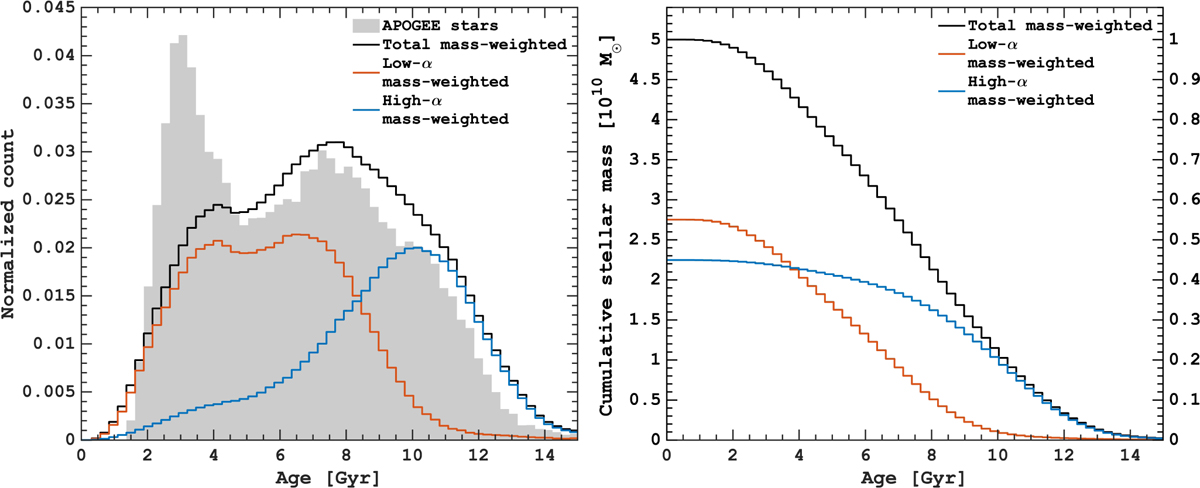
Left: age distribution for APOGEE stars (grey shaded area) and the stellar mass-weighted age distributions for all stars in black and high- and low-α populations in blue and red, respectively. The age distributions for APOGEE and the orbit superposition solutions are normalised by the number of stars and total stellar mass, respectively. Right: cumulative mass distributions for the stellar mass-weighted components. The orbit superposition method results in the mass-weighted age distribution, which can be considered the star formation history of the entire Galaxy, as it gives direct information about the amount of stellar mass formed over time. Since we propagate the age uncertainties along the orbits, in some cases, we end up with ages that are larger than the overall age of the Universe.
Current usage metrics show cumulative count of Article Views (full-text article views including HTML views, PDF and ePub downloads, according to the available data) and Abstracts Views on Vision4Press platform.
Data correspond to usage on the plateform after 2015. The current usage metrics is available 48-96 hours after online publication and is updated daily on week days.
Initial download of the metrics may take a while.