


Fig. 7
Download original image
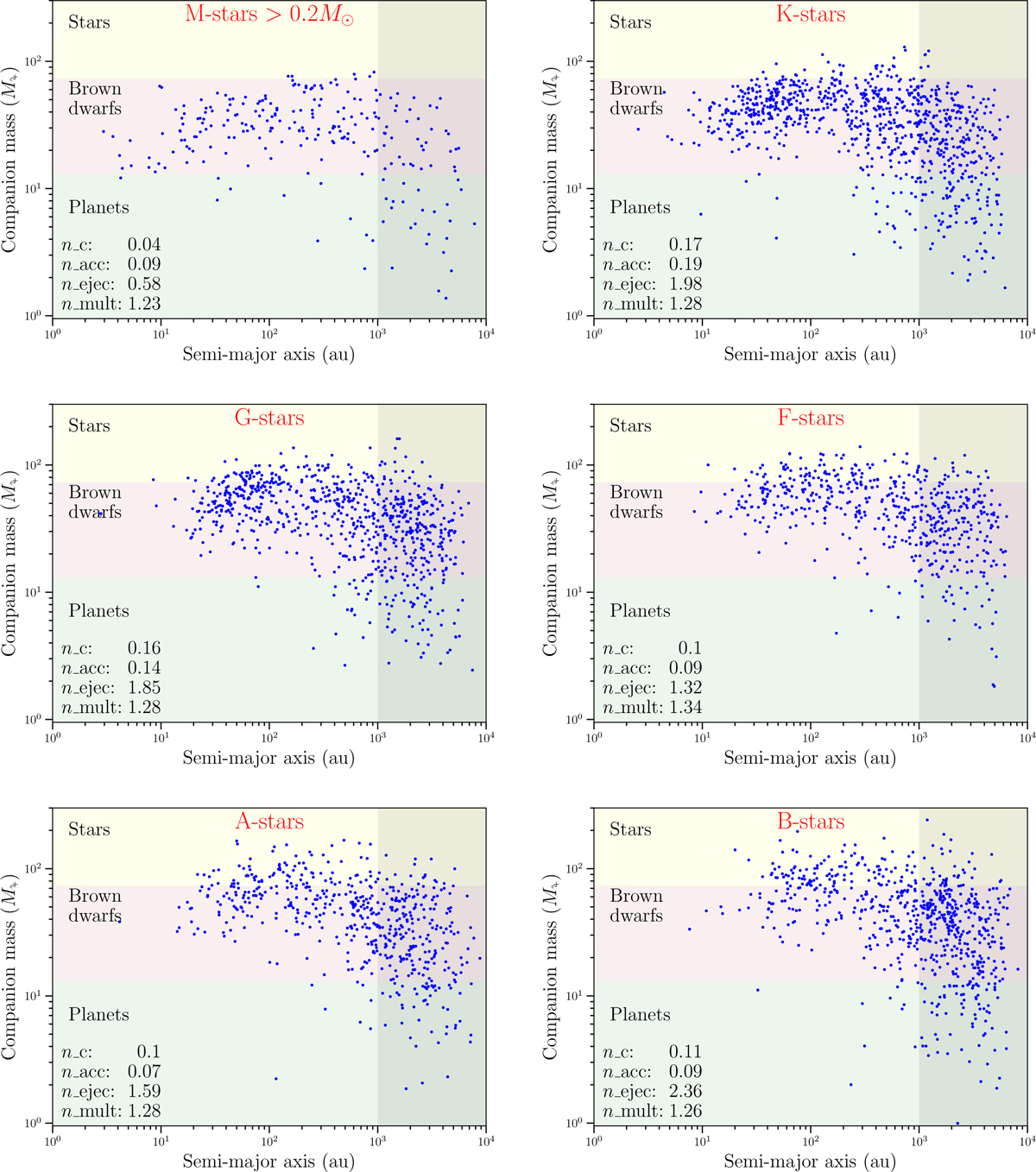
Mass vs semi-major axis for surviving companions of the baseline DIPSY-0 population for different spectral types of the primary. The spectral type, from M to B, is indicated in the title of each panel. Each panel contains the companions from a random selection of 5000 systems from the corresponding mass range. In the bottom left corner, the following quantities are given as mean numbers for every sub-population: surviving companions per system nc, objects accreted on the primary per system nacc, ejected objects per system nejec, and number of surviving companions per system with at least one surviving companion, ncs (companion multiplicity). The envelope of points has a similar shape for all spectral classes but systematically shifts in position and density.
Current usage metrics show cumulative count of Article Views (full-text article views including HTML views, PDF and ePub downloads, according to the available data) and Abstracts Views on Vision4Press platform.
Data correspond to usage on the plateform after 2015. The current usage metrics is available 48-96 hours after online publication and is updated daily on week days.
Initial download of the metrics may take a while.