


Fig. 2
Download original image
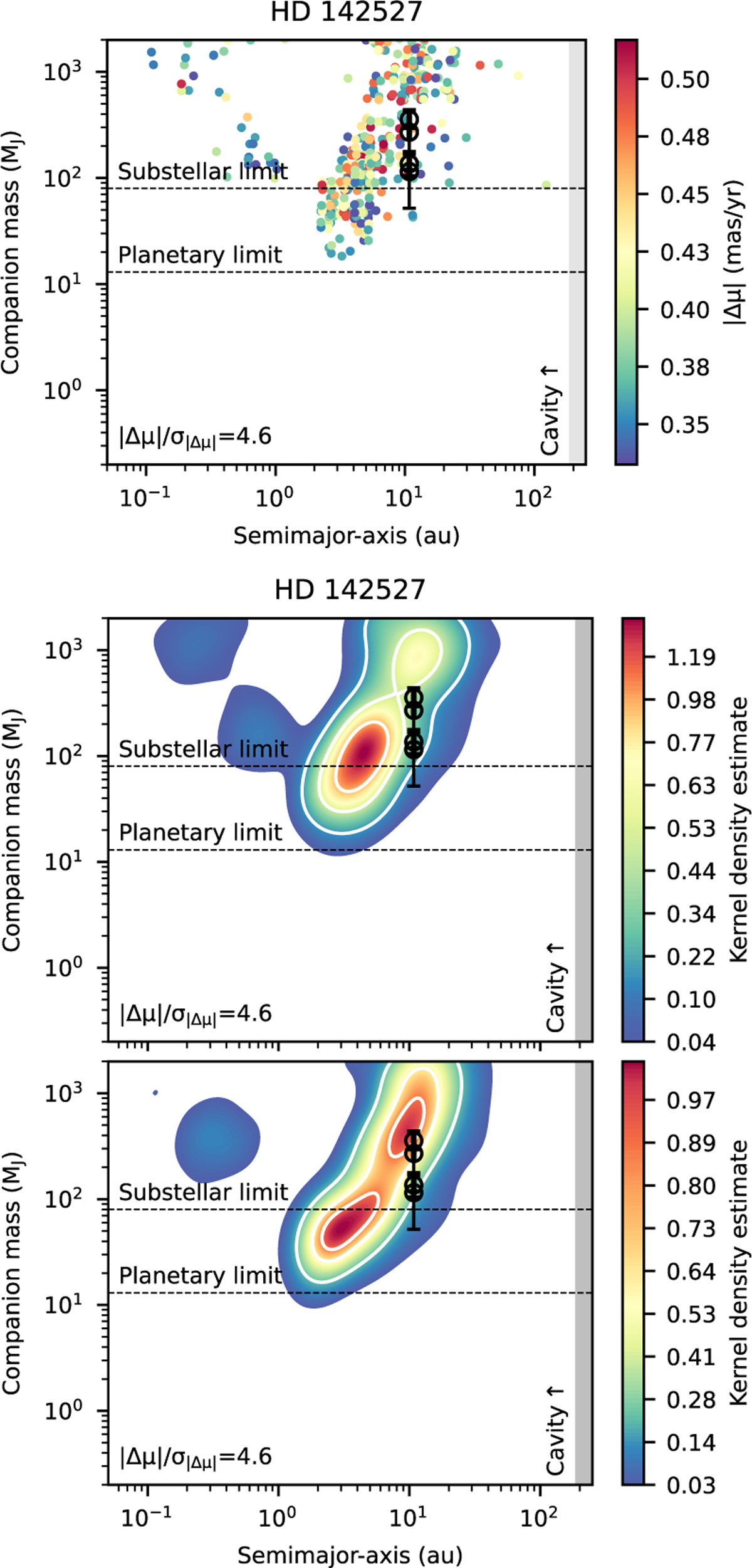
Orbital separation and mass of the companion that would produce the observed Gaia astrometry of HD 142527(0.33<|Δμ|< 0.52 mas yr−1,|Δμ|/σ|Δμ|>4, and RUWEDR3<1.25, from Sect. 3 Eqs. (3)–(5)). The top panel shows the individual Gaia simulations for this system. The middle panel presents the same simulations but smoothed with a kernel density estimate (contours indicate the 20, 50, and 80% levels of the normalised area). Black circles mark the location and the proposed masses for the known companion in this system (see Sect. 3.3). The bottom panel is the same as the middle panel but assuming the companion responsible for the astrometric signal is in the plane of the disc. Similar plots for all other 30 systems with significant astrometric accelerations are shown in Fig. A.2.
Current usage metrics show cumulative count of Article Views (full-text article views including HTML views, PDF and ePub downloads, according to the available data) and Abstracts Views on Vision4Press platform.
Data correspond to usage on the plateform after 2015. The current usage metrics is available 48-96 hours after online publication and is updated daily on week days.
Initial download of the metrics may take a while.