


Fig. 3.
Download original image
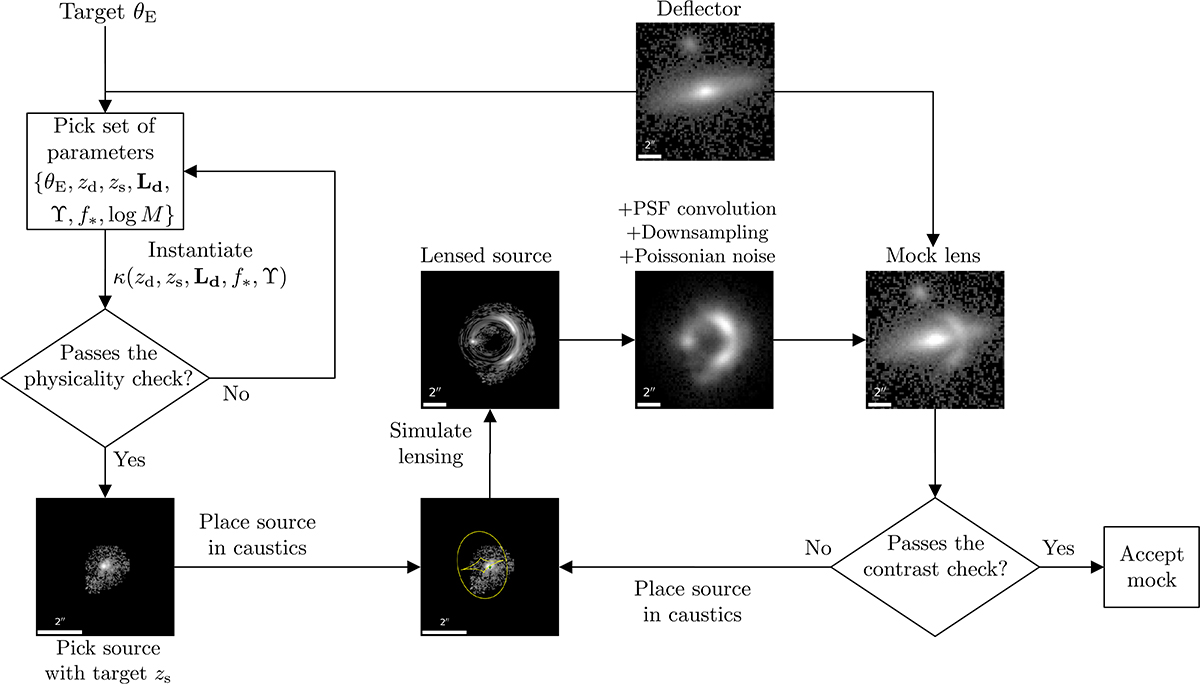
Schematic description of our lens simulation procedure. To produce each simulated stamp, we started with a potential deflector and a target Einstein radius, θE. Then, we picked a set of parameters for a mass model consistent with the target θE and the deflector’s light, and we performed a check where we made sure that log M, f*, and Υ are within physical ranges. After that, we picked a source using the target zs provided by the mass model parameters, and we placed it randomly around the caustics before simulating its lensing by the mass model. Next, we convolved the lensed source image with the deflector’s PSF, downsampled to match the pixel size of CFIS, and added Poissonian noise. At this point, we added the original stamp of the deflector to get the final mock. Lastly, we performed a contrast check to make sure that the lensing features are visible. If it passed the check, we accepted the mock and proceeded to the next deflector. Otherwise, we repositioned the source relative to the caustics and tried a second time.
Current usage metrics show cumulative count of Article Views (full-text article views including HTML views, PDF and ePub downloads, according to the available data) and Abstracts Views on Vision4Press platform.
Data correspond to usage on the plateform after 2015. The current usage metrics is available 48-96 hours after online publication and is updated daily on week days.
Initial download of the metrics may take a while.