


| Issue |
A&A
Volume 499, Number 3, June I 2009
|
|
|---|---|---|
| Page(s) | L29 - L32 | |
| Section | Letters | |
| DOI | https://doi.org/10.1051/0004-6361/200912059 | |
| Published online | 29 April 2009 | |
LETTER TO THE EDITOR
Propagating waves in polar coronal holes as seen by SUMER & EIS![[*]](/icons/foot_motif.png)
D. Banerjee1 - L. Teriaca2 - G. R. Gupta1,3 - S. Imada4 - G. Stenborg5 - S. K. Solanki2,6
1 - Indian Institute of Astrophysics, Bangalore 560034, India
2 - Max-Planck-Institut für Sonnensystemforschung (MPS), 37191
Katlenburg-Lindau, Germany
3 - Joint Astronomy Programme, Indian Institute of Science, Bangalore 560012, India
4 - National Astronomical Observatory of Japan, 2-21-1 Osawa, Mitaka, Tokyo 181-8588, Japan
5 - Interferometrics, Inc., Herndon, VA 20171, USA
6 - School of Space Research, Kyung Hee University, Yongin, Gyeonggi 446-701,
Korea
Received 13 March 2009 / Accepted 22 April 2009
Abstract
Context. To study the dynamics of coronal holes and the role of waves in the acceleration of the solar wind, spectral observations were performed over polar coronal hole regions with the SUMER spectrometer on SoHO and the EIS spectrometer on Hinode.
Aims. Using these observations, we aim to detect the presence of propagating waves in the corona and to study their properties.
Methods. The observations analysed here consist of SUMER spectra of the Ne VIII 770 Å line (T = 0.6 MK) and EIS slot images in the Fe XII 195 Å line (T=1.3 MK). Using the wavelet technique, we study line radiance oscillations at different heights from the limb in the polar coronal hole regions.
Results. We detect the presence of long period oscillations with periods of 10 to 30 min in polar coronal holes. The oscillations have an amplitude of a few percent in radiance and are not detectable in line-of-sight velocity. From the time distance maps we find evidence for propagating velocities from 75 km s-1 (Ne VIII) to 125 km s-1 (Fe XII). These velocities are subsonic and roughly in the same ratio as the respective sound speeds.
Conclusions. We interpret the observed propagating oscillations in terms of slow magneto-acoustic waves. These waves can be important for the acceleration of the fast solar wind.
Key words: Sun: corona - Sun: oscillations - Sun: UV radiation - Sun: transition region - waves
1 Introduction
Propagating radiance oscillations were detected in polar plumes,
first by Ofman et al. (1997) using
UVCS/SoHO and later by
Deforest & Gurman (1998) with EIT/SoHO.
Ofman et al. (1999,2000a) identified the observed
radiance oscillations as propagating slow magneto-acoustic waves.
A number of studies using the CDS/SoHO spectrometer have
reported oscillations in the polar coronal holes up to 25
 above
the limb
(e.g., Banerjee et al. 2001b; O'Shea et al. 2006; Banerjee et al. 2000,2001a; O'Shea et al. 2007).
Popescu et al. (2005), using SUMER/SoHO, detected radiance
fluctuations with periods from 10 to 90 min up to 15
above the limb.
These studies point to the presence of compressional waves, thought to
be slow magneto-acoustic waves.
In this letter, for the first time to our knowledge,
simultaneous use of the SUMER and EIS/Hinode spectrometer were used to study these
propagating disturbances in the off-limb
regions of the polar coronal holes. We construct time distance maps to
study the properties of wave propagation and use wavelet analysis to
establish their periods.
Spectroscopic observations have the advantage of a narrow temperature
response (by isolating specific spectral lines) and of allowing
the study of resolved and unresolved plasma motions by measuring the
Doppler shift and width of the observed profiles. These observables
provide important constraints in establishing the nature
of the observed oscillations.
above
the limb
(e.g., Banerjee et al. 2001b; O'Shea et al. 2006; Banerjee et al. 2000,2001a; O'Shea et al. 2007).
Popescu et al. (2005), using SUMER/SoHO, detected radiance
fluctuations with periods from 10 to 90 min up to 15
above the limb.
These studies point to the presence of compressional waves, thought to
be slow magneto-acoustic waves.
In this letter, for the first time to our knowledge,
simultaneous use of the SUMER and EIS/Hinode spectrometer were used to study these
propagating disturbances in the off-limb
regions of the polar coronal holes. We construct time distance maps to
study the properties of wave propagation and use wavelet analysis to
establish their periods.
Spectroscopic observations have the advantage of a narrow temperature
response (by isolating specific spectral lines) and of allowing
the study of resolved and unresolved plasma motions by measuring the
Doppler shift and width of the observed profiles. These observables
provide important constraints in establishing the nature
of the observed oscillations.
2 Observations
The data analysed here were obtained on 8th and 15th April 2007 during a Hinode/SUMER joint observing campaign as part of the
Hinode Observing Programme (HOP) 45/Joint Observing program (JOP) 196. They
consist of time series taken in the south polar coronal hole by the Solar
Ultraviolet Measurements Of Emitted Radiation
(SUMER, Wilhelm et al. 1995) spectrometer aboard the Solar and
Heliospheric Observatory (SoHO) and by the EUV imaging spectrometer
(EIS, Culhane et al. 2007) aboard Hinode
(Kosugi et al. 2007).
For SUMER, the
 slit was centred on the limb
and spectra were acquired from 19:13 to 20:47 UTC on 8th and from 10:44
to 14:45 UTC on 15th, with a cadence of 18.12 s.
For EIS, the
slit was centred on the limb
and spectra were acquired from 19:13 to 20:47 UTC on 8th and from 10:44
to 14:45 UTC on 15th, with a cadence of 18.12 s.
For EIS, the
 wide slot was used to obtain
 images in several spectral lines over the time
interval 18:42 to 20:58 UTC on 8th and 10:54 to 15:57 UTC on 15
images in several spectral lines over the time
interval 18:42 to 20:58 UTC on 8th and 10:54 to 15:57 UTC on 15 April. The EIS data consist of a series of elementary rasters each formed by two slot
images displaced by 20
April. The EIS data consist of a series of elementary rasters each formed by two slot
images displaced by 20
 in the X direction to maximise the
chances of overlapping with the other instruments. Each slot image was
exposed for about 7.5 s. As a result, for each dataset, we have two time series
with a cadence of 19.3 s that we identify hereafter with slot0 (East) and
slot1 (West). Before the start of the temporal series, raster images were obtained with SUMER
and EIS to allow the co-alignment of the different instruments.
in the X direction to maximise the
chances of overlapping with the other instruments. Each slot image was
exposed for about 7.5 s. As a result, for each dataset, we have two time series
with a cadence of 19.3 s that we identify hereafter with slot0 (East) and
slot1 (West). Before the start of the temporal series, raster images were obtained with SUMER
and EIS to allow the co-alignment of the different instruments.
![\begin{figure}
\par\includegraphics[width=4.0cm]{ban12059_f1a.eps}\includegraphics[width=4.0cm]{ban12059_f1b.eps}
\end{figure}](/articles/aa/full_html/2009/21/aa12059-09/img13.png) |
Figure 1:
Left ( right) panel shows the location of different slits and slots on
the Fe XII 195 Å EIS context raster on |
| Open with DEXTER | |
 area.
In both panels, radiance iso-contours (white) are from EIT Fe XII 195 Å
images.
The two white rectangular boxes are the location of the EIS slots
(solid slot0, dashed slot1).
The solid vertical blue line represents the location of the SUMER 1
area.
In both panels, radiance iso-contours (white) are from EIT Fe XII 195 Å
images.
The two white rectangular boxes are the location of the EIS slots
(solid slot0, dashed slot1).
The solid vertical blue line represents the location of the SUMER 1
All the data were reduced and calibrated with the standard procedures
given in the SolarSoft
(SSW) library.
SUMER data were decompressed, corrected for response inhomogeneities
(flat-field) and for geometrical distortion (de-stretch).
The data series of 8 April was analysed only until 20:47 UTC due to
spurious flaring at the edges of the detector occurring after this time.
For EIS, after applying the standard reduction and calibration provided by the
eis-prep procedure, data were corrected for the spacecraft jitter in the
Y-direction (the jitter in the X direction is less than 1
and can be
neglected) by using housekeeping data. Finally, the movement of the
slot image on the detector due to thermal variations during the orbit was
corrected. The displacement in the dispersion (Solar X) direction was obtained
by measuring the position of the edge of the Fe XII 195 slot
image over time. The displacement in the Y direction is taken equal to 1.5 times that in the X direction (Imada 2009, in preparation). The validity of the latter assumption was verified by checking
the limb Y position vs. time.
All images from Hinode were converted to SoHO view (L1) and co-aligned in two
steps. First, the internal offset between the long-wavelength and
short-wavelength EIS CCDs and the wavelength dependent inclination of the
spectrum were obtained (Kamio & Hara, private communication) and accounted
for. Then, choosing SUMER as the reference, the EIS rasters were aligned with
the SUMER rasters.
We estimate the alignment to be accurate within
 .
Figure 1 shows the location of the slits and slots of the
different instruments.
Here the white rectangular boxes represent EIS slot0 and slot1.
The vertical lines indicates the location of the SUMER (solid blue) and CDS
(dash-dotted yellow) slits.
Due to the marginal overlap with the other instruments and the low signal in
the off-limb spectra, CDS data were not used for the analysis.
SUMER data overlap with EIS slot0 in both cases and only those data are
used here.
.
Figure 1 shows the location of the slits and slots of the
different instruments.
Here the white rectangular boxes represent EIS slot0 and slot1.
The vertical lines indicates the location of the SUMER (solid blue) and CDS
(dash-dotted yellow) slits.
Due to the marginal overlap with the other instruments and the low signal in
the off-limb spectra, CDS data were not used for the analysis.
SUMER data overlap with EIS slot0 in both cases and only those data are
used here.
![\begin{figure}
\par {\includegraphics[width=8.5cm, clip=true]{ban12059_f2.eps} }\end{figure}](/articles/aa/full_html/2009/21/aa12059-09/img15.png) |
Figure 2:
Enhanced (see text) maps of radiance variation along the slit
(Solar Y direction) with time for Ne VIII as recorded by SUMER
( top panel) and Fe XII 195 Å as recorded by EIS ( bottom panel) on
|
| Open with DEXTER | |
![\begin{figure}
\par {\includegraphics[width=8cm, clip=true]{ban12059_f3.eps} }\end{figure}](/articles/aa/full_html/2009/21/aa12059-09/img16.png) |
Figure 3:
Enhanced radiance maps as in Fig. 2, but for the
|
| Open with DEXTER | |
3 Results
Maps of the radiance along the slit vs. time (xt slices) were first built using the SUMER Ne VIII integrated line radiances and EIS Fe XII radiances averaged over 5
in the X direction at the position overlapping
the SUMER slit. The resulting maps were then contrast enhanced and low-pass
filtered to produce the maps shown in Figs. 2
and 3 for the  and
and
 April datasets,
respectively.
EIS radiance maps were normalised by dividing by the average along the
Y direction (to remove the strong limb signature),
the result elevated to the power of 3 (to increase the contrast between high/low radiance regions),
and, finally, low-pass filtered. SUMER enhanced radiance
maps were obtained as the median over
April datasets,
respectively.
EIS radiance maps were normalised by dividing by the average along the
Y direction (to remove the strong limb signature),
the result elevated to the power of 3 (to increase the contrast between high/low radiance regions),
and, finally, low-pass filtered. SUMER enhanced radiance
maps were obtained as the median over  pixels of the quantity
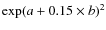 where b is the original image, and a is a highly
smoothed version of the original image obtained by convolving with an isotropic
kernel.
The difference in the treatment of the data from
the two instruments depends on the different noise level and image scale.
In Fig. 2, we note that the EIS time series starts at a later
time (denoted by a dashed vertical line in the top panel of the figure).
On xt slices, the presence of alternate bright and dark regions indicates the
presence of oscillations. Moreover, diagonal radiance enhancements (marked
by dotted yellow lines and dashed blue lines in Figs. 2
and 3) are a signature of propagating disturbances.
Thus, from such maps, it is possible to estimate periods and projected
propagation speeds.
where b is the original image, and a is a highly
smoothed version of the original image obtained by convolving with an isotropic
kernel.
The difference in the treatment of the data from
the two instruments depends on the different noise level and image scale.
In Fig. 2, we note that the EIS time series starts at a later
time (denoted by a dashed vertical line in the top panel of the figure).
On xt slices, the presence of alternate bright and dark regions indicates the
presence of oscillations. Moreover, diagonal radiance enhancements (marked
by dotted yellow lines and dashed blue lines in Figs. 2
and 3) are a signature of propagating disturbances.
Thus, from such maps, it is possible to estimate periods and projected
propagation speeds.
![\begin{figure}
\par\mbox{\includegraphics[angle=90, width=8.5cm]{ban12059_f4a.eps}\includegraphics[angle=90, width=8.5cm]{ban12059_f4b.eps} }
\end{figure}](/articles/aa/full_html/2009/21/aa12059-09/img19.png) |
Figure 4:
Wavelet analysis for the |
| Open with DEXTER | |
 for both Ne VIII 770 Å ( left) and
Fe XII 195 Å ( right). Both light curves are obtained by averaging
over 9
for both Ne VIII 770 Å ( left) and
Fe XII 195 Å ( right). Both light curves are obtained by averaging
over 9
![\begin{figure}
\par\mbox{\includegraphics[angle=90,width=8.2cm]{ban12059_f5a.eps}\includegraphics[angle=90, width=8.2cm]{ban12059_f5b.eps} }
\end{figure}](/articles/aa/full_html/2009/21/aa12059-09/img20.png) |
Figure 5:
Wavelet analysis for the
|
| Open with DEXTER | |
 75 km s-1 and a periodicity of about 15 min. The propagation
fronts are much more visible on the 8
April data (see
top panel of Fig. 2) but are also visible on the
15
April data. In the case of the EIS data, no definitive conclusions can be drawn from
the 8
April data (see bottom panel of Fig. 2),
while propagating fronts are clearly visible in the
15
April data (see bottom panel of Fig. 3).
However, both the propagation speeds and the periodicity are higher than for
the SUMER data, with values of 125 km s-1 and 30 min,
respectively (see the dashed blue lines in the bottom panel of
Fig. 3). The observed propagation speeds are actually
a lower limit as the field lines may form an angle with the
plane-of-sky. However,
these angles are very likely small and the speeds are most probably subsonic.
For the propagation speeds, we estimate the uncertainty to be
around 10%. The ratio of the
Fe XII to Ne VIII propagation speeds, about 1.7, is close
to the ratio of the sound speeds of about 1.5 (at the two formation
temperatures of 0.6 and 1.3 MK). The observed radiance perturbations have an
amplitude of a few percent.
No evidence of propagating disturbances
can be found in the LOS velocity xt maps (not shown).
75 km s-1 and a periodicity of about 15 min. The propagation
fronts are much more visible on the 8
April data (see
top panel of Fig. 2) but are also visible on the
15
April data. In the case of the EIS data, no definitive conclusions can be drawn from
the 8
April data (see bottom panel of Fig. 2),
while propagating fronts are clearly visible in the
15
April data (see bottom panel of Fig. 3).
However, both the propagation speeds and the periodicity are higher than for
the SUMER data, with values of 125 km s-1 and 30 min,
respectively (see the dashed blue lines in the bottom panel of
Fig. 3). The observed propagation speeds are actually
a lower limit as the field lines may form an angle with the
plane-of-sky. However,
these angles are very likely small and the speeds are most probably subsonic.
For the propagation speeds, we estimate the uncertainty to be
around 10%. The ratio of the
Fe XII to Ne VIII propagation speeds, about 1.7, is close
to the ratio of the sound speeds of about 1.5 (at the two formation
temperatures of 0.6 and 1.3 MK). The observed radiance perturbations have an
amplitude of a few percent.
No evidence of propagating disturbances
can be found in the LOS velocity xt maps (not shown).
To better study the properties of the propagating disturbances seen in
the enhanced-radiance xt slices in Figs. 2
and 3, we make use of wavelet analysis and focus
on individual locations (heights) in the off-limb corona. For this purpose we
extracted radiance vs. time curves at a given height by averaging over 9
in the Y direction for both SUMER and EIS original (without filtering
or contrast enhancement) radiance maps.
In Fig. 4 (
April) and
Fig. 5 (
April),
we show representative examples of the type of oscillation measured at
 (
(
 above the limb).
The top panels of Figs. 4 and 5
show the variation of the radiance (hereafter we will use the term
radiance for trend-subtracted line radiance). Details on the wavelet
analysis, which provides information on
the temporal variation of a signal, are described in
Torrence & Compo (1998). For the convolution with the time series in the
wavelet transform, we chose the Morlet function, as defined in
Torrence & Compo (1998).
The light curves shown in the upper panels had
their background trend removed by subtracting from the original time series a
60-point (
above the limb).
The top panels of Figs. 4 and 5
show the variation of the radiance (hereafter we will use the term
radiance for trend-subtracted line radiance). Details on the wavelet
analysis, which provides information on
the temporal variation of a signal, are described in
Torrence & Compo (1998). For the convolution with the time series in the
wavelet transform, we chose the Morlet function, as defined in
Torrence & Compo (1998).
The light curves shown in the upper panels had
their background trend removed by subtracting from the original time series a
60-point (
 min) running
average for
April data and a 100-point
(
min) running
average for
April data and a 100-point
(
 min) for SUMER
and 150-point (
min) for SUMER
and 150-point (
 min) for the EIS running average for
April data. In the wavelet spectrum (middle-left
panels), the cross-hatched regions are locations where estimates of
oscillation periods become unreliable. This is the so-called cone-of-influence
(COI, see Torrence & Compo 1998).
As a result of the COI, the maximum measurable period is shown by a dotted
line in the global spectrum plots (middle-right panels).
Above the global wavelet spectrum of Figs. 4
and 5 we show the prevalent period, measured at the location of the
maximum of the global wavelet spectrum, together with an estimate of the
probability that this oscillation is not due to noise. The probability estimate
was calculated using the randomisation method with 200 permutations as
outlined in detail in O'Shea et al. (2001).
min) for the EIS running average for
April data. In the wavelet spectrum (middle-left
panels), the cross-hatched regions are locations where estimates of
oscillation periods become unreliable. This is the so-called cone-of-influence
(COI, see Torrence & Compo 1998).
As a result of the COI, the maximum measurable period is shown by a dotted
line in the global spectrum plots (middle-right panels).
Above the global wavelet spectrum of Figs. 4
and 5 we show the prevalent period, measured at the location of the
maximum of the global wavelet spectrum, together with an estimate of the
probability that this oscillation is not due to noise. The probability estimate
was calculated using the randomisation method with 200 permutations as
outlined in detail in O'Shea et al. (2001).
Below the wavelet power spectrum, in the lower panels, we
show the variation of the probability estimate, calculated using the
randomisation technique, associated with the maximum power at each
time in the wavelet power spectrum. The location of the maximum power
is indicated by the over-plotted white lines in the middle-left panels.
Figure 4 shows that the oscillations detected in the
April data have periodicities with maximum power at 14.1 min in
Ne VIII (SUMER) and 13.9 min in Fe XII
(EIS). Note that the wavelet technique reveals highly significant
power in Fe XII (also at other heights), although no clear oscillation
could be discerned by eye in the EIS enhanced radiance map (see bottom panel
of Fig. 2).
On the other hand, for
April data, which have
a longer time series, Ne VIII shows its maximum power around 18 min
and Fe XII shows maximum power around 30 min, consistent with the
results from the analysis of the xt slices. Also note that there are multiple
peaks seen in the global wavelet spectra (right panels), which implies that the
signal could be composed of multiple modes of oscillation.
To study the oscillation behaviour at different heights we also look at
the wavelet results at
 and plot the results in Figs. 6
and 7, respectively (available online only).
For the
April data at
,
SUMER reveals a
strong peak at 14.2 min, while EIS shows a peak at 15.15 min.
For the
April data at
SUMER
shows a strong peak at 20 min, whereas EIS shows a peak at 30 min.
Finally, we also attempted to search for oscillations in the LOS
velocity (by fitting the profiles obtained using the same binning as for the
radiance wavelet analysis).
No evidence of oscillations with an amplitude larger than 2 km s-1can be found in the LOS velocity data.
This is the accuracy achievable with SUMER when observing the Ne VIII
line in the first order of diffraction (at the Signal to Noise values of relevance here).
and plot the results in Figs. 6
and 7, respectively (available online only).
For the
April data at
,
SUMER reveals a
strong peak at 14.2 min, while EIS shows a peak at 15.15 min.
For the
April data at
SUMER
shows a strong peak at 20 min, whereas EIS shows a peak at 30 min.
Finally, we also attempted to search for oscillations in the LOS
velocity (by fitting the profiles obtained using the same binning as for the
radiance wavelet analysis).
No evidence of oscillations with an amplitude larger than 2 km s-1can be found in the LOS velocity data.
This is the accuracy achievable with SUMER when observing the Ne VIII
line in the first order of diffraction (at the Signal to Noise values of relevance here).
4 Conclusions
The first observational detection of longitudinal waves came from analysing
polarised brightness (density) fluctuations in white light data.
Fluctuations with periods of about 9 min were detected in coronal holes at
a height of about 1.9  by Ofman et al. (1997) using the white
light channel of UVCS/SoHO. In a follow-up study, Ofman et al. (2000b)
determined the
fluctuation periods to be in the range of 7 to 10 min. The propagation
speeds of the fluctuations indicated values in the range of 160 to
260 km s-1 at 2 ,
which is slightly slower than the acoustic speed
at those heights. Deforest & Gurman (1998), usingEIT 171 Å reported
detection of outwardly propagating radiance perturbations at distances
of 1.01 to 1.2 ,
gathered in quasi-periodic groups of 3 to 10 periods,
with periods of about 10 to 15 min. The projected speeds are about 75 to
150 km s-1 and the relative amplitude (in density) was about 2 to 4%.
Usually these waves are observed propagating along the assumed coronal magnetic
structures and, thus, along the magnetic field. Their speeds are usually much
slower than the expected coronal Alfvén speed, which leads to their
interpretation as longitudinally propagating slow magneto-acoustic waves.
Slow magneto-acoustic waves follow magnetic field lines and propagate at the
local sound speed. We detect the presence of long period oscillations with
periods of 10 to 30 min in polar coronal holes within the range of 1 to
1.2 ,
with a clear signature of propagation with velocities from 75 to 125 km s-1, depending on the temperature of line formation.
The measured propagation speeds are subsonic, indicating
that they are slow magneto-acoustic in nature, which is consistent with earlier
reports.
Note that this detection has been confirmed through the analysis of data from
two separate spectrometers on-board two different satellites.
Thus we feel that this simultaneous detection makes the result very robust.
We also find that the propagation speed in Fe XII
(125 km s-1) is higher than that in Ne VIII
(75 km s-1), as shown in the bottom panel of Fig. 3.
This may be a temperature effect, as the ratio of the Fe XII to
Ne VIII propagation speeds, about 1.7, is close to the ratio of the sound
speeds. Different propagating speeds observed in different
lines may also be interpreted as an indication of the presence of structures
with different temperatures along the line of sight (e.g., weak plumes).
The observed region can be either a bundle of magnetic
threads of different temperatures, or have a transverse temperature profile.
However, with the available data this statement remains a conjecture only.
Finally, we note that the observed waves have no detectable signature in the
LOS velocity, enforcing the idea of compressive longitudinal magneto-acoustic
waves.
by Ofman et al. (1997) using the white
light channel of UVCS/SoHO. In a follow-up study, Ofman et al. (2000b)
determined the
fluctuation periods to be in the range of 7 to 10 min. The propagation
speeds of the fluctuations indicated values in the range of 160 to
260 km s-1 at 2 ,
which is slightly slower than the acoustic speed
at those heights. Deforest & Gurman (1998), usingEIT 171 Å reported
detection of outwardly propagating radiance perturbations at distances
of 1.01 to 1.2 ,
gathered in quasi-periodic groups of 3 to 10 periods,
with periods of about 10 to 15 min. The projected speeds are about 75 to
150 km s-1 and the relative amplitude (in density) was about 2 to 4%.
Usually these waves are observed propagating along the assumed coronal magnetic
structures and, thus, along the magnetic field. Their speeds are usually much
slower than the expected coronal Alfvén speed, which leads to their
interpretation as longitudinally propagating slow magneto-acoustic waves.
Slow magneto-acoustic waves follow magnetic field lines and propagate at the
local sound speed. We detect the presence of long period oscillations with
periods of 10 to 30 min in polar coronal holes within the range of 1 to
1.2 ,
with a clear signature of propagation with velocities from 75 to 125 km s-1, depending on the temperature of line formation.
The measured propagation speeds are subsonic, indicating
that they are slow magneto-acoustic in nature, which is consistent with earlier
reports.
Note that this detection has been confirmed through the analysis of data from
two separate spectrometers on-board two different satellites.
Thus we feel that this simultaneous detection makes the result very robust.
We also find that the propagation speed in Fe XII
(125 km s-1) is higher than that in Ne VIII
(75 km s-1), as shown in the bottom panel of Fig. 3.
This may be a temperature effect, as the ratio of the Fe XII to
Ne VIII propagation speeds, about 1.7, is close to the ratio of the sound
speeds. Different propagating speeds observed in different
lines may also be interpreted as an indication of the presence of structures
with different temperatures along the line of sight (e.g., weak plumes).
The observed region can be either a bundle of magnetic
threads of different temperatures, or have a transverse temperature profile.
However, with the available data this statement remains a conjecture only.
Finally, we note that the observed waves have no detectable signature in the
LOS velocity, enforcing the idea of compressive longitudinal magneto-acoustic
waves.
Acknowledgements
This work was supported by the Indo-German DST-DAAD joint project D/07/03045. The SUMER project is financially supported by DLR, CNES, NASA, and the ESA PRODEX programme (Swiss contribution). Hinode is a Japanese mission developed and launched by ISAS/JAXA, with NAOJ as domestic partner and NASA and STFC (UK) as international partners. It is operated by these agencies in co-operation with ESA and NSC (Norway). This work was partially supported by the WCU grant No. R31-10016 from the Korean Ministry of Education, Science and Technology. We thank the anonymous referee for useful comments and suggestions.
References
- Banerjee, D., O'Shea, E., & Doyle, J. G. 2000, Sol. Phys., 196, 63 [NASA ADS] [CrossRef]
- Banerjee, D., O'Shea, E., Doyle, J. G., & Goossens, M. 2001a, A&A, 377, 691 [NASA ADS] [CrossRef] [EDP Sciences]
- Banerjee, D., O'Shea, E., Doyle, J. G., & Goossens, M. 2001b, A&A, 380, L39 [NASA ADS] [CrossRef] [EDP Sciences]
- Culhane, J. L., Harra, L. K., James, A. M., et al. 2007, Sol. Phys., 243, 19 [NASA ADS] [CrossRef] (In the text)
- Deforest, C. E., & Gurman, J. B. 1998, ApJ, 501, L217 [NASA ADS] [CrossRef] (In the text)
- Kosugi, T., Matsuzaki, K., Sakao, T., et al. 2007, Sol. Phys., 243, 3 [NASA ADS] [CrossRef] (In the text)
- Ofman, L., Romoli, M., Poletto, G., Noci, G., & Kohl, J. L. 1997, ApJ, 491, L111 [NASA ADS] [CrossRef] (In the text)
- Ofman, L., Nakariakov, V. M., & Deforest, C. E. 1999, ApJ, 514, 441 [NASA ADS] [CrossRef]
- Ofman, L., Nakariakov, V. M., & Sehgal, N. 2000a, ApJ, 533, 1071 [NASA ADS] [CrossRef]
- Ofman, L., Romoli, M., Poletto, G., Noci, G., & Kohl, J. L. 2000b, ApJ, 529, 592 [NASA ADS] [CrossRef] (In the text)
- O'Shea, E., Banerjee, D., Doyle, J. G., Fleck, B., & Murtagh, F. 2001, A&A, 368, 1095 [NASA ADS] [CrossRef] [EDP Sciences] (In the text)
- O'Shea, E., Banerjee, D., & Doyle, J. G. 2006, A&A, 452, 1059 [NASA ADS] [CrossRef] [EDP Sciences]
- O'Shea, E., Banerjee, D., & Doyle, J. G. 2007, A&A, 463, 713 [NASA ADS] [CrossRef] [EDP Sciences]
- Popescu, M. D., Banerjee, D., O'Shea, E., Doyle, J. G., & Xia, L. D. 2005, A&A, 442, 1087 [NASA ADS] [CrossRef] [EDP Sciences] (In the text)
- Torrence, C., & Compo, G. P. 1998, Bull. Amer. Meteo. Soc., 79, 61 [CrossRef] (In the text)
- Wilhelm, K., Curdt, W., Marsch, E., et al. 1995, Sol. Phys., 162, 189 [NASA ADS] [CrossRef] (In the text)
Online Material
![\begin{figure}
\par\mbox{\includegraphics[angle=90,width=9cm]{ban12059_f6a.eps}\includegraphics[angle=90, width=9cm]{ban12059_f6b.eps} }
\end{figure}](/articles/aa/full_html/2009/21/aa12059-09/img28.png) |
Figure 6:
Wavelet analysis for the |
| Open with DEXTER | |
 for both Ne VIII 770 Å ( left) and
Fe XII 195 Å ( right). Both light curves are obtained by averaging
over 9
for both Ne VIII 770 Å ( left) and
Fe XII 195 Å ( right). Both light curves are obtained by averaging
over 9
![\begin{figure}
\par\mbox{\includegraphics[angle=90,width=9cm]{ban12059_f7a.eps}\includegraphics[angle=90, width=9cm]{ban12059_f7b.eps} }
\end{figure}](/articles/aa/full_html/2009/21/aa12059-09/img29.png) |
Figure 7:
Wavelet analysis for the
|
| Open with DEXTER | |
Footnotes
- ... EIS
- Figures 6 and 7 are only available in electronic form at http://www.aanda.org
- ...
(SSW)
- http://sohowww.nascom.nasa.gov/solarsoft/
All Figures
| |
Figure 1:
Left ( right) panel shows the location of different slits and slots on
the Fe XII 195 Å EIS context raster on |
| Open with DEXTER | |
| In the text | |
| |
Figure 2:
Enhanced (see text) maps of radiance variation along the slit
(Solar Y direction) with time for Ne VIII as recorded by SUMER
( top panel) and Fe XII 195 Å as recorded by EIS ( bottom panel) on
|
| Open with DEXTER | |
| In the text | |
| |
Figure 3:
Enhanced radiance maps as in Fig. 2, but for the
|
| Open with DEXTER | |
| In the text | |
| |
Figure 4:
Wavelet analysis for the |
| Open with DEXTER | |
| In the text | |
| |
Figure 5:
Wavelet analysis for the
|
| Open with DEXTER | |
| In the text | |
| |
Figure 6:
Wavelet analysis for the |
| Open with DEXTER | |
| In the text | |
| |
Figure 7:
Wavelet analysis for the
|
| Open with DEXTER | |
| In the text | |
Copyright ESO 2009
Current usage metrics show cumulative count of Article Views (full-text article views including HTML views, PDF and ePub downloads, according to the available data) and Abstracts Views on Vision4Press platform.
Data correspond to usage on the plateform after 2015. The current usage metrics is available 48-96 hours after online publication and is updated daily on week days.
Initial download of the metrics may take a while.