


| Issue |
A&A
Volume 701, September 2025
|
|
|---|---|---|
| Article Number | A255 | |
| Number of page(s) | 8 | |
| Section | Stellar atmospheres | |
| DOI | https://doi.org/10.1051/0004-6361/202556166 | |
| Published online | 22 September 2025 | |
The incidence of magnetism in blue and yellow straggler stars
1
Leibniz-Institut für Astrophysik Potsdam (AIP),
An der Sternwarte 16,
14482
Potsdam,
Germany
2
European Southern Observatory,
Karl-Schwarzschild-Str. 2,
85748
Garching,
Germany
★ Corresponding author: This email address is being protected from spambots. You need JavaScript enabled to view it.
Received:
29
June
2025
Accepted:
16
August
2025
Abstract
Context. Our understanding of the generation of magnetic fields in intermediate-mass and massive OBA stars remains limited. Some theories have proposed that their magnetic fields could be a result of strong binary interactions, including stellar mergers. Blue straggler stars, which lie well beyond the main sequence turn-off point on the colour-magnitude diagram of stellar clusters, are widely theorised to be merger products or interacting binaries and therefore can be considered excellent test targets to get insights into the origin of magnetic fields in stars with radiative envelopes.
Aims. We search for the presence of magnetic fields in a sample of blue and yellow straggler stars listed in the Gaia DR2-based catalogue of blue straggler stars in open clusters.
Methods. We measured the mean longitudinal magnetic field from high-resolution HARPSpol spectra of five blue straggler and three yellow straggler stars using the least-squares deconvolution technique.
Results. We present the first observational evidence that blue straggler and yellow straggler stars possess magnetic fields of the order of a hundred to a few hundred Gauss. The targets in our sample belong to open clusters of very different ages and metallicities, but we do not detect any relationship between the presence or strength of the detected magnetic field and the cluster characteristics. For the first time, using high-resolution spectropolarimetric observations, a definite detection of a magnetic field is achieved in a Be-shell star, HD 61954. The two yellow straggler stars, HD 62329 and HD 65032, appear to be members in binary systems, whereas the blue straggler star HD 62775 is possibly a triple system. HD 62329 and HD 65032 exhibit in their spectra weak Nd III 6145 lines, which are usually prominent in magnetic Ap and Bp stars. Our observations provide crucial information necessary for testing predictions of existing theories and place strong constraints on the origin of magnetic fields in stars with radiative envelopes.
Key words: techniques: polarimetric / binaries: spectroscopic / stars: evolution / stars: magnetic field / open clusters and associations: general
© The Authors 2025
 Open Access article, published by EDP Sciences, under the terms of the Creative Commons Attribution License (https://creativecommons.org/licenses/by/4.0), which permits unrestricted use, distribution, and reproduction in any medium, provided the original work is properly cited.
This article is published in open access under the Subscribe to Open model. This email address is being protected from spambots. You need JavaScript enabled to view it. to support open access publication.
1 Introduction
The existence of magnetic fields in massive and intermediate-mass OBA stars, with an incidence of roughly 10–15%, is no longer in question. However, the origin of these fields is still unclear. It has been argued in the past that magnetic fields in stars with radiative envelopes could be fossil relics of fields that were present in the interstellar medium from which these stars formed (e.g. Moss 2003). Alternatively, magnetic fields may be generated by strong binary interactions, i.e. in the course of mass transfer, during common envelope evolution, or during a merger of two lower-mass stars or protostars (e.g. Tout et al. 2008; Ferrario et al. 2009; Tutukov & Fedorova 2010). Mass transfer or stellar mergers may rejuvenate the mass-gaining star, while the induced differential rotation is thought to be the key ingredient for the generation of a magnetic field (e.g. Wickramasinghe et al. 2014). Three-dimensional magnetohydro-dynamical simulations by Schneider et al. (2019) demonstrated that merger products may exhibit strong magnetic fields and rapid rotation immediately following the merger. Although a few studies have already reported on the presence of magnetic fields in interacting binaries or merger products (e.g. Hubrig et al. 2022, 2023; Frost et al. 2024), dedicated spectropolarimetric observations are necessary to secure trustworthy statistics on the occurrence of magnetic fields and the distribution of field strengths in interacting binaries.
One of the observable manifestations of the presence of coalesced stars or rejuvenated companions in binary systems due to mass transfer is the existence of blue straggler stars (BSSs) in open clusters (OCs). These stars, due to their locations in the colour-magnitude diagram (CMD) beyond the turn-off point (e.g. Rain et al. 2021) appear more luminous, hotter, and therefore younger than their coeval counterparts. McCrea (1964) proposed that mass transfer from a binary companion can lead to rejuvenation of the mass gainer and the formation of a BSS. More recent studies have shown that tight binary stars that merged as a consequence of Roche-lobe overflow of both of their components during the hydrogen-burning evolution form rejuvenated stars that could be brighter and bluer than the turn-off stars in star clusters (e.g. Wang et al. 2020; Wang & Ryu 2024). In hierarchical triple systems, the Kozai-Lidov mechanism can cause the inner binary to become more compact (e.g. Naoz & Fabrycky 2014), leading to mergers within the inner binary system and contributing significantly to BSS formation in OCs. Obviously, given the results of recent theoretical simulations demonstrating that binary interaction products exhibit measurable magnetic fields and the fact that the primary mechanisms for BSS formation include binary mass transfer, binary mergers, and stellar collisions, a systematic survey of magnetic fields in BSSs is urgently needed.
Indeed, the question of the presence of magnetic fields in BSSs is not answered yet. Pendl & Seggewiss (1976) found from spectroscopy that at least one third of the 14 studied BSSs had spectra similar to magnetic Ap and Bp stars. Maitzen et al. (1981) conducted photometric studies of BSSs and found that around 10% of BSSs show chemical peculiarities inherent to Ap stars. Other studies that arrived at this conclusion include Abt (1985) and Paunzen et al. (2014). Mathys (1988) failed to detect magnetic fields in four BSSs in one of the oldest Galactic clusters, M67, using measurements with high uncertainties – of the order of several hundred Gauss. Hubrig et al. (2008) studied the magnetic field of the SB1 hot peculiar B0.2V system θ Carinae (=HD 93030), suggested to be a BSS located ~2 mag above the turn-off of the young OC IC 2602, but the results were inconclusive, with only a few measurements at a significance level of 3σ. Previous studies of this binary with one of the shortest orbital periods (P = 2.2 d) known among massive stars (Lloyd et al. 1995) reported the presence of spectral peculiarities such as an enhancement of nitrogen and definite line-intensity variations (Walborn 1979) indicative of previous mass transfer. On the other hand, due to its brightness rendering astrometry unreliable, this system was not listed in the recent study of Rain et al. (2021), who used Gaia DR2 data to establish the membership of BSSs in 408 Galactic OCs.
With respect to more recent studies, Nieva & Przybilla (2014) measured the stellar parameters of the magnetic massive B0.2V star τ Sco belonging to the Upper Sco association and, based on its position in the HRD, concluded that this star is a BSS and could possibly originate from a stellar merger. Also the most recent kinematical study of the young OC NGC 2516 by Kharchenko et al. (2022) based on high-precision Gaia EDR3 data confirmed membership status (and likely BSS status) of the magnetic chemically peculiar Bp star HD 65987. Since the Ohmic decay timescale is comparable to the stellar lifetime, the generated magnetic fields are expected to be long-lived.
In light of these results, it is obvious that spectropolari-metric observations of BSSs are important to test whether the presence of a magnetic field correlates with the blue straggler phenomenon. Therefore, as a pilot project, we obtained twelve spectropolarimetric HARPSpol observations to search for magnetic fields in six BSSs and two yellow straggler stars (YSSs) identified in various clusters and presented in the catalogue of Rain et al. (2021). This catalogue is based on photometry, proper motions, and parallaxes extracted from Gaia DR2. The two YSSs, which are believed to be stragglers in a more advanced evolutionary stage, have been observed to test the evolutionary effect on the strength of the magnetic field. To our knowledge, no search for magnetic fields has ever been carried out for any YSS in the past. Obviously, observations of YSSs are important to understand the evolution of magnetic fields across the CMD.
The paper is laid out as follows. In Sect. 2 we describe the targets selected for observations. In Sect. 3 we present our HARPSpol spectropolarimetric observations, their reduction, and the results of the magnetic field measurements. The occurrence of magnetic fields and the distribution of their strength in BSSs and YSSs in the context of recent theoretical considerations of the blue and yellow straggler phenomenon are discussed in Sect. 4.
2 The sample
We searched for the presence of magnetic fields in BSSs and YSSs identified in the Gaia-based catalogue of BSSs in open clusters by Rain et al. (2021). Before Gaia data became available, the most comprehensive list of BSSs had been produced by Ahumada & Lapasset (2007). As we wish to explore the existence of magnetic fields in massive and intermediate-mass OBA stars, we considered BSSs and YSSs in rather young clusters with ages from a few Myr to about 700 Myr. According to Jadhav & Subramaniam (2021), BSS-like systems are more prevalent in more massive, denser, and older clusters. The authors also report on the large percentage of BSSs known to be in binaries. A detection of BSSs requires a clear identification of the main-sequence turn-off of the clusters, which is much easier for older clusters. Ahumada & Lapasset (2007) demonstrated the difficulty of identifying BSSs in young clusters without using a corresponding isochrone. On the other hand, the choice of a set of isochrones implies the adoption of specific stellar models.
Our sample of spectropolarimetrically studied stars consists of one BSS (HD 61954) and two YSSs (HD 62000 and HD 62329) in the cluster NGC 2437, one BSS (HD 62775) in the cluster NGC 2447, one BSS (HD 65032) in the cluster Trumpler9, two BSSs (HD 87222 and HD 87266) in the cluster NGC 3114, and one BSS (HD 101545) in the cluster IC 2944. As is discussed in Sect. 3.3, HD65032 is listed as a BSS in the catalogue of Rain et al. (2021), but has a Gaia G magnitude and colour BP – RP consistent with YSS status (Gaia Collaboration 2022). HD 101545 was identified as the only BSS in the very young OC IC 2944 by Ahumada & Lapasset (2007). However, this cluster was not included in the catalogue of Rain et al. (2021), probably because of limitations set by photometric calibration errors for bright targets.
The targets were selected from clusters with ages between 70 and 700 Myr. 172 clusters in the catalogue of Rain et al. (2021) have ages in this range, of which 108 are observable from La Silla, i.e. with declinations below +20°. From the same catalogue, we find a total of 24 BSSs with mV smaller or equal to 10, of which 17 are below +20°, of which 13 are from clusters with an age between 70 and 700 Myr. For the YSS, these numbers are 8, 7, and 6. Due to the younger age of clusters containing OBA stars, only very few targets have been classified as YSSs by Rain et al. (2021). There is no cluster younger than 70 Myr holding a YSS and there are only two clusters younger than 70 Myr holding at least one BSS: NGC 7790 with one and IC 361 with two. All three sources are faint with mV > 10. To test possible correlations between the occurrence of magnetic fields in BSSs and YSSs and cluster properties, our targets are selected from OCs of different ages and metallicities. In Table 1 we present for each cluster the corresponding age and metallicity together with the literature source.
3 Observations and magnetic field measurements
Our spectropolarimetric observations were carried out using HARPSpol attached to ESO’s 3.6 m telescope in 2024 from January 1 to January 6. With HARPSpol, we have access to measurements of the mean longitudinal magnetic field 〈Bz〉, which is the line-of-sight component of the magnetic field, weighted with the line intensity and averaged over the visible hemisphere. The longitudinal magnetic field is strongly dependent on the viewing angle between the field orientation and the observer and is modulated as the star rotates. HARPSpol has a resolving power of about 115 000 and a wavelength coverage from 3780 to 6910 Å, with a small gap between 5259 and 5337 Å. The data were reduced on La Silla using the HARPSpol data reduction pipeline. The normalisation of the spectra to the continuum level is described in detail in Hubrig et al. (2013). Due to a misalignment of the polarimeter, the achieved signal-to-noise ratio (S/N) was somewhat lower than intended. This problem went unnoticed over a couple of years, because this misalignment did not affect the polarimetric analysis itself and only the overall transmission was decreased. The ESO staff successfully fixed the position of the polarimeter in March 2025.
As we did in our previous studies using HARPSpol data (e.g. Hubrig et al. 2018; Järvinen et al. 2020), we employed the least-squares deconvolution (LSD) technique following the description given by Donati et al. (1997) in order to increase the accuracy of the mean longitudinal magnetic field determination. The parameters of the lines used to calculate the LSD profiles were taken from the Vienna Atomic Line Database (VALD3; Kupka et al. 2011). Only lines that appear to be unblended or minimally blended in the Stokes I spectra were included in the line mask. The resulting profiles were scaled according to the line strength and the sensitivity to the magnetic field. Because early-type stars are frequently members of binary or multiple systems, for the treatment of their composite spectra a special procedure involving different line masks populated for each element separately has been applied. This procedure is similar to that described by Hubrig et al. (2023) in their study of magnetic fields in massive binary and multiple systems.
Such a strategy is also important for stars hosting magnetic fields. Usually, abundance anomalies in magnetic stars with radiative envelopes are associated with the presence of surface chemical patches, which show a correlation with magnetic field topologies (e.g. Rice et al. 1997; Hubrig et al. 2012, 2017a,b). As their visibility is changing during the stellar rotation, different line masks populated for each element separately should be tested.
The presence of a magnetic field in the LSD profile was evaluated according to Donati et al. (1992), who defined a Zee-man profile with a false alarm probability (FAP) ≤ 10−5 as a definite detection, 10−5 < FAP ≤ 10−3 as a marginal detection, and FAP > 10−3 as a non-detection. The FAP values and the longitudinal magnetic field strengths were calculated in the velocity ranges corresponding to the full width of the under-lined Stokes I profiles. Furthermore, to check the reliability of our results, we also calculated FAP values for the N spectra. All our measurements yield non-detections with the smallest FAP value of 0.15 achieved for HD 61954. To avoid the limitations to the accuracy of the magnetic field characterisation due to the observed longitudinal magnetic field changing with rotational and/or orbital phase, a few targets have been observed twice. In this way we sampled different phases and hoped to gain a more refined understanding of the field geometry. The summary of our measurements is presented in Table 2. In the following subsections, we discuss the spectral appearance of each target, including previously known properties and the results of our measurements.
Parameters of the clusters harbouring our BSSs and YSSs.
Logbook of the observations and the results of the magnetic field measurements for all targets in our sample.
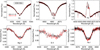 |
Fig. 1 Line profiles of various lines observed in the HARPSpol spectra of HD 61954 obtained on two different nights. |
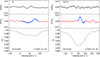 |
Fig. 2 LSD analysis results, Stokes I, V, and diagnostic null N spectra, obtained for different line masks using HARPSpol observations of HD 61954 on two different nights in January 2024. The identified Zeeman signatures are presented in a blue colour. |
3.1 NGC 2437
HD61954 (=BD–14 2102): with only 14 entries in the SIM-BAD database, not much is known about this target with a spectral type of B9 listed in Cannon & Pickering (1993). According to Rain et al. (2021), it is a BSS in the OC NGC 2437 with a probability of 0.8. In Fig. 1 we present line profiles of various lines observed in the HARPSpol spectra obtained on two different nights. The appearance of emission in the hydrogen lines suggests that this target belongs to the class of Be-shell stars (Rivinius et al. 2006). Although we do not detect a radial velocity change between the two different observing epochs, small changes in the line profile shapes of Mg II 4481 and He I 6678 still may indicate binarity or a spotted surface. Furthermore, with just two observations of this target, we cannot exclude the presence of pulsational variability as Be stars are known to exhibit non-radial pulsations causing variations in light and spectral line profiles. The reason for the detection of small changes in line profiles can be determined only after spectropolarimetric monitoring is carried out over the rotation period, which is currently unknown.
Our LSD analysis of observations acquired on two different nights is presented in Table 2 and Fig. 2. The LSD analysis of the first spectropolarimetric observation on January 2 2024 using a mask containing Si lines shows a marginal detection of a mean longitudinal magnetic field, 〈Bz〉 = −420 ± 95 G, with FAP = 7.4 × 10⁻⁵ .For the second observation on January 6, using He, C, and Si lines we obtained a definite detection of 〈Bz〉 = 156 ± 46 G with FAP = 2.8 × 10⁻⁶. Importantly, for the observations on the second epoch we observe in Fig. 2 that the detected Zeeman signature does not extend over the full LSD Stokes I profile. This is explained by the fact that magnetic A- and B-type stars are characterised by an inhomogeneous chemical abundance distribution that is non-uniform and non-symmetric with respect to the rotation axis but that shows some symmetry between the topology of the magnetic field and the chemical spot distribution. Due to the presence of a rotationally modulated appearance of chemical spots in the observed spectra, the corresponding Zeeman signatures usually do not extend over the full LSD Stokes I profile. The diagnostic null (N) spectrum for the first observation shows a distinct feature, which could be caused by pulsations, but the FAP value calculated for this spectrum indicates non-detection.
HD62000 (=ALS 661): this target with spectral type A1 II/III is listed in the catalogue of Rain et al. (2021) as a YSS in NGC 2437 at a membership probability of 1.0. Our inspection of the HARPSpol spectrum recorded on January 2 2024 suggests a shell phenomenon revealing a very unusual appearance of metal line profiles: hydrogen and Fe lines exhibit shell-like line profiles sometimes observed in λ Boo stars and the Ti line profiles appear broad and split. The corresponding line profiles are displayed in Fig. 3. Given the very different appearance of the line profiles belonging to different elements, we used in our LSD analysis two different masks, one containing exclusively Fe lines and another one with Ti lines. The results of our analysis are presented in Table 2 and in Fig. 4. The LSD analysis carried out using Fe lines shows a definite detection 〈Bz〉 = −4 ± 29 G with FAP < 10−10. For the Ti mask we obtained 〈Bz〉 = −111 ± 43 G with FAP = 1.4 × 10⁻⁵.
HD 62329 (=BD–14 2166): with only seven entries in the SIM-BAD database, not much is known about this target with the spectral type A2 listed in Cannon & Pickering (1993) It is reported to be a YSS in NGC 2437 with a membership probability of 0.5 in the catalogue of Rain et al. (2021). For both observations, acquired on January 3 and 5 2024, we used a line mask containing Fe lines. As is reported in Table 2, we achieve for the first observation a marginal detection of 〈Bz〉 = 114 ± 87 G with FAP = 9.3 × 10⁻⁵ for the night of January 3 and a definite detection 〈Bz〉 = −582 ± 86 G with FAP = 1.5 × 10⁻⁶ for the night of January 5. The LSD Stokes I profiles clearly show that HD 62329 is a double-lined spectroscopic binary with a magnetic component. The LSD Stokes I, V, and diagnostic null N profiles obtained using HARPSpol observations obtained on January 3 and 5 2024 are presented in Fig. 5.
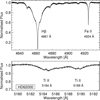 |
Fig. 3 Line profiles belonging to different elements with very unusual shapes observed in the HARPSpol spectrum of HD 62000 recorded on January 2 2024. |
3.2 NGC 2447
HD62775 (=CD–23 6092): this target with spectral type A2 III/IV is listed in the catalogue of Rain et al. (2021) as a BSS in NGC 2447 at a membership probability of 0.9. It has not been well studied in the past, with only 12 entries in the SIMBAD database. We observed this target on two different nights, on January 3 and January 6 2024. The results of the LSD analysis are presented in Table 2. The LSD Stokes I, V, and diagnostic null N profiles obtained on January 3 and 6 2024 are presented in Fig. 6 and indicate that this target is probably a triple system. In the same figure on the right side we show the overplotted LSD Stokes I profiles produced for both observing epochs using a line mask with the cleanest Fe II lines. We do not detect significant spectral changes in either the radial velocities or the line shapes, apart from a very small change in the depth of the central component. Clearly, more observations are necessary to firmly confirm the presence of companions.
We achieved on the first observing night a marginal detection of the mean longitudinal magnetic field using Fe lines with 〈Bz〉 = 631 ± 110 G and FAP = 6.4 × 10⁻⁵ and a definite detection with FAP = 1.1 × 10⁻⁷ using Fe and Ti lines for the second observation obtained at a higher S/N. We were not able to estimate the strength of the mean longitudinal magnetic field because it is not obvious whether the detected Zeeman signature indeed belongs to the central component and is shifted from the line profile centre due to the presence of a surface FeTi spot.
3.3 Trumpler9
HD 65032 (=CD–25 5284): with only ten entries in the SIM-BAD database, this target with spectral type A2/3 III has been poorly studied in the past. It is listed as a BSS in the OC Trumpler9 with a probability of 0.9 by Rain et al. (2021). However, given the Gaia G magnitude of 8.249 and the colour BP – RP of 0.497 (Gaia Collaboration 2022), HD 65032 is clearly not a BSS but a YSS. This result is subject to verification because the impact of the presence of a magnetic field and the extent to which this influences the Gaia colours has not been investigated yet. Two HARPSpol observations of this star have been acquired on January 3 and 4 2024. As is shown in Fig. 7, the observation from January 4 indicates the presence of a companion. Our LSD analysis shows the marginal presence of a mean longitudinal magnetic field in the first observation with FAP = 0.5 × 10⁻⁵ using a line mask containing Fe lines. The detected Zeeman signature is shifted from the line centre to the red wing and it is not clear whether this shift could be caused by the presence of a chemical spot with Fe overabundance. A definite detection of a Zeeman signature has been achieved for the second observing night using a mask with Si and Cr lines with FAP = 7.8 × 10⁻⁸. In this observing epoch we see a small change in radial velocity of the order of 1 km s−1 suggesting a physical bound between the components. The detected Zeeman signature is shifted to the blue wing. Obviously, more observations are necessary to be able to produce surface element maps and to measure the magnetic field using spectral lines of inhomogeneously distributed elements separately. Also a possible contamination by foreground or background cluster members should be investigated. The results of our LSD analysis are presented in Table 2 and in Fig. 7.
3.4 NGC 3114
The cluster NGC 3114 is located in a crowded field projected onto the Carina complex and is reported to be rich in peculiar Ap and Bp stars (Levato & Malaroda 1975). On the other hand, such a location of NGC 3114 complicates the separation of cluster members from field stars. We have selected HD 87222 and HD 87266 for spectropolarimetric observations because Ahumada & Lapasset (1995) identified both stars as blue straggler candidates and because González & Lapasset (2001) reported that they are also the bluest in the turn-off zone.
HD87222 (=ALS 18018): a membership probability of 99% was reported for HD 87222 by González & Lapasset (2001), who also determined a spectral type B3 V by comparison with spectra of standard stars obtained with the same instrument. This spectral classification is in good agreement with the classification B3 IV reported by Aidelman et al. (2015), who utilised the spectrophotometric Barbier-Chalonge-Divan (BCD) method (Barbier & Chalonge 1941; Chalonge & Divan 1952) as a tool to evaluate accurate physical parameters for cluster members. HD 87222 is listed in the catalogue of peculiar stars by Renson & Manfroid (2009). The authors assumed that it is chemically peculiar based on the work of Levato & Malaroda (1975), but information about the presence of a magnetic field is still missing. The comparison of our high-resolution HARPSpol Stokes I spectra obtained for HD 87222 and HD 87266 reveals strong similarity, indicating only slightly different atmospheric parameters. This is in agreement with the results reported for both stars by Aidelman et al. (2015). Our spectral classification of HD 87222, following the criteria discussed by Negueruela et al. (2024), suggests that the spectral type is close to B3, similar to the spectral type listed in the SIMBAD database. To assess the chemically peculiar nature of HD 87222, we compared our HARPSpol spectrum with spectra of a few magnetic He-rich stars and non-magnetic stars of similar spectral type and projected rotational velocity, acquired in the framework of the ESO program 191.D-0255. We notice that all spectral lines identifiable in the B2 IV-V primary of the SB2 system HD 136504 (=ϵ Lup), detected as magnetic by Hubrig et al. (2009), appear at a similar strength in the spectra of HD 87222 and HD 87266. However, a comparison with the non-magnetic stars also does not show any clear evidence of differences in the spectral appearance. According to Ghazaryan et al. (2019), the only element showing solar or anomalously strong abundance in He-rich stars is He, whereas other elements can either be underabundant or overabundant. However, He is usually inhomogeneously distributed over the stellar surface with a stronger concentration at the magnetic poles (e.g. Hubrig et al. 2017b). As HD 87222 has been observed only once, we are not able to assess its spectral variability. Using the line mask with He and C lines for the LSD analysis of HD 87222, we achieve a marginal detection of a mean longitudinal magnetic field 〈Bz〉 = −133 ± 7 G, with an FAP value of 8.8 × 10⁻⁴. The results of our analysis are presented in Table 2 and in Fig. 8 on the left side.
HD 87266 (=CD–59 2755): a spectral classification B2.5 V for this target was reported by González & Lapasset (2001). Using the BCD method, Aidelman et al. (2015) reported a spectral type of B2 III. Our spectral classification following the criteria discussed by Negueruela et al. (2024) indicates that the spectral type is closer to B2.5. HD 87266 is mentioned as a BSS in the catalogue of Ahumada & Lapasset (1995) and, similar to HD 87222, is listed in the Renson & Manfroid (2009) catalogue as a peculiar star, again without mentioning a magnetic field. Similar to HD 87222, HD 87266 has been observed only once. Thus, we are not able to assess its spectral variability. HD 87266 belongs to NGC 3114 with a probability of 0.9 (Cantat-Gaudin et al. 2020). Although previous spectropolarimetric observations failed to detect a magnetic field in HD 87266 (e.g. Bagnulo et al. 2006), our HARPSpol observation shows a definite longitudinal magnetic field detection: 〈Bz〉 = 110 ± 23 G, with an FAP value of 1.0 × 10⁻⁵, if we employ a line mask containing C, N, Ne, and Si lines. The shifted location of the observed Zeeman signature in the LSD Stokes V spectrum probably indicates that there are surface chemical spots or that HD 87266 is a close binary with a magnetic component. The results of our analysis are presented in Table 2 and in Fig. 8 on the right side.
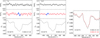 |
Fig. 6 As Figure 2, but for HD 62775. On the right side we show overplotted LSD Stokes I profiles produced for both observing epochs using a line mask with the cleanest Fe II lines. |
3.5 IC 2944
HD101545A (=ALS 2448): this is the primary in the O9.5Ib+B0.5Iab visual binary with a component separation of 2.6″ (Sana et al. 2014) and has been identified as a BSS in IC 2944 in the work of Ahumada & Lapasset (2007). However, as was mentioned above, this cluster was not included in the catalogue of Rain et al. (2021), probably because of limitations set by photometric calibration errors for bright targets. According to Baumgardt et al. (2000), the membership probability for HD 101545 is 0.83. The study of Sana et al. (2011) indicates that the best spectral type estimate for this system yielded O9.5III/I and O9.7 III/I for the A and B components, but given the stars’ brightness, the authors finally considered both stars to be giants and not supergiants. No magnetic field measurements for this system have been carried out in the past. We observed HD 101545 A with HARPSpol only once on January 2 2024 and report here the definite detection of a mean longitudinal magnetic field. In our analysis we employed two different masks, one mask containing He, N, O, and Si lines and one mask containing exclusively He lines. For the mask with the He, N, O, and Si lines we obtain a marginal detection 〈Bz〉 = 69 ± 17 G with FAP = 2.1 × 10⁻⁵. For the mask with the He lines, we obtain a definite detection of the mean longitudinal field, 〈Bz〉 = 82 ± 16 G, with FAP = 4.3 × 10⁻⁶. The results of our analysis are presented in Table 2 and in Fig. 9.
4 Discussion
In this work, we present the first observational evidence that BSSs and YSSs possess magnetic fields of the order of a hundred Gauss. By analysing the polarized spectra of the sample targets using the LSD technique, we extracted Zeeman signatures that revealed definite detections of the presence of a magnetic field in four BSSs and three YSSs. For the BSS HD 87222, only a marginal detection has been achieved. Importantly, the detection of the presence of a magnetic field in YSSs with a field strength comparable to that observed in BSSs indicates that magnetic fields created during the binary interaction process probably remain stable on evolutionary timescales.
For all targets apart from HD 87266, the magnetic field measurements have been carried out for the first time. The measured mean longitudinal magnetic field strength for most targets is of the order of a hundred to a few hundred Gauss. Only for the massive target HD 101545 is it below 100 G. However, our targets have been observed only once or twice. As the longitudinal magnetic field is strongly dependent on the viewing angle between the field orientation and the observer and is modulated as the star rotates, spectropolarimetric monitoring over the rotation periods of our targets is necessary to obtain trustworthy statistics on their magnetic field geometries and the distribution of the field strengths. Importantly, it is the first time that, using high-resolution spectropolarimetric observations, a definite detection of a magnetic field has been achieved in a Be-shell star, HD 61954. The only other magnetic Be-shell star with a definite detection, HD 56014, hosting a longitudinal magnetic field 〈Bz〉 = −146 ± 32 G, was reported by Hubrig et al. (2007). In their study, the authors used low-resolution observations with the ESO multi-mode instrument FORS1 installed at the 8 m Kueyen telescope.
Apart from HD 101545, which is a known visual binary, we have discovered that our targets, HD 62329 and HD 65032, appear to be members of binary systems and that HD 62775 is possibly a member in a triple system. Because the amplitudes of the Zeeman signatures are lower in multiple systems in comparison to the size of these features in single stars (e.g. Hubrig et al. 2023), their magnetic fields can even be stronger. The multiplicity of the three targets mentioned above has not previously been mentioned in the literature. Unfortunately, only single observations have been obtained for the remaining targets: HD 62000, which has a very unusual spectral appearance exhibiting shell-like line profiles, HD 87222, and HD 87266, all of which appear as single stars in our spectra. It is not clear whether they are merger products or we are unable to detect their companions due to the small number of observations. The presence of a companion can certainly remain undetected for some targets when only single or very few observations are available or when spectropolarimetric observations are obtained with low S/N. Still, our detection of a few binary and multiple systems supports the theoretical scenario that magnetic fields may be generated by strong binary interactions. These results are also in agreement with the results of Hubrig et al. (2023), who demonstrated that magnetic fields are frequently observed in binary and multiple systems with O- and B-type components.
Importantly, magnetic A and late-B type stars, generally called Ap and Bp stars, are frequently severely enhanced in most of the rare earth elements (REEs). Rare earth elements are usually concentrated in surface spots close to the magnetic field poles. For the majority of Ap and Bp stars, the spectral lines Nd III 6145.1 and Pr III 6195.6 appear especially prominent in their spectra. In Fig. 10 we present the spectra of our targets in the spectral regions containing these lines. In the bottom of the two panels, each for a different spectral wavelength region, we display for comparison the spectrum of the typical Ap star γ Equ. While the very weak Nd III 6145.1 line is detectable in the spectra of HD 65032 and HD 62329, the presence of the Pr III 6195.6 line is detectable only in HD 65032. Since the visibility of the rare earth spots is changing over the course of the stellar rotation, additional observations over different rotational phases are necessary to prove that the other targets indeed do not show similar REE enhancement. It is also not clear on which timescales the development of the element overabundance due to the atomic radiative diffusion process involving the interplay of gravity and radiation pressure takes place.
Ap and late Bp stars are also very rarely members of close binary and multiple systems, but frequently members of wide binaries (e.g. Mathys 2017). Among a sample of 113 Ap stars studied by Carrier et al. (2002), at least 34 binaries were found. After correcting for detection biases, the authors estimated an Ap binary fraction of 43%. Mathys (2017) confirmed 21 of the 84 Ap stars to be binaries and reported that the shortest periods among them were Porb = 3.37 d for HD 142070 and Porb = 8.03 d for HD 65339. The Porb of the remaining binaries were all > 18 d, and half had Porb > 1000 d. This study is raising the important question of what happened to the short orbital period Ap stars, and whether it is possible that BSSs, which are usually considered as coalesced stars or rejuvenated companions in binary systems due to mass transfer, present the missing short period binaries among the Ap stars. It is of interest that nearly all main-sequence late B-type stars in close binaries with Porb ≤ 20 d show HgMn peculiarities and possess only weak magnetic fields (e.g. Hubrig & Mathys 1995; Hubrig et al. 2012), whereas A type stars in close binaries frequently show a weak metal overabundance and are correspondingly classified as Am stars (e.g. Kitamura & Kondo 1978).
Although the targets in our sample belong to OCs of very different ages and metallicities (see Table 1), we do not detect any relationship between the presence or strength of the detected magnetic field and the cluster characteristics. Interestingly, magnetic fields have recently also been detected in massive stars in the low-metallicity environment of the Magellanic Clouds (Hubrig et al. 2024), indicating that the impact of the lower-metallicity environment on the occurrence and strength of stellar magnetic fields in massive stars is low. On the other hand, since the number of the studied BSSs and YSSs is small, spectropolarimetric observations of a representative sample of BSSs are necessary to provide more reliable results about possible correlations with cluster parameters.
Considering the catalogue of Rain et al. (2021), only 13 BSSs with mV < 10 are observable from La Silla, i.e. with declinations below +20°, and have ages less than 700 Myr. Among the YSSs, only six targets fulfil these criteria. Follow-up studies of the presence of a magnetic field in a larger sample of BSSs and YSSs will be worthwhile to provide the crucial information necessary to test predictions of existing theories and place more stringent constraints on the origin of magnetic fields in intermediate-mass and massive stars.
 |
Fig. 10 Spectra of our late-B and A-type targets in the spectral regions containing the spectral lines Nd III 6145.1 and Pr III 6195.6. For comparison, we show in the bottom the spectrum of the typical Ap star γ Equ. |
Acknowledgements
We appreciate the constructive comments by the referee and thank Rahul Jayaraman for helpful discussions. This work is based on observations made with ESO telescopes at the La Silla Paranal Observatory under programmes ID 0112.D-0091(A) and ID 191.D-0255 publicly available via the ESO Archive.
References
- Abt, H. A. 1985, ApJ, 294, L103 [Google Scholar]
- Ahumada, J., & Lapasset, E. 1995, A&AS, 109, 375 [NASA ADS] [Google Scholar]
- Ahumada, J. A., & Lapasset, E. 2007, A&A, 463, 789 [NASA ADS] [CrossRef] [EDP Sciences] [Google Scholar]
- Aidelman, Y., Cidale, L. S., Zorec, J., & Panei, J. A. 2015, A&A, 577, A45 [NASA ADS] [CrossRef] [EDP Sciences] [Google Scholar]
- Bagnulo, S., Landstreet, J. D., Mason, E., et al. 2006, A&A, 450, 777 [NASA ADS] [CrossRef] [EDP Sciences] [Google Scholar]
- Barbier, D., & Chalonge, D. 1941, Annales d’Astrophysique, 4, 30 [Google Scholar]
- Baume, G., Rodriguez, M. J., Corti, M. A., Carraro, G., & Panei, J. A. 2014, MNRAS, 443, 411 [NASA ADS] [CrossRef] [Google Scholar]
- Baumgardt, H., Dettbarn, C., & Wielen, R. 2000, A&AS, 146, 251 [NASA ADS] [CrossRef] [EDP Sciences] [Google Scholar]
- Cannon, A. J., & Pickering, E. C. 1993, VizieR Online Data Catalog: Henry Draper Catalogue and Extension (Cannon+ 1918-1924; ADC 1989), VizieR On-line Data Catalog: III/135A [Google Scholar]
- Cantat-Gaudin, T., Anders, F., Castro-Ginard, A., et al. 2020, A&A, 640, A1 [NASA ADS] [CrossRef] [EDP Sciences] [Google Scholar]
- Carrier, F., North, P., Udry, S., & Babel, J. 2002, A&A, 394, 151 [NASA ADS] [CrossRef] [EDP Sciences] [Google Scholar]
- Chalonge, D., & Divan, L. 1952, Annales d’Astrophysique, 15, 201 [Google Scholar]
- Dias, W. S., Monteiro, H., Moitinho, A., et al. 2021, MNRAS, 504, 356 [NASA ADS] [CrossRef] [Google Scholar]
- Donati, J. F., Semel, M., & Rees, D. E. 1992, A&A, 265, 669 [Google Scholar]
- Donati, J. F., Semel, M., Carter, B. D., Rees, D. E., & Collier Cameron, A. 1997, MNRAS, 291, 658 [Google Scholar]
- Ferrario, L., Pringle, J. E., Tout, C. A., & Wickramasinghe, D. T. 2009, MNRAS, 400, L71 [NASA ADS] [CrossRef] [Google Scholar]
- Frost, A. J., Sana, H., Mahy, L., et al. 2024, Science, 384, 214 [NASA ADS] [CrossRef] [Google Scholar]
- Gaia Collaboration 2022, VizieR Online Data Catalog: Gaia DR3 Part 1. Main source (Gaia Collaboration, 2022), VizieR On-line Data Catalog: I/355 [Google Scholar]
- Ghazaryan, S., Alecian, G., & Hakobyan, A. A. 2019, MNRAS, 487, 5922 [NASA ADS] [CrossRef] [Google Scholar]
- González, J. F., & Lapasset, E. 2001, AJ, 121, 2657 [CrossRef] [Google Scholar]
- Hubrig, S., & Mathys, G. 1995, Comments Astrophys., 18, 167 [Google Scholar]
- Hubrig, S., Yudin, R. V., Pogodin, M., Schöller, M., & Peters, G. J. 2007, Astron. Nachr., 328, 1133 [Google Scholar]
- Hubrig, S., Briquet, M., Morel, T., et al. 2008, A&A, 488, 287 [NASA ADS] [CrossRef] [EDP Sciences] [Google Scholar]
- Hubrig, S., Briquet, M., De Cat, P., et al. 2009, Astron. Nachr., 330, 317 [NASA ADS] [CrossRef] [Google Scholar]
- Hubrig, S., González, J. F., Ilyin, I., et al. 2012, A&A, 547, A90 [NASA ADS] [CrossRef] [EDP Sciences] [Google Scholar]
- Hubrig, S., Ilyin, I., Schöller, M., & Lo Curto, G. 2013, Astron. Nachr., 334, 1093 [NASA ADS] [CrossRef] [Google Scholar]
- Hubrig, S., Mikulášek, Z., Kholtygin, A. F., et al. 2017a, MNRAS, 472, 400 [Google Scholar]
- Hubrig, S., Przybilla, N., Korhonen, H., et al. 2017b, MNRAS, 471, 1543 [NASA ADS] [CrossRef] [Google Scholar]
- Hubrig, S., Järvinen, S. P., Madej, J., et al. 2018, MNRAS, 477, 3791 [NASA ADS] [Google Scholar]
- Hubrig, S., Järvinen, S. P., Ilyin, I., & Schöller, M. 2022, ApJ, 933, 27 [CrossRef] [Google Scholar]
- Hubrig, S., Järvinen, S. P., Ilyin, I., Schöller, M., & Jayaraman, R. 2023, MNRAS, 521, 6228 [NASA ADS] [CrossRef] [Google Scholar]
- Hubrig, S., Schöller, M., Järvinen, S. P., et al. 2024, A&A, 686, L4 [NASA ADS] [CrossRef] [EDP Sciences] [Google Scholar]
- Jadhav, V. V., & Subramaniam, A. 2021, MNRAS, 507, 1699 [NASA ADS] [CrossRef] [Google Scholar]
- Järvinen, S. P., Hubrig, S., Mathys, G., et al. 2020, MNRAS, 499, 2734 [CrossRef] [Google Scholar]
- Kharchenko, N. V., Piskunov, A. E., Hubrig, S., & Schöller, M. 2022, MNRAS, 515, 3094 [Google Scholar]
- Kitamura, M., & Kondo, M. 1978, Ap&SS, 56, 341 [Google Scholar]
- Kupka, F., Dubernet, M. L., & VAMDC Collaboration 2011, Balt. Astron., 20, 503 [Google Scholar]
- Levato, H., & Malaroda, S. 1975, AJ, 80, 807 [Google Scholar]
- Lloyd, C., Stickland, D., & Walborn, N. R. 1995, PASP, 107, 1030 [Google Scholar]
- Maitzen, H. M., Seggewiss, W., & Tueg, H. 1981, A&A, 96, 174 [Google Scholar]
- Mathys, G. 1988, The Messenger, 53, 39 [Google Scholar]
- Mathys, G. 2017, A&A, 601, A14 [NASA ADS] [CrossRef] [EDP Sciences] [Google Scholar]
- McCrea, W. H. 1964, MNRAS, 128, 147 [Google Scholar]
- Moss, D. 2003, A&A, 403, 693 [NASA ADS] [CrossRef] [EDP Sciences] [Google Scholar]
- Naoz, S., & Fabrycky, D. C. 2014, ApJ, 793, 137 [Google Scholar]
- Negueruela, I., Simón-Díaz, S., de Burgos, A., Casasbuenas, A., & Beck, P. G. 2024, A&A, 690, A176 [NASA ADS] [CrossRef] [EDP Sciences] [Google Scholar]
- Nieva, M.-F., & Przybilla, N. 2014, A&A, 566, A7 [NASA ADS] [CrossRef] [EDP Sciences] [Google Scholar]
- Paunzen, E., Netopil, M., Maitzen, H. M., et al. 2014, A&A, 564, A42 [NASA ADS] [CrossRef] [EDP Sciences] [Google Scholar]
- Pendl, E. S., & Seggewiss, W. 1976, IAU Colloq., 32, 357 [Google Scholar]
- Rain, M. J., Ahumada, J. A., & Carraro, G. 2021, A&A, 650, A67 [NASA ADS] [CrossRef] [EDP Sciences] [Google Scholar]
- Renson, P., & Manfroid, J. 2009, A&A, 498, 961 [NASA ADS] [CrossRef] [EDP Sciences] [Google Scholar]
- Rice, J. B., Wehlau, W. H., & Holmgren, D. E. 1997, A&A, 326, 988 [NASA ADS] [Google Scholar]
- Rivinius, T., Štefl, S., & Baade, D. 2006, A&A, 459, 137 [NASA ADS] [CrossRef] [EDP Sciences] [Google Scholar]
- Sana, H., James, G., & Gosset, E. 2011, MNRAS, 416, 817 [Google Scholar]
- Sana, H., Le Bouquin, J. B., Lacour, S., et al. 2014, ApJS, 215, 15 [Google Scholar]
- Schneider, F. R. N., Ohlmann, S. T., Podsiadlowski, P., et al. 2019, Nature, 574, 211 [Google Scholar]
- Tout, C. A., Wickramasinghe, D. T., Liebert, J., Ferrario, L., & Pringle, J. E. 2008, MNRAS, 387, 897 [NASA ADS] [CrossRef] [Google Scholar]
- Tutukov, A. V., & Fedorova, A. V. 2010, Astron. Rep., 54, 156 [CrossRef] [Google Scholar]
- Walborn, N. R. 1979, PASP, 91, 442 [Google Scholar]
- Wang, C., & Ryu, T. 2024, arXiv e-prints [arXiv:2410.10314] [Google Scholar]
- Wang, C., Langer, N., Schootemeijer, A., et al. 2020, ApJ, 888, L12 [NASA ADS] [CrossRef] [Google Scholar]
- Wickramasinghe, D. T., Tout, C. A., & Ferrario, L. 2014, MNRAS, 437, 675 [NASA ADS] [CrossRef] [Google Scholar]
All Tables
Logbook of the observations and the results of the magnetic field measurements for all targets in our sample.
All Figures
|
Fig. 1 Line profiles of various lines observed in the HARPSpol spectra of HD 61954 obtained on two different nights. |
| In the text | |
|
Fig. 2 LSD analysis results, Stokes I, V, and diagnostic null N spectra, obtained for different line masks using HARPSpol observations of HD 61954 on two different nights in January 2024. The identified Zeeman signatures are presented in a blue colour. |
| In the text | |
|
Fig. 3 Line profiles belonging to different elements with very unusual shapes observed in the HARPSpol spectrum of HD 62000 recorded on January 2 2024. |
| In the text | |
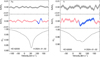 |
Fig. 4 As Figure 2, but for HD 62000. |
| In the text | |
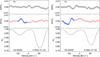 |
Fig. 5 As Figure 2, but for HD 62329. |
| In the text | |
|
Fig. 6 As Figure 2, but for HD 62775. On the right side we show overplotted LSD Stokes I profiles produced for both observing epochs using a line mask with the cleanest Fe II lines. |
| In the text | |
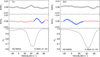 |
Fig. 7 As Figure 2, but for HD 65032. |
| In the text | |
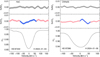 |
Fig. 8 Left: as Figure 2, but for HD 87222. Right: as Figure 2, but for HD 87266. |
| In the text | |
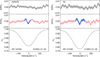 |
Fig. 9 As Figure 2, but for HD 101545 A. |
| In the text | |
|
Fig. 10 Spectra of our late-B and A-type targets in the spectral regions containing the spectral lines Nd III 6145.1 and Pr III 6195.6. For comparison, we show in the bottom the spectrum of the typical Ap star γ Equ. |
| In the text | |
Current usage metrics show cumulative count of Article Views (full-text article views including HTML views, PDF and ePub downloads, according to the available data) and Abstracts Views on Vision4Press platform.
Data correspond to usage on the plateform after 2015. The current usage metrics is available 48-96 hours after online publication and is updated daily on week days.
Initial download of the metrics may take a while.