


Fig. 1
Download original image
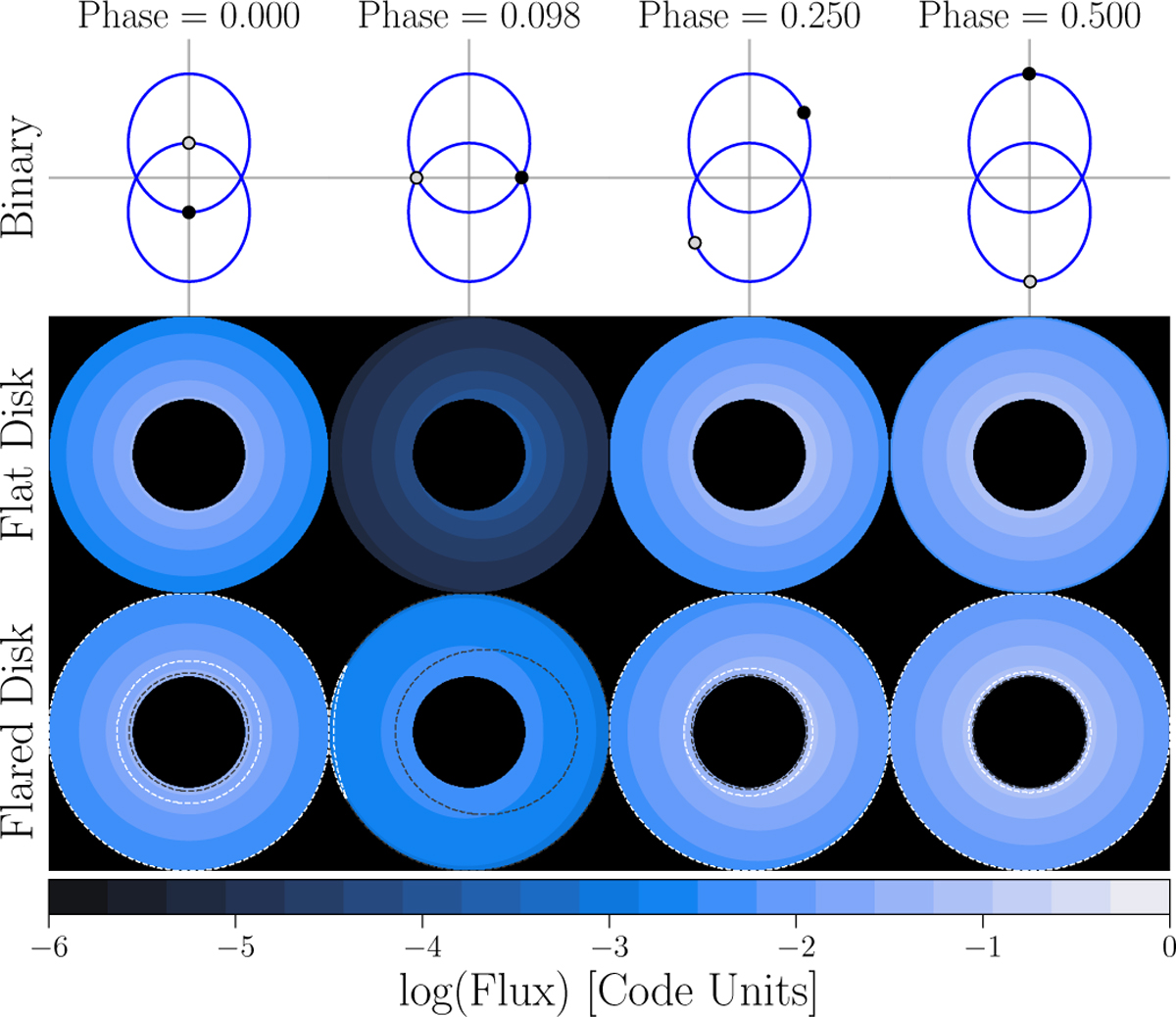
Illumination of the disk at different points of the binary orbit, for an equal mass central binary of e = 0.5. Each column shows the position of the binary stars (top), along with the illuminated flux received by a razor-thin disk (middle) and a flared disk (bottom). For the flared disk model, dashed lines along the disk face indicate the regions where the incoming starlight would be shadowed due to the presence of a puffed inner rim; gray and white dashed lines show shadowed regions for puff heights of 1.5hin and 2.0hin, respectively. Note that, for the second column, the stars are shown with a small vertical displacement to show asymmetric lighting effects close to plane crossing.
Current usage metrics show cumulative count of Article Views (full-text article views including HTML views, PDF and ePub downloads, according to the available data) and Abstracts Views on Vision4Press platform.
Data correspond to usage on the plateform after 2015. The current usage metrics is available 48-96 hours after online publication and is updated daily on week days.
Initial download of the metrics may take a while.