


Fig. 4.
Download original image
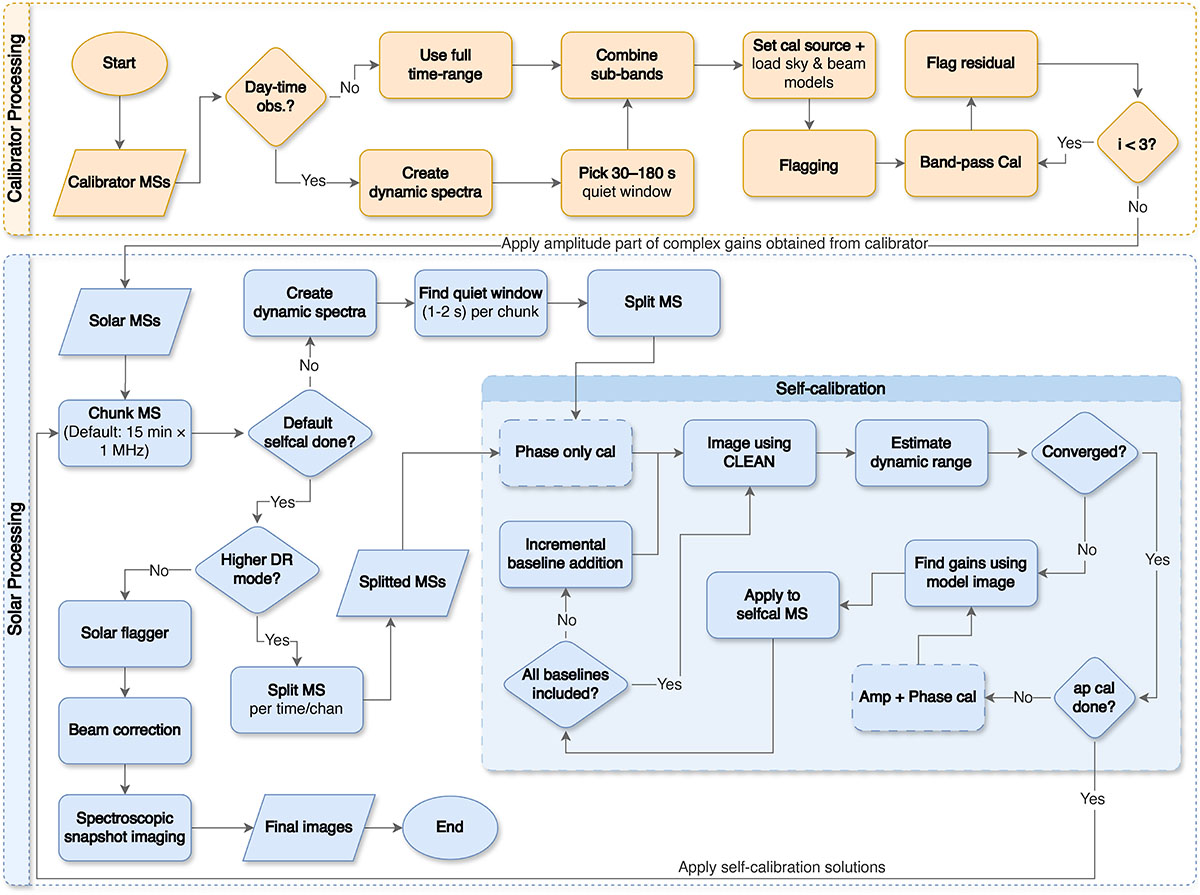
Schematic overview of SIMPL. The flow is divided into three main sections: calibrator processing (orange), solar processing (light blue), and the self-calibration sub-module (darker blue). Calibrator processing identifies an optimal quiet time range for daytime observations, derives antenna gain solutions, and applies only the amplitude part of the gains to solar data. Solar processing operates on time–frequency chunks of the solar measurement set, invoking the self-calibration block to iteratively refine phase (and later amplitude) solutions. An optional higher dynamic range mode estimates differential self-calibration solutions per time and frequency slice. Final steps include primary beam correction and generation of spectroscopic snapshot images. Rounded rectangles denote processing steps, diamonds represent decision points, and dashed rounded rectangles indicate iterative self-calibration loops.
Current usage metrics show cumulative count of Article Views (full-text article views including HTML views, PDF and ePub downloads, according to the available data) and Abstracts Views on Vision4Press platform.
Data correspond to usage on the plateform after 2015. The current usage metrics is available 48-96 hours after online publication and is updated daily on week days.
Initial download of the metrics may take a while.