


Fig. 6.
Download original image
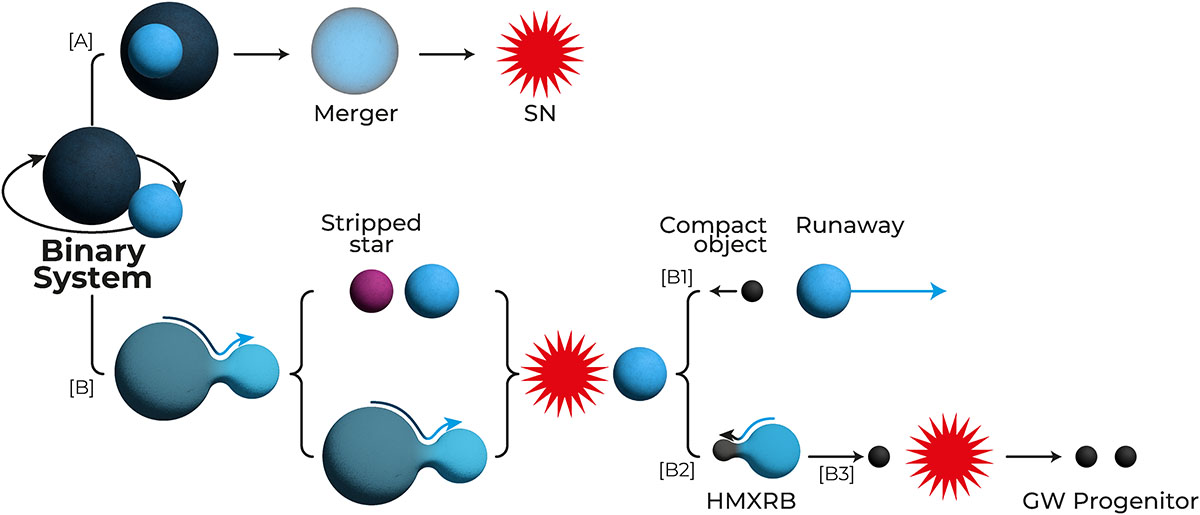
Schematic evolutionary paths of a massive binary system. Initially, if the two stars orbit close enough to each other, they may eventually merge, forming a single, more massive star (top path). Alternatively, the more massive star may explode as a supernova (SN), potentially ejecting the companion as a high-velocity runaway star or resulting in a system with a compact object. The companion may later undergo its own SN event, creating a double compact-object system that could eventually merge and emit gravitational waves (bottom paths).
Current usage metrics show cumulative count of Article Views (full-text article views including HTML views, PDF and ePub downloads, according to the available data) and Abstracts Views on Vision4Press platform.
Data correspond to usage on the plateform after 2015. The current usage metrics is available 48-96 hours after online publication and is updated daily on week days.
Initial download of the metrics may take a while.