


Fig. B.2.
Download original image
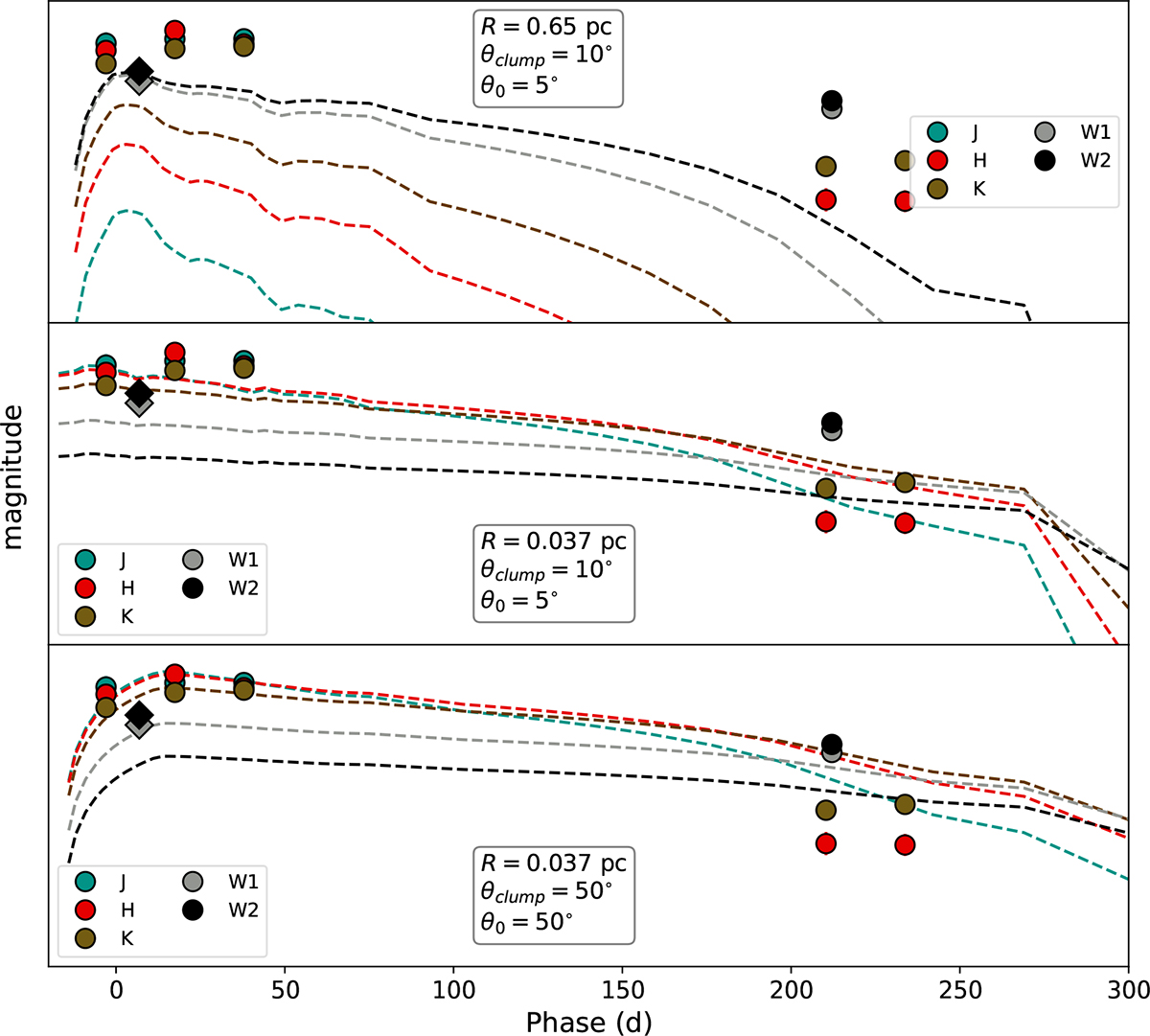
Top: IR echo model for a small clump of distant dust. This dust can produce the cool dust component observed at 7 d, and declines rapidly enough that it makes no observable contribution to the observed IR SED at later epochs. Middle: IR echo model for a small clump of nearby dust, close to the line of sight. Dust that can reproduce the pre-peak NIR data does not well reproduce the other early NIR data, or the NIR data at ∼200 d. Bottom: IR echo model for a larger clump of nearby dust, further from the line of sight. The NIR data around peak is well reproduced by this configuration, but the IR echo is much too bright to fit the data at > 200 d.
Current usage metrics show cumulative count of Article Views (full-text article views including HTML views, PDF and ePub downloads, according to the available data) and Abstracts Views on Vision4Press platform.
Data correspond to usage on the plateform after 2015. The current usage metrics is available 48-96 hours after online publication and is updated daily on week days.
Initial download of the metrics may take a while.