


| Issue |
A&A
Volume 703, November 2025
|
|
|---|---|---|
| Article Number | A133 | |
| Number of page(s) | 19 | |
| Section | Stellar structure and evolution | |
| DOI | https://doi.org/10.1051/0004-6361/202555492 | |
| Published online | 13 November 2025 | |
Probing accretion and stellar properties in the Orion Nebula with VLT/X-Shooter⋆
1
European Southern Observatory, Karl-Schwarzschild-Strasse 2, 85748 Garching bei München, Germany
2
Institute of Theoretical Physics and Astrophysics, Masaryk University, Kotlářská 2, Brno 611 37, Czech Republic
3
University Observatory, Faculty of Physics, Ludwig-Maximilians-Universität München, Scheinerstr 1, D-81679 Munich, Germany
4
Exzellenzcluster “Origins”, Boltzmannstr. 2, D-85748 Garching, Germany
5
Max-Planck-Institut für Extraterrestrische Physik, Giessenbachstra.e 1, 85748 Garching, Germany
6
School of Cosmic Physics, Dublin Institute for Advanced Studies, 31 Fitzwilliam Place, Dublin 2, Ireland
7
Space Research Institute, Austrian Academy of Sciences, Schmiedlstr. 6, 8042 Graz, Austria
⋆⋆ Corresponding author: This email address is being protected from spambots. You need JavaScript enabled to view it.
Received:
12
May
2025
Accepted:
6
September
2025
Abstract
Context. Multiple photometric studies have reported the presence of seemingly older accreting pre-main-sequence (PMS) stars in optical colour-magnitude diagrams (CMDs). These sources appear bluer than the majority of cluster members, leading to older isochronal age estimates.
Aims. We investigated this phenomenon in the Orion Nebula, which harbours a subset of stars that show infrared excess detected by Spitzer (which indicates the presence of protoplanetary discs) and Hα excess emission (which traces ongoing mass accretion), yet seem to have significantly older isochronal ages (≳10 Myr) than the bulk population (∼1−3 Myr) in the r, (r − i) CMD. This raises the question of whether these stars are truly older or whether their photometric properties are affected by observational biases or other physical processes.
Methods. We performed a detailed spectroscopic analysis of 40 Orion Nebula stars using VLT/X-Shooter, covering CMD-based isochronal ages from 1 to over 30 Myr. We derived extinction values, stellar properties, and accretion parameters by modelling the ultraviolet excess emission via a multi-component fitting procedure. The sample spans spectral types from M4.5 up to K6, and masses in the range ∼0.1−0.8 M⊙.
Results. We demonstrate that when extinction and, more importantly, accretion effects are accurately constrained, the stellar luminosity and effective temperature of the majority of the seemingly old stars become consistent with a younger population (∼1−5 Myr). This is supported by strong lithium absorption (EWLi ≳ 400 mÅ), which corroborates their youth, and by the accretion-to-stellar luminosity ratios (Lacc/L⋆) typical for young, accreting stars. Three of these sources, however, remain old even after our analysis, despite showing signatures consistent with ongoing accretion from a protoplanetary disc. More generally, our analysis indicates that excess continuum emission from accretion shocks affects the placement of PMS stars in the CMD, displacing sources towards bluer optical colours.
Conclusions. This study highlights the critical role of accretion in shaping stellar property estimates (including age) derived from optical CMDs and emphasises the need to carefully account for accretion effects when interpreting age distributions in star-forming regions. Understanding these biases is essential for accurately constraining the early evolution of PMS stars.
Key words: techniques: spectroscopic / stars: low-mass / stars: pre-main sequence
Based on observations collected at the European Southern Observatory under ESO programmes 0108.C-0919 and 0114.D-0441.
© The Authors 2025
 Open Access article, published by EDP Sciences, under the terms of the Creative Commons Attribution License (https://creativecommons.org/licenses/by/4.0), which permits unrestricted use, distribution, and reproduction in any medium, provided the original work is properly cited.
This article is published in open access under the Subscribe to Open model. This email address is being protected from spambots. You need JavaScript enabled to view it. to support open access publication.
1. Introduction
The evolution of protoplanetary discs around pre-main-sequence (PMS) stars is a fundamental process in star and planet formation. These discs provide the material for planetary systems, and their dispersal timescale sets a critical time ceiling for planet formation (e.g. Alexander et al. 2014). During the early stages of disc evolution, accretion of material onto the central star plays a key role in PMS evolution. Understanding how accretion depends on stellar properties, such as mass and age, as well as on environmental conditions, is crucial for constraining the physical mechanisms driving early stellar evolution (e.g. Coleman & Haworth 2022).
To study disc evolution, it is first necessary to reliably identify disc-bearing stars across different stellar populations. This is commonly done by detecting an infrared (IR) excess in the spectral energy distributions originating from warm dust in the disc (Lada & Wilking 1984; Lada 1987; Greene et al. 1994). Another key signature is ongoing accretion, which can be detected through excess emission in the ultraviolet (UV; e.g. Calvet & Gullbring 1998; Herczeg & Hillenbrand 2008) or strong emission lines such as Hα (e.g. White & Basri 2003; Barrado y Navascués & Martín 2003). Using these observational diagnostics, studies of nearby star-forming regions (SFRs) have shown that (1) the fraction of stars with discs decreases approximately exponentially, with typical reported disc lifetimes of ∼2−3 Myr when based on near-infrared (NIR) excess (e.g. Hernández et al. 2007; Williams & Cieza 2011; Ribas et al. 2015); and (2) accretion declines on a comparable or shorter timescale, with the fraction of accreting PMS stars dropping to only 2−3% by 10 Myr (e.g. Fedele et al. 2010; Delfini et al. 2025).
However, PMS stars exhibiting significant accretion signatures at ages ≳20 Myr have been reported in different spectroscopic and photometric studies (e.g. Murphy et al. 2018; Silverberg et al. 2020; Biazzo et al. 2017; De Marchi et al. 2024). Various processes such as external gas infall, the existence of discs with both debris-like and primordial disc features, and interactions between stars or between stars and discs have been suggested as possible explanations for these so-called ‘Peter Pan’ discs (e.g. Scicluna et al. 2014; Silverberg et al. 2020), highlighting the complex interplay between internal and external processes that shape disc evolution. Interpreting these cases is further complicated by uncertainties in age determinations since photometric ages derived from colour-magnitude diagrams (CMDs) can be affected by extinction, variability, episodic accretion, and disc inclination (e.g. Baraffe & Chabrier 2010; Soderblom et al. 2014; Jeffries 2017; De Marchi et al. 2013). Spectroscopic age determinations can also be influenced by strong accretion – which veils photospheric features, complicating spectral classification and thus effective temperature determinations (Fernández & Comerón 2001; Huélamo et al. 2010) – and edge-on disc geometries that obscure the stellar photosphere, making the stars appear under-luminous and, hence, colder and older than they truly are (e.g. Alcalá et al. 2014).
The Orion Nebula, as the closest (∼385−395 pc; Kounkel et al. 2022) massive (∼1500 M⊙, Kroupa et al. 2018) SFR, provides a rich environment for studying PMS evolution in a dynamically complex setting. It hosts a large and diverse population of low-mass young stellar objects (YSOs) while also containing massive O- and B-type stars, such as those in the Trapezium Cluster. While the bulk population has a mean age of 2.2 Myr, with a scatter of a few million years (Reggiani et al. 2011), some sources appear significantly older in the CMD despite displaying clear disc and accretion signatures.
It is still highly debated whether the apparent age spread in the Orion Nebula is primarily attributed to observational biases, which would suggest a coeval population (e.g. Jeffries et al. 2011), or whether it reflects a real distribution of stellar ages (e.g. Da Rio et al. 2010, 2016), potentially indicative of extended or multiple episodes of star formation (e.g. Beccari et al. 2017; Jerabkova et al. 2019). Lithium depletion studies by Palla et al. (2005, 2007) revealed a small number of Orion Nebula members with significantly depleted lithium, pointing to ages older than 10 Myr, well beyond the age typically assumed for this region’s population (∼1−3 Myr). However, it remains possible that some sources that appear older in CMDs are not intrinsically older, but rather affected by observational or physical effects that can bias age estimates.
We performed a homogeneous spectroscopic study of 40 PMS stars that host a disc in the Orion Nebula. The aim of this work is to study accretion properties as a function of the host star parameters, with a particular focus on a subset of disc-bearing sources with ongoing accretion and seemingly older isochronal ages than those expected for Orion Nebula sources.
2. Observations and data reduction
We observed 40 disc-bearing PMS stars in the Orion Nebula with ESO VLT/X-Shooter at the Very Large Telescope (VLT) in Paranal, Chile. X-Shooter (Vernet et al. 2011) is an intermediate-resolution spectrograph that covers, simultaneously, a broad wavelength range, consisting of three independent arms: UVB (300−550 nm), VIS (550−1000 nm), and NIR (1000−2480 nm). The observations were carried out in service mode, with the first programme conducted between October 2021 and January 2022 (programme ID 0108.C-0919, PI Beccari), providing 33 spectra. We include in this study seven spectra taken with X-Shooter between October 2024 and February 2025 as part of the service mode programme 0114.D-0441 (PI Piscarreta). These 40 spectra constitute a well-defined and self-contained sample, selected to investigate accretion properties in the Orion Nebula and, in particular, to characterise a subset of seemingly old accreting PMS stars. The targets have the following properties:
-
Classified as a ‘disk’ according to Spitzer (Megeath et al. 2012);
-
Located within 1 degree of the centre of the Trapezium cluster and at an angular separation greater than ∼2.34 arcminutes (∼0.28 pc in projection) from θ1 Ori C – the O6V primary ionising source in the Orion Nebula Cluster (O’Dell et al. 2017; see Figure 1);
-
Have parallaxes between ∼2.15−2.92 mas (i.e., distance ∼340−465 pc) according to Gaia Data Release 3 (DR3; Gaia Collboration 2016, 2023);
-
Selected based on their location in the r–Hα versus r–i colour-colour diagram using OmegaCAM photometry from the Accretion Discs in Hα with OmegaCAM (ADHOC) survey (programme IDs 096.C-0730(A) and 098.C-0850(A), PI Beccari). Most of the sample (32 sources out of 40) shows strong Hα excess consistent with ongoing accretion (EWHα > 20 Å), while the remaining 8 sources lie closer to the locus of non-accreting stars, with weaker or marginal Hα excess.
 |
Fig. 1. Position of the targets in the sky. The X-Shooter sample is shown as yellow stars, and sources with isochronal ages ≳ 10 Myr in the CMD as green circles. The position of θ1 Ori C is marked with a cyan circle. The background is an IR image from the Digitized Sky Survey II (McLean et al. 2000). |
We show in Figure 2 the position of the objects in the r versus r − i CMD. While most stars have isochronal ages between ∼1 and ∼3Myr, consistent with the Orion Nebula population, a subset appears significantly older. Specifically, 14 out of the 40 stars in our sample exhibit both isochronal ages ≳10 Myr and Hα excess emission (highlighted with green circles in Figure 2). We refer to this group as the ‘CMD−old’ population throughout this work. The remaining 26 stars, which span a similar mass range (∼0.1−0.8 M⊙), show younger ages and serve as a representative sample of the Orion Nebula bulk population. The OmegaCAM photometry for the full sample is provided in Table A.1.
 |
Fig. 2. r, (r–i) OmegaCAM CMD for the X-Shooter sample (yellow stars) with sources ≳10 Myr (isochrone highlighted in blue) pinpointed with green circles (CMD−old). Sources with a disc within 1 degree of the centre of the Orion Nebula Cluster according to Spitzer photometry (Megeath et al. 2012) are displayed as dark grey circles. Only sources brighter than 17.5 mag are shown. The solid lines show the location of 0.1, 0.5, 1, 3, 10, 20, and 30 Myr PISA PMS isochrones (Tognelli et al. 2011). |
The targets were observed in slit-nodding mode adopting a ABBA cycle strategy with slit widths of 1.3″for the UVB arm and 0.9″for the VIS and NIR arms in both programmes. This ensured spectral resolutions of R∼4100, 8900, and 5600 in the UVB, VIS, and NIR arms, respectively. We adopted for each offset position exposure times equal to 254s, 160s, and 320s in the UVB, VIS, and NIR arms, respectively, for stars with magnitudes rAB < 15 mag. Stars with 15 < rAB < 17.5 mag were observed using 694s, 600s, and 700s exposure times for each offset position in the UVB, VIS, and NIR arms, respectively.
The median seeing during the observations was 0.88″with a standard deviation of 0.22″. The observations were carried out under relaxed weather constraints, meaning that while some exposures were obtained in photometric or clear skies, most of the spectra were acquired with thin cirrus in the sky. We obtained an additional short exposure in stare mode using a 5.0″-slit in all three arms immediately after each science exposure, in order to guarantee accurate flux calibration. The spectra obtained using a 5.0″-slit do not suffer from flux losses and thus act as a reference to properly flux-calibrate the narrow-slit observations.
The data reduction was performed using the X-Shooter pipeline (Modigliani et al. 2010) v3.6.3 within the EsoReflex environment (Freudling et al. 2013). The pipeline applies standard reduction steps, including bias and dark subtraction, flat-field correction, order tracing and merging, wavelength calibration, sky subtraction, 1D spectrum extraction, and flux calibration using standard stars observed on the same night as the science observations. The spectra from the three X-Shooter arms were reduced independently.
The presence of strong and variable nebular emission lines in the Orion Nebula introduces significant sky variability, making the sky subtraction performed by the X-Shooter pipeline not ideal for some sources. In some cases, this led to artefacts in the extracted 1D spectra, such as artificially deep central absorptions in emission lines (e.g. Balmer lines), likely caused by over-subtraction or sky saturation at those wavelengths. While sky subtraction can be optimised by adjusting parameters in the EsoReflex environment, we found it useful to complement this approach with Jdaviz/Specviz2D1. This package allowed us to interactively inspect the rectified and order-merged 2D data product obtained from the pipeline and manually assess how different background selections affected the final extracted line profiles. Subtracting the average background from a visually refined sky selection led to cleaner extracted spectra.
The telluric correction was performed with Molecfit (Smette et al. 2015; Kausch et al. 2015) v4.3.1 for the VIS and NIR arms. Finally, we rescaled the narrow-slit observations to their respective wide slit ones to obtain the final flux calibration. The procedure is the same as presented in Manara et al. (2021). The scaling factor is computed as the median ratio between the wide-slit and narrow-slit observations (considering spectral regions outside the telluric absorption bands), or it can vary linearly with wavelength. We used the first approach for the UVB arm and the second for the VIS and NIR arms.
3. Analysis
3.1. Multi-component fitting procedure
Obtaining accurate stellar and accretion properties in YSOs is challenging due to the combined effects of extinction and geometry. Circumstellar material, such as protoplanetary discs and any residual envelope material, contributes to extinction (Natta et al. 2006; Manara et al. 2013a), and disentangling these components is not straightforward. Moreover, the amount of extinction also depends on the system’s inclination, which further complicates the determination of the star’s intrinsic photospheric emission.
In addition to these geometric and environmental factors, the accretion process itself introduces further complexity. According to the magnetospheric accretion model (see review by Hartmann et al. 2016), the process of material being funnelled from the inner edge of the disc onto the stellar surface along the magnetic field lines results in accretion shocks that generate excess continuum emission (mainly in the Balmer continuum, λ≲ 364.6 nm, and the Paschen continuum 364.6 ≲ λ ≲ 820 nm, i.e. near-UV and optical; Calvet & Gullbring 1998; Bouvier et al. 2007; Herczeg & Hillenbrand 2008) and line emission along a broad wavelength range (e.g. Balmer series as well as other hydrogen recombination lines such as Paβ and Brγ, and metallic lines as He I and Ca II; Alcalá et al. 2014). The Paschen continuum emission veils photospheric absorption lines at optical and NIR wavelengths. Veiling causes the photospheric absorption lines to appear shallower compared to non-accreting stars since the additional emission reduces the contrast between the absorption lines and the continuum (Hartmann et al. 2016). Recent work by Robinson & Espaillat (2019), as well as Espaillat et al. (2021) and Pittman et al. (2022), has shown that the accretion shock could be composed by multiple flows at different densities, with low density components leading to higher veiling in the red part of the spectra (from Y band on), possibly causing the higher veiling observed in classical T Tauri stars (e.g. Fischer et al. 2011). We acknowledge that our modelling does not explicitly account for these multiple density components, but comparison between the method used here and the multi-flow shock modelling suggest a good agreement between the two (e.g. Pittman et al. 2025).
To disentangle the effects of extinction and accretion, we used FRAPPE (FitteR for Accretion ProPErties; Claes et al. 2024), a tool that allowed us to derive stellar parameters, accretion properties, and extinction from X-Shooter spectra in a self-consistent way. FRAPPE is built upon the recipe presented in Manara et al. (2013a). The algorithm uses a grid of non-accreting Class III YSO templates spanning spectral types (SpTs) from G5 to M9.5 compiled from Manara et al. (2013b), Manara et al. (2017a), and Claes et al. (2024). A refined sequence of templates between G8 and M9.5 was adopted based on the implementation of Claes et al. (2024), where additional intermediate templates are generated through interpolation to improve SpT coverage within this range. The Class III templates were used to reproduce the photospheric contribution of the host star, and the modelling of the accretion contribution and the extinction (AV) was done using a grid of isothermal hydrogen slab models (Valenti et al. 1993; Rigliaco et al. 2012; Manara et al. 2013a) and the Cardelli extinction law (RV = 3.12; Cardelli et al. 1989), respectively. This approach of modelling the UV continuum has been widely implemented and shown to effectively capture key characteristics of accretion (e.g. Herczeg & Hillenbrand 2008; Rigliaco et al. 2012; Manara et al. 2013b, 2016, 2017b; Alcalá et al. 2014, 2017; Venuti et al. 2019; Claes et al. 2024).
In brief, the best fit to each individual observed spectrum is obtained by finding the combination of SpT, AV, and slab parameters (electron temperature, electron density and the optical depth at 300 nm) along with two normalisation constants (Hslab and Kcl3) that minimises a  distribution. These normalisation constants ensure that the templates and slab models are properly scaled to match the observed de−reddened spectrum: Hslab adjusts the slab emission both for the emitting area (set by the slab parameters) and for the distance to the source, while Kcl3 rescales the flux of the photospheric template according to the observed target’s radius and distance. The wavelength ranges considered for the fitting encompass features such as the Balmer jump, Balmer and Paschen continua and several TiO band heads around ∼710 nm. We refer to Claes et al. (2024) for specific details on the method.
3.1.1. Spectral type, stellar luminosity, and extinction
Firstly, we estimated the SpTs of our 40 targets by computing the narrow-band TiO spectral index at ∼7140 Å (Oliveira et al. 2003; Jeffries et al. 2007) on the X-Shooter spectra. This spectral index correlates positively for SpTs from late-K (> K6) down to M types. At higher temperatures, i.e. earlier SpTs than late-K, TiO is not present in stellar photospheres. The TiO spectral index is computed by calculating the ratio between the pseudo-continuum flux integrated within the range [702,705] nm and the strength of the TiO molecular band integrated within the range [712.5,715.5] nm. The SpT estimates using this spectral index are shown in Table 1.
Parameters derived from FRAPPE for the X-Shooter sample.
We used the SpTs estimated from the TiO index to narrow the grid of Class III templates considered by FRAPPE when fitting each spectrum. We left the SpT free to vary between ±3 sub-SpTs of the previously derived TiO-index SpT. The extinction parameter is free to vary between 0 and 3 mag with a step of 0.1 mag (Orion Nebula members are typically extincted by AV ≲ 3 mag, Da Rio et al. 2010; Scandariato et al. 2011). From FRAPPE, we directly obtained the SpT and AV for each source. The typical uncertainties for the fitting procedure are ∼0.5 sub-classes for the SpT and ∼0.2 mag for AV (Claes et al. 2024). All sources in our sample have extinction values below 3 mag, with the highest estimated AV being 2.8 mag (star #5), confirming that the chosen grid adequately spans the extinction range of our targets. Out of our sample of 40 PMS stars, 8 have previously reported SpTs based on spectral indices, particularly those tracing TiO and VO absorption bands in the red-optical, from Hillenbrand et al. (2013). The SpTs we derive are consistent with theirs to within ≲0.5 sub-classes.
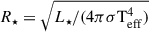
The effective temperature, Teff, is determined from the SpT−Teff relation from Herczeg & Hillenbrand (2014) and the bolometric flux, Fbol, from their bolometric correction, which is based on the stellar flux at 751 nm. For stars with Teff < 4500 K, FRAPPE adopts a revision to the original calibrations (see Claes et al. 2024 for details). The flux at 751 nm used for this correction corresponds to the photospheric emission only. FRAPPE computes it by taking the de-reddened observed flux at 751 nm and subtracting the contribution of the respective best-fit slab model at the same wavelength. The stellar luminosity is then derived from  , where the distance d (in parsecs) is obtained by inverting the Gaia parallax of each individual star. Typical uncertainties on the luminosity are around 0.2 dex (Manara et al. 2017b). The stellar radius is computed through
  .
.
Finally, we estimated the stellar masses (M⋆) and ages by interpolating each target’s position on the Hertzsprung-Russell diagram (HRD) and adopting the luminosity and effective temperature derived with FRAPPE against a set of PMS theoretical evolutionary models. We considered several sets of models (D’Antona & Mazzitelli 1994; Palla & Stahler 1999; Siess et al. 2000; Tognelli et al. 2011; Baraffe et al. 2015; Feiden 2016), and although the absolute age of an individual object varied slightly, we consistently find that the X-Shooter sample is younger than ≲5 Myr. The only exceptions are three sources (#30, #38, and #39) that appear older than 10 Myr (see Section 4 for further discussion). To be consistent with the CMD presented in Figure 2, hereafter we adopt the PISA stellar models (Tognelli et al. 2011). This set of isochrones, properly computed to study the stellar population in Orion (see Section 4.2 of Jerabkova et al. 2019), provides theoretical magnitudes in the r and i bands of OmegaCAM, ensuring compatibility with the photometric system used in our analysis. While a detailed comparison of different evolutionary models could offer valuable insights, it is beyond the scope of this paper. The stellar masses across the sample span the range ∼0.1–0.8 M⊙. The final stellar parameters for all targets are summarised in Table 1.
While we assumed the inverse of the Gaia DR3 parallax as the distance of each star analysed with FRAPPE, we also assessed the impact on the stellar parameter derived if a fixed distance of 390 pc was adopted for all targets in this study. In either case, most of the population shows ages younger than 5 Myr, with only three stars (#30, #38, and #39) appearing significantly older (> 10 Myr). A few objects in the sample have re-normalised unit weigth error (RUWE) values3 larger than 1.4, suggesting potentially unreliable astrometry. Still the inclusion of these sources is motivated by their IR excess and the presence of accretion signatures, which justify their relevance to our study.
3.1.2. Accretion properties
The accretion luminosity, Lacc, is obtained by FRAPPE considering the best-fit slab model. The slab models extend below the minimum wavelength of the X-Shooter observations (300 nm). Hence, while the best slab model is found by fitting the model itself against the wavelength coverage of X-Shooter, the total accretion flux, Facc, is obtained by integrating over the entire wavelength range provided by the best-fit slab model (50−2500 nm). The total accretion flux can be used to obtain Lacc through Lacc = 4πd2Facc (see Table 1). The mass accretion rate, Ṁacc, is computed using Equation (1):
 (1)
(1)
We assumed that the YSO inner disc radius, Rin, is equal to 5R⋆, following the convention adopted in the magnetospheric accretion model (e.g. Gullbring et al. 1998) and commonly assumed in subsequent studies (e.g. Herczeg & Hillenbrand 2008; Rigliaco et al. 2012; Alcalá et al. 2014; Manara et al. 2020).
We were able to estimate stellar and accretion properties for 37 out of the initial sample of 40 sources using FRAPPE. We show all the best fits of the X-Shooter spectra in the Balmer jump region in Appendix B as well as the spectra of the three targets for which we could not find a suitable fit (IDs #9, #28, and #32). In the first source, emission from the accretion process appears to dominate over the photospheric emission, effectively masking the molecular absorption bands (e.g. TiO, CaH, and VO) used by FRAPPE for spectral classification (see Figure B.1). On the other hand, FRAPPE could not be implemented in the other two sources due to low S/N in the UVB arm (S/N < 6 at 400 nm whereas all the other sources in the sample have S/N > 10). Since one of the goals of this work is to carry out a homogeneous analysis of accretion properties based on UV continuum excess fitting, we decided not to include these sources in the following analysis. Unfortunately, the three sources are part of the seemingly old population according to the CMD (see Figure 2), leaving us with 11 sources from this population with estimated stellar and accretion properties from UV excess modelling. The accretion luminosities and rates derived for the 37 stars with good fits fall within the following ranges: −3.0 ≲ log(Lacc/L⊙)≲−0.8 and 2 × 10⁻¹⁰ ≲ Ṁacc ≲ 5 × 10⁻⁸ M⊙/yr. The typical uncertainties for Lacc and Ṁacc are ∼0.25 dex and ∼0.35 dex, respectively (Claes et al. 2024). The values we found using FRAPPE are in line with typical values found in the literature for PMS stars in the same age and mass range (Manara et al. 2023), though see Sect. 4.2 for a detailed discussion of the accretion properties of the stars studied in this work.
As a consistency check, we also derived Lacc from multiple emission lines using empirical Lline−Lacc relations. For most sources, the line-based accretion luminosities are in good agreement with those obtained from UV excess modelling, with a mean difference and spread of 0.15 ± 0.36 dex. We emphasise that throughout the study we adopted the Lacc values derived from the UV excess as our reference.
3.2. Lithium feature at λ670.8 nm
Lithium (7Li, hereafter Li) is a short-lived element in the photosphere of low-mass PMS stars since it is depleted when coretemperatures reach ∼3×10⁶ K (Soderblom et al. 2014). For this reason, equivalent widths of the Li line (EWLi) at λ670.8 nm have been widely used for identifying young stars (e.g. Jeffries et al. 2023). Here we computed EWLi for our sample considering that, as explained in Section 3, the spectra of YSOs that host a protoplanetary disc and are undergoing mass accretion are affected by veiling. This effect needs to be taken into account when measuring reliable EWLi.
Using the best-fit slab models obtained from FRAPPE, we performed veiling correction on the X-Shooter spectra. First, each spectrum was de-reddened using the best-fit value of AV. Next, the wavelength step of the best-fit slab model was resampled to match that of the observed spectrum. We scaled the resampled best-fit slab model to the observed spectrum by multiplying it by the normalisation constant, Hslab. Finally, the rescaled best-fit slab model was subtracted from the de-reddened observed spectrum, resulting in the veiling-corrected spectrum. We computed the EWLi by first normalising the pseudo-continuum around the spectral feature using a second-degree polynomial fit in the region [670.4, 671.2] nm, excluding the lithium line itself from the fit. The standard deviation of the continuum (σspec) was taken as the noise of the spectrum. To estimate the uncertainty, we followed a Monte Carlo, perturbing the flux by adding values sampled from a Gaussian distribution (with μ = 0 and σ = σspec) in each iteration. The equivalent width was calculated by integrating the line after each perturbation. This process was repeated multiple times, and the final EWLi was taken as the mean of the measurements, with its uncertainty as the standard deviation.
We detect lithium absorption in all but two sources of our sample, #9 and #32 (see Figure C.1). Source #9 appears to be a strong accretor, and the non-detection of the Li I line may be due to strong veiling, which can significantly weaken photospheric absorption features. As for #32, we could not detect Li I in its spectrum due to low S/N. For the remaining sources the presence of lithium supports their young nature.
4. Discussion
In this section, we analyse the isochronal ages obtained through the position of the sources in the HRD, based on the newly derived stellar parameters using FRAPPE on the X-Shooter spectra. Additionally, the equivalent-width measurements of the lithium absorption feature are used to further corroborate the young nature of our sample. We also explore relationships between accretion properties and host star characteristics by comparing our derived parameters with those measured in other nearby SFRs. Finally, we inspect the impact of accretion on the optical colours of our sample.
4.1. Youth indicators: HRD and lithium
In Figure 3, we show the distribution of the stars on the HRD. We adopted the effective temperatures and luminosities obtained using the multi-component fitting procedure FRAPPE (see Section 3). PISA isochrones and evolutionary tracks (Tognelli et al. 2011) are included for reference. Most stars in our sample have estimated ages younger than 3 Myr, consistent with the expected age of the Orion Nebula population, with only a few falling in the 3−5 Myr range. However, there are three sources in our sample (IDs #30, #38, and #39) that stand out by appearing significantly older in the HRD (≳10 Myr; highlighted as dark blue solid circles in Figure 3). We refer to this subgroup as the ‘CMD+HRD−old’ subset in the remainder of the analysis.
 |
Fig. 3. HRD of our sample (yellow stars) with sources appearing older than 10 Myr in the CMD (CMD−old; see Figure 2) highlighted with green circles. Among these sources, those remaining older than 10 Myr after estimating stellar parameters with FRAPPE (CMD+HRD−old) are marked with dark blue circles. The 0.1, 0.5, 1, 3, 5, 10, and 20 Myr PISA isochrones (Tognelli et al. 2011) are shown as solid black lines, and the 0.2, 0.4, 0.6, and 0.8 M⊙ mass tracks as dashed grey lines. |
Unlike the rest of the sample, where a self-consistent treatment of extinction and accretion reconciles the stars with younger estimated ages, sources #30, #38, and #39 remain significantly older despite the application of the same fitting procedure. All three stars show clear signatures of disc presence and ongoing mass accretion, suggesting that they are not evolved field contaminants. Moreover, although these sources are located towards the southern outskirts of the surveyed region (at declinations below −6 ° 00′; see Figure 1), their proper motions are fully consistent with those of the main population, and their RUWE values are within the expected range for reliable astrometric solutions.
Even excluding the three most under-luminous sources, we still observe a spread of luminosity in the HRD shown in Figure 3. This spread reaches up to ∼0.7 dex if measured as the full vertical extent in L⋆ at a given Teff. A spread in stellar luminosity within Orion Nebula stars has been reported by several previous works (e.g. Da Rio et al. 2010; Jeffries et al. 2011). Different processes can contribute to this spread, including a complex star formation history, variations in accretion activity of YSOs, disc geometry with respect to the observer and star spots (e.g. Beccari et al. 2017; Jerabkova et al. 2019; Baraffe et al. 2017; Guarcello et al. 2010; Franciosini et al. 2022).
To further investigate the age distribution of our sample, we computed veiling-corrected EWLi, a common youth indicator in PMS stars. We show in Figure 4 the EWLi versus Teff measured in this work using X-Shooter spectra for the stars in Orion, together with measurements from sources located in the Lupus star-forming complex. Lupus, located within 200 pc of the Sun, is one of the prominent low-mass SFRs and hosts stars with estimated ages between 1 and 3 Myr (see review by Comerón 2008). Given its similar age range to the Orion Nebula, Lupus provides an ideal benchmark for evaluating the overall lithium depletion in our sample. The EWLi measurements for Lupus stars were obtained from X-Shooter spectra by Biazzo et al. (2017), based on a dataset of Class II and Class III targets presented in previous works (Alcalá et al. 2014, 2017; Frasca et al. 2017). For consistency, we include only Class II Lupus sources in our comparison with the sample of Biazzo et al. (2017).
 |
Fig. 4. EWLi vs Teff for the veiling-corrected sample as obtained with FRAPPE. The symbols have the same meaning as in Figure 3, with the addition of pink pentagons that indicate EWLi measurements performed on X-Shooter spectra of Class II sources located in Lupus from Biazzo et al. (2017). The mean EWLi values and associated standard deviations in the Teff range from 4200 K down to 3000 K and are plotted in yellow and pink for the Orion Nebula and Lupus, respectively. |
In the same figure, we show the mean and standard deviation of the distribution of the EWLi in the two samples for stars in the temperature range 3000 < Teff < 4200 K. For the Orion Nebula, we find ⟨EWLi⟩ = 505 ± 100 mÅ in agreement with previous studies (see e.g. Palla et al. 2005), while for Lupus, we find ⟨EWLi⟩ = 489 ± 125 mÅ. The properties of the EWLi of the populations in the two SFRs are statistically consistent, suggesting a similarity in the median age of their stellar populations.
However, two Orion stars stand out for having weaker Li lines compared to the rest of the population: #18 with EWLi = 196 ± 26 mÅ, and #38 with EWLi = 174 ± 27 mÅ. Source #38 (Teff ∼ 3640 K) is among the oldest stars in the HRD and, together with #39, is one of the two most underluminous sources in our sample (see Figure 3). Despite having the same estimated effective temperature, source #38 shows significant lithium depletion, whereas source #39 displays the strongest lithium absorption among all stars with similar Teff. On the other hand, source #18 (Teff ∼3190 K) appears extremely young in the HRD, with an isochronal age of only 0.2 Myr, and low mass (∼0.2 M⊙), making the low EWLi more difficult to interpret.
These examples highlight the need for caution when using lithium equivalent width as a standalone age indicator for individual stars at very young ages (< 10 Myr), since no significant depletion is expected at this stage. In this context, EWLi is more useful as a relative age indicator within a given population, rather than for absolute age determinations. The reliability of lithium depletion as an age tracer for individual stars increases when depletion becomes substantial, typically in PMS stars aged between 20 and 200 Myr (Soderblom et al. 2014). Given the age range considered here, EWLi cannot be used to derive absolute individual ages, but it provides a valuable comparative tool for assessing our Orion Nebula sample’s youth relative to other SFRs, such as Lupus.
4.2. Accretion relations with host star properties
Previous spectroscopic studies of accreting PMS stars in other nearby SFRs such as Lupus, Chamaeleon I, and Upper Scorpius have extensively characterised accretion properties in lower-mass and less complex (i.e. lower stellar density and far-UV radiation from massive stars) environments than that of the Orion Nebula. These studies have revealed a well-defined correlation between accretion and stellar properties across a wide mass range, from intermediate-mass Herbig stars down to the substellar regime (e.g, Hillenbrand et al. 1992; Natta et al. 2004; Mohanty et al. 2005; Natta et al. 2006; Alcalá et al. 2014, 2017; Manara et al. 2017b; Venuti et al. 2019; Almendros-Abad et al. 2024). In particular, the scaling of Ṁacc with M⋆ in the logarithmic scale follows a steeper-than-linear relation, with reported slopes in the range of ∼1.6−2. However, this trend exhibits a significant spread in accretion rates – up to 1−2 dex – which remains a topic of discussion and has important implications for disc evolution (Somigliana et al. 2022; Manara et al. 2023 and references therein). While these findings have provided crucial insights into star-disc interactions and the evolution of YSOs, more massive and dynamically complex environments, such as the Orion Nebula, remain comparatively less explored. Conducting similar homogeneous accretion studies in regions like Orion is therefore essential to understand whether the trends observed in lower-mass environments hold in more representative star-forming conditions (Winter & Haworth 2022) and to further probe the role of accretion in shaping inferred stellar properties.
We show in the left panel of Figure 5 the distribution of the accretion luminosity, log Lacc, as a function of the luminosity of the host star, log L⋆, for the stars analysed in this work. For comparison, we also include results from previous studies of YSOs in nearby SFRs, as compiled in Table 1 of Manara et al. (2023). We observe a general trend in which Lacc increases with L⋆. Moreover, all stars lie below the Lacc = L⋆ boundary, indicating that the stellar luminosity exceeds the accretion luminosity across the entire sample. This is the expected behaviour for Class II YSOs, where accretion contributes moderately to the total luminosity output. Although higher ratios are more commonly associated with earlier, more embedded evolutionary stages, the majority of observed sources still show accretion luminosities smaller than the stellar luminosity (Clarke & Pringle 2006; Tilling et al. 2008; Fiorellino et al. 2021).
 |
Fig. 5. Comparison of accretion parameters as a function of stellar properties from our X-Shooter sample of Orion Nebula sources and the sample of different nearby SFRs (transparent circles) presented in Manara et al. (2023). The marker scheme for our sample is the same as in Figure 3. Left panel: Accretion luminosity as a function of stellar luminosity as obtained using FRAPPE. The black lines indicate Lacc equal to 1L⋆, 0.1L⋆, and 0.01L⋆. The error bars indicate the typical uncertainties on the stellar and accretion luminosities (∼0.2 dex and 0.25 dex, respectively). Right panel: Mass accretion rate as a function of stellar mass as obtained using FRAPPE. Literature targets with arrows pinpoint upper limits. The error bars indicate the typical uncertainties on the mass accretion rate and stellar mass (∼0.35 dex and 0.1 dex, respectively). |
We show in the right panel of Figure 5 the distribution of Ṁacc as a function of M⋆. The distribution confirms the well-established trend that Ṁacc increases with M⋆. The Orion Nebula sample appears to populate the same parameter space as the one covered by the other young, less dense SFRs, within the typical uncertainties.
The two most under-luminous sources in our sample (#38 and #39; see Figure 3) show high accretion luminosities relative to their stellar luminosities (log L⋆ ∼ −1.3L⊙; see the upper panel of Figure 5). However, in the Ṁacc versus M⋆ diagram (bottom panel of the same figure), they appear to have relatively low mass accretion rates for their stellar mass (M⋆ ∼ 0.4 M⊙). Both stars have small estimated radii (∼0.55–0.65 R⊙; see Table 1). In FRAPPE, the stellar radius is derived from the stellar luminosity following the relation  . Thus, if L⋆ is underestimated, this would lead to an underestimated R⋆ and, consequently, an underestimated Ṁacc (see Equation 1). While we cannot rule out the possibility that these sources are genuinely old stars with long-lived accretion, an alternative explanation is that their stellar luminosities are underestimated due to significant disc inclination (e.g. Alcalá et al. 2014). Nearly edge-on discs can obscure much of the stellar photosphere, reducing the observed luminosity. However, accretion signatures like Hα emission and, in some cases, UV excess emission can remain detectable through scattered light, depending on the disc geometry and accretion rate. Such systems, when observed predominantly in scattered light, can also exhibit anomalously blue colours in CMDs (e.g. Guarcello et al. 2010; De Marchi et al. 2013) consistent with what we observe for these two sources.
We conclude by highlighting that all the other sources in our sample that appear old in the CMD − and that have been reassessed as young PMS stars after the analysis presented in this work − demonstrate typical accretion behaviour, consistent with their evolutionary stage.
4.3. Impact of accretion in OmegaCAM photometry
As shown in Figure 3, most PMS stars that appear old in the CMD have estimated stellar parameters that place them in a position on the HRD consistent with a young population (∼1−5 Myr). The young age is also supported by strong lithium absorption and typical Lacc/L⋆ ratios expected for young, accreting stars. Hence, with our work, we show that the majority of the seemingly old accretors analysed are not intrinsically old, but that their optical magnitudes are strongly affected by the presence of strong accretion luminosity, making these stars appear to have bluer optical colours in the r, r − i CMD (see Figure 2). In the following we describe a method for accurately investigating the impact of accretion on the photometry of our targets by isolating the effect of the accretion process on the light collected through the OmegaCAM r and i filters. Since OmegaCAM observations were not obtained simultaneously with the X-Shooter data, we adopted the spectroscopic observations as a consistent reference.
We first estimated synthetic photometry by convolving the de-reddened X-Shooter spectra with the response curves of the OmegaCAM r and i filters. The de-reddening was performed using the best-fit AV values obtained from FRAPPE and applying Cardelli’s extinction law. We computed the total flux observed through the r and i broad-bands using the specific filter’s throughput and adopting Equation 2:
![Mathematical equation: $$ \begin{aligned} f_{\lambda } [\mathrm{erg s}^{-1}\,\mathrm{cm}^{-2} \mathring{A}^{-1}] = \frac{\int (\mathrm{spec} \times \mathrm{filter} \times \lambda ) \mathrm{d}\lambda }{\int (\mathrm{filter} \times \lambda ) \mathrm{d}\lambda } \end{aligned} $$](/articles/aa/full_html/2025/11/aa55492-25/aa55492-25-eq6.gif) (2)
(2)
where spec is the de-reddened X-Shooter spectrum resampled to the wavelength step of the filter’s response curve, filter is the filter’s response curve and λ the respective wavelength. Once the total flux observed through the r and i band filters is known, one can convert it to magnitudes using mAB = −2.5 log (fλ/fZP) where fr, ZP = 2.7549 × 10⁻⁹ erg s−1 cm−2 Å−1 and fi, ZP = 1.35102 × 10⁻⁹ erg s−1 cm−2 Å−1. The filter’s response curves and fλ, ZP were taken from the Spanish Virtual Observatory (SVO) Filter Profile Service (Rodrigo et al. 2012).
We then estimated the r and i magnitudes of the pure photosphere by performing a weighted interpolation on the HRD, using the Teff and L⋆ values derived with FRAPPE and the PISA PMS isochrones. This interpolation used a 2D Gaussian kernel centred on the HRD position of each source. These HRD-based magnitudes represent the intrinsic photospheric emission, free from both extinction and, more importantly, accretion contributions, as both effects are accounted for in FRAPPE. By placing both magnitude estimates (i.e., photosphere+accretion and photosphere-only) in a r versus (r − i) CMD and connecting them with a line, we can isolate and visualise the impact of accretion on the OmegaCAM photometry of each star. These results are presented in Figure 6.
 |
Fig. 6. r vs (r − i) CMD illustrating the effect of accretion on the OmegaCAM photometry of our targets. For each star, the white star-like points are derived from synthetic photometry performed on the de-reddened X-Shooter spectra, and include both photospheric and accretion-related emission; the yellow crosses correspond to the expected photospheric emission, estimated by interpolating their positions on the HRD using the stellar parameters derived with FRAPPE and the PISA isochrones. The two measures for each star are connected with a dashed line. We use the same marker scheme as in Figure 3 for the CMD−old and the CMD+HRD− old subsamples. The black arrow indicates the effect that 1 mag of extinction would have. The solid grey lines show the location of 0.1, 0.5, 1, 3, 10, and 20 Myr PISA isochrones (Tognelli et al. 2011). |
As shown in the figure, removing the continuum excess emission coming from accretion from the de-reddened spectra (white stars to yellow crosses) causes most objects to appear fainter and redder. This can be explained by the addition of flux primarily in the bluer part of the spectrum due to the excess emission originating in the accretion shock regions. This figure clearly demonstrates that the presence of accretion luminosity causes a displacement of stars in the optical CMD making accreting PMS stars appear bluer and brighter with respect to their purely photospheric colours. We also show the extinction vector, illustrating that the displacement of stars in these bands due to extinction follows a different direction than the displacement caused by accretion. Hence, both effects must be taken into account when analysing optical CMDs.
We compared the OmegaCAM photometry with the synthetic photometry derived from the X-Shooter spectra, considering only sources for which stellar parameters could bedetermined with FRAPPE. The two sets of measurements show a clear correlation, though with some scatter and systematic offset. In the r band, we find an absolute mean difference of 0.06 mag with a scatter of 0.43 mag, whereas in the i band, the mean difference is 0.003 mag with a scatter of 0.36 mag. These small offsets indicate the presence of low residuals in the flux calibration of the spectra with respect to the ADHOC catalogue while the scatters likely reflect the presence of intrinsic stellar and accretion-related variability. Accreting PMS stars can vary photometrically due to fluctuations in the accretion rate, variable circumstellar extinction, and rotational modulation by stellar spots (e.g. Venuti et al. 2015). As such, some level of discrepancy between photometry taken at different epochs is anticipated.
To assess the impact of accretion on the stellar parameters one might retrieve from the CMD, we applied the same weighted interpolation method as explained above but now based on the PISA isochrones in the CMD to the extinction-corrected magnitudes only. By comparing the stellar parameters obtained accounting and not accounting for accretion, we find mean differences of ΔL⋆ ∼ 0.32 ± 0.29 L⊙ and ΔTeff ∼ 479 ± 175 K, which translate into a mean difference of ∼0.3 M⊙ in M⋆. These shifts are not restricted to the seemingly older accretors, indicating that accretion affects inferred stellar parameters throughout the sample. Photometric and accretion variability are not disentangled in this analysis. Instead, the accretion-corrected parameters that we report are derived from the X-Shooter spectra alone, which provide a consistent snapshot of each star’s accretion and photospheric properties at a single epoch. Veiling, which is a result of the continuum excess, is implicitly accounted for in the spectral modelling and is not treated as a separate parameter.
5. Summary and conclusions
In this work we have presented a detailed analysis of VLT/X-Shooter spectra of 40 disc-bearing (according to Spitzer) PMS stars located in the Orion Nebula. From these, 14 sources show both isochronal ages older than 10 Myr (with some even > 30 Myr) in the r, (r − i) CMD, and Hα excess emission (from OmegaCAM observations). We obtained accurate stellar and accretion properties of the YSOs in the X-Shooter sample by implementing the multi-component fitting procedure FRAPPE (Claes et al. 2024) which models the accretion and photospheric contributions using a grid of slab models and a set of interpolated Class III YSO templates, respectively. We were able to fit 37 out of the initial sample of 40 sources. We analysed the retrieved parameters, and these are the main results of our study:
-
The accretion properties of the Orion Nebula PMS stars are consistent with those observed in lower-density SFRs such as Lupus, Taurus and Upper Scorpius, in terms of Lacc versus L⋆ and Ṁacc versus M⋆.
-
After accounting for extinction and accretion, and deriving accurate stellar parameters, the location of most of the seemingly old stars (≳10 Myr) in the HRD is consistent with younger ages (∼1−5 Myr). This is further supported by strong lithium features (EWLi ≳ 400 mÅ), and by typical Lacc/L⋆ ratios expected for young, accreting stars.
-
While most sources are consistent with typical ages expected for the Orion Nebula population, three sources (IDs #30, #38, and #39) seem to be truly old (> 10 Myr) even after our analysis. Additional observations and further analysis will be crucial to determining whether these accreting PMS stars are intrinsically older or if their apparent age can be explained by geometric or environmental factors.
-
By combining synthetic photometry on the de-reddened X-Shooter spectra with magnitudes interpolated from the HRD (representing the intrinsic photospheric emission), we demonstrated that continuum excess emission from the accretion process significantly alters the observed optical colours of accreting PMS stars. In particular, the r magnitude of stars undergoing accretion appears brighter and their r − i colour is systematically bluer with respect to the pure photospheric colour, making the stars (erroneously) appear hotter and hence younger. Such impacts have consequences on the derived stellar luminosity and hence on the stellar masses and ages retrieved.
Our work presents a homogeneous study of accretion in PMS stars in the Orion Nebula. The accretion properties we find are in agreement with those found in similarly young populations in low-mass SFRs like Lupus and Taurus. However, a more extensive study covering different stellar and interstellar densities in Orion is needed to better characterise how the environment influences accretion. Moreover, we report how accretion can affect the optical photometry of PMS stars. This pilot study seems to suggest that any investigation of YSOs in SFRs that selects members purely based on their positions in an optical CMD is likely to miss a substantial fraction of objects whose locations fall outside the canonical PMS locus due to strong accretion. Hence, the effect of accretion must be carefully taken into account when estimating the stellar properties from isochrone fitting in such a context. In future work, we will study the impact of accretion across different photometric bands.
Data availability
Additional data from this study are available on Zenodo at https://zenodo.org/records/17093047.
We acknowledge that the variability of RV across the Orion Nebula is still a matter of debate. Since our sources lie outside the dense core of the Trapezium Cluster, we assumed RV = 3.1, in line with previous works (e.g. Da Rio et al. 2010).
The RUWE quantifies the quality of Gaia’s astrometric fit; values ≲1.4 typically indicate well-behaved single-star solutions, while higher values suggest binarity or other perturbing effects (Lindegren et al. 2021).
Acknowledgments
We thank the anonymous referee for valuable feedback that improved this manuscript. We thank Victor Almendros-Abad for many helpful discussions on these results. LP acknowledges the PhD fellowship of the International Max-Planck-Research School (IMPRS) funded by ESO. CFM is funded by the European Union (ERC, WANDA, 101039452). Views and opinions expressed are however those of the author(s) only and do not necessarily reflect those of the European Union or the European Research Council Executive Agency. Neither the European Union nor the granting authority can be held responsible for them. TJ acknowledges the support from the MUNI Award in Science and Humanities. Based on observations collected at the European Southern Observatory under ESO programme(s) 108.2206.001 and 114.276M.001. This work has made use of data from the European Space Agency (ESA) mission Gaia (https://www.cosmos.esa.int/gaia), processed by the Gaia Data Processing and Analysis Consortium (DPAC, https://www.cosmos.esa.int/web/gaia/dpac/consortium). Funding for the DPAC has been provided by national institutions, in particular the institutions participating in the Gaia Multilateral Agreement. This research has made use of the SVO Filter Profile Service “Carlos Rodrigo”, funded by MCIN/AEI/10.13039/501100011033/ through grant PID2023-146210NB-I00 This research was supported by the Excellence Cluster ORIGINS, funded by the Deutsche Forschungsgemeinschaft (DFG, German Research Foundation) under Germany’s Excellence Strategy – EXC-2094 – 390783311. We acknowledge the support of the Deutsche Forschungsgemeinschaft (DFG, German Research Foundation) Research Unit “Transition discs” – 325594231.
References
- Alcalá, J. M., Natta, A., Manara, C. F., et al. 2014, A&A, 561, A2 [NASA ADS] [CrossRef] [EDP Sciences] [Google Scholar]
- Alcalá, J. M., Manara, C. F., Natta, A., et al. 2017, A&A, 600, A20 [NASA ADS] [CrossRef] [EDP Sciences] [Google Scholar]
- Alexander, R., Pascucci, I., Andrews, S., Armitage, P., & Cieza, L. 2014, in Protostars and Planets VI, eds. H. Beuther, R. S. Klessen, C. P. Dullemond, & T. Henning, 475 [Google Scholar]
- Almendros-Abad, V., Manara, C. F., Testi, L., et al. 2024, A&A, 685, A118 [NASA ADS] [CrossRef] [EDP Sciences] [Google Scholar]
- Baraffe, I., & Chabrier, G. 2010, A&A, 521, A44 [NASA ADS] [CrossRef] [EDP Sciences] [Google Scholar]
- Baraffe, I., Homeier, D., Allard, F., & Chabrier, G. 2015, A&A, 577, A42 [NASA ADS] [CrossRef] [EDP Sciences] [Google Scholar]
- Baraffe, I., Elbakyan, V. G., Vorobyov, E. I., & Chabrier, G. 2017, A&A, 597, A19 [NASA ADS] [CrossRef] [EDP Sciences] [Google Scholar]
- Barrado y Navascués, D., & Martín, E. L. 2003, AJ, 126, 2997 [Google Scholar]
- Beccari, G., Petr-Gotzens, M. G., Boffin, H. M. J., et al. 2017, A&A, 604, A22 [NASA ADS] [CrossRef] [EDP Sciences] [Google Scholar]
- Biazzo, K., Frasca, A., Alcalá, J. M., et al. 2017, A&A, 605, A66 [NASA ADS] [CrossRef] [EDP Sciences] [Google Scholar]
- Bouvier, J., Alencar, S. H. P., Harries, T. J., Johns-Krull, C. M., & Romanova, M. M. 2007, in Protostars and Planets V, eds. B. Reipurth, D. Jewitt, & K. Keil, 479 [Google Scholar]
- Calvet, N., & Gullbring, E. 1998, ApJ, 509, 802 [Google Scholar]
- Cardelli, J. A., Clayton, G. C., & Mathis, J. S. 1989, ApJ, 345, 245 [Google Scholar]
- Claes, R. A. B., Campbell-White, J., Manara, C. F., et al. 2024, A&A, 690, A122 [NASA ADS] [CrossRef] [EDP Sciences] [Google Scholar]
- Clarke, C. J., & Pringle, J. E. 2006, MNRAS, 370, L10 [Google Scholar]
- Coleman, G. A. L., & Haworth, T. J. 2022, MNRAS, 514, 2315 [NASA ADS] [CrossRef] [Google Scholar]
- Comerón, F. 2008, in Handbook of Star Forming Regions, Volume II, ed B. Reipurth, 5, 295 [Google Scholar]
- Da Rio, N., Robberto, M., Soderblom, D. R., et al. 2010, ApJ, 722, 1092 [NASA ADS] [CrossRef] [Google Scholar]
- Da Rio, N., Tan, J. C., Covey, K. R., et al. 2016, ApJ, 818, 59 [Google Scholar]
- D’Antona, F., & Mazzitelli, I. 1994, ApJS, 90, 467 [Google Scholar]
- De Marchi, G., Panagia, N., Guarcello, M. G., & Bonito, R. 2013, MNRAS, 435, 3058 [NASA ADS] [CrossRef] [Google Scholar]
- De Marchi, G., Giardino, G., Biazzo, K., et al. 2024, ApJ, 977, 214 [Google Scholar]
- Delfini, L., Vioque, M., Ribas, Á., & Hodgkin, S. 2025, A&A, 699, A145 [NASA ADS] [CrossRef] [EDP Sciences] [Google Scholar]
- Espaillat, C. C., Robinson, C. E., Romanova, M. M., et al. 2021, Nature, 597, 41 [NASA ADS] [CrossRef] [Google Scholar]
- Fedele, D., van den Ancker, M. E., Henning, T., Jayawardhana, R., & Oliveira, J. M. 2010, A&A, 510, A72 [NASA ADS] [CrossRef] [EDP Sciences] [Google Scholar]
- Feiden, G. A. 2016, A&A, 593, A99 [NASA ADS] [CrossRef] [EDP Sciences] [Google Scholar]
- Fernández, M., & Comerón, F. 2001, A&A, 380, 264 [NASA ADS] [CrossRef] [EDP Sciences] [Google Scholar]
- Fiorellino, E., Manara, C. F., Nisini, B., et al. 2021, A&A, 650, A43 [NASA ADS] [CrossRef] [EDP Sciences] [Google Scholar]
- Fischer, W., Edwards, S., Hillenbrand, L., & Kwan, J. 2011, ApJ, 730, 73 [Google Scholar]
- Franciosini, E., Tognelli, E., Degl’Innocenti, S., et al. 2022, A&A, 659, A85 [NASA ADS] [CrossRef] [EDP Sciences] [Google Scholar]
- Frasca, A., Biazzo, K., Alcalá, J. M., et al. 2017, A&A, 602, A33 [NASA ADS] [CrossRef] [EDP Sciences] [Google Scholar]
- Freudling, W., Romaniello, M., Bramich, D. M., et al. 2013, A&A, 559, A96 [NASA ADS] [CrossRef] [EDP Sciences] [Google Scholar]
- Gaia Collboration (Prusti, T., et al.) 2016, A&A, 595, A1 [NASA ADS] [CrossRef] [EDP Sciences] [Google Scholar]
- Gaia Collboration (Vallenari, A., et al.) 2023, A&A, 674, A1 [NASA ADS] [CrossRef] [EDP Sciences] [Google Scholar]
- Greene, T. P., Wilking, B. A., Andre, P., Young, E. T., & Lada, C. J. 1994, ApJ, 434, 614 [NASA ADS] [CrossRef] [Google Scholar]
- Guarcello, M. G., Damiani, F., Micela, G., et al. 2010, A&A, 521, A18 [Google Scholar]
- Gullbring, E., Hartmann, L., Briceño, C., & Calvet, N. 1998, ApJ, 492, 323 [Google Scholar]
- Hartmann, L., Herczeg, G., & Calvet, N. 2016, ARA&A, 54, 135 [Google Scholar]
- Herczeg, G. J., & Hillenbrand, L. A. 2008, ApJ, 681, 594 [Google Scholar]
- Herczeg, G. J., & Hillenbrand, L. A. 2014, ApJ, 786, 97 [Google Scholar]
- Hernández, J., Hartmann, L., Megeath, T., et al. 2007, ApJ, 662, 1067 [Google Scholar]
- Hillenbrand, L. A., Strom, S. E., Vrba, F. J., & Keene, J. 1992, ApJ, 397, 613 [CrossRef] [Google Scholar]
- Hillenbrand, L. A., Hoffer, A. S., & Herczeg, G. J. 2013, AJ, 146, 85 [NASA ADS] [CrossRef] [Google Scholar]
- Huélamo, N., Bouy, H., Pinte, C., et al. 2010, A&A, 523, A42 [CrossRef] [EDP Sciences] [Google Scholar]
- Jeffries, R. D. 2017, Mem. Soc. Astron. It., 88, 637 [NASA ADS] [Google Scholar]
- Jeffries, R. D., Oliveira, J. M., Naylor, T., Mayne, N. J., & Littlefair, S. P. 2007, MNRAS, 376, 580 [NASA ADS] [CrossRef] [Google Scholar]
- Jeffries, R. D., Littlefair, S. P., Naylor, T., & Mayne, N. J. 2011, MNRAS, 418, 1948 [Google Scholar]
- Jeffries, R. D., Jackson, R. J., Wright, N. J., et al. 2023, MNRAS, 523, 802 [NASA ADS] [CrossRef] [Google Scholar]
- Jerabkova, T., Beccari, G., Boffin, H. M. J., et al. 2019, A&A, 627, A57 [NASA ADS] [CrossRef] [EDP Sciences] [Google Scholar]
- Kausch, W., Noll, S., Smette, A., et al. 2015, A&A, 576, A78 [NASA ADS] [CrossRef] [EDP Sciences] [Google Scholar]
- Kounkel, M., Stassun, K. G., Covey, K., & Hartmann, L. 2022, MNRAS, 517, 161 [NASA ADS] [CrossRef] [Google Scholar]
- Kroupa, P., Jeřábková, T., Dinnbier, F., Beccari, G., & Yan, Z. 2018, A&A, 612, A74 [NASA ADS] [CrossRef] [EDP Sciences] [Google Scholar]
- Lada, C. J. 1987, IAU Symp., 115, 1 [Google Scholar]
- Lada, C. J., & Wilking, B. A. 1984, ApJ, 287, 610 [NASA ADS] [CrossRef] [Google Scholar]
- Lindegren, L., Klioner, S. A., Hernández, J., et al. 2021, A&A, 649, A2 [EDP Sciences] [Google Scholar]
- Manara, C. F., Beccari, G., Da Rio, N., et al. 2013a, A&A, 558, A114 [NASA ADS] [CrossRef] [EDP Sciences] [Google Scholar]
- Manara, C. F., Testi, L., Rigliaco, E., et al. 2013b, A&A, 551, A107 [NASA ADS] [CrossRef] [EDP Sciences] [Google Scholar]
- Manara, C. F., Fedele, D., Herczeg, G. J., & Teixeira, P. S. 2016, A&A, 585, A136 [NASA ADS] [CrossRef] [EDP Sciences] [Google Scholar]
- Manara, C. F., Frasca, A., Alcalá, J. M., et al. 2017a, A&A, 605, A86 [NASA ADS] [CrossRef] [EDP Sciences] [Google Scholar]
- Manara, C. F., Testi, L., Herczeg, G. J., et al. 2017b, A&A, 604, A127 [NASA ADS] [CrossRef] [EDP Sciences] [Google Scholar]
- Manara, C. F., Natta, A., Rosotti, G. P., et al. 2020, A&A, 639, A58 [NASA ADS] [CrossRef] [EDP Sciences] [Google Scholar]
- Manara, C. F., Frasca, A., Venuti, L., et al. 2021, A&A, 650, A196 [NASA ADS] [CrossRef] [EDP Sciences] [Google Scholar]
- Manara, C. F., Ansdell, M., Rosotti, G. P., et al. 2023, ASP Conf. Ser., 534, 539 [NASA ADS] [Google Scholar]
- McLean, B. J., Greene, G. R., Lattanzi, M. G., & Pirenne, B. 2000, ASP Conf. Ser., 216, 145 [NASA ADS] [Google Scholar]
- Megeath, S. T., Gutermuth, R., Muzerolle, J., et al. 2012, AJ, 144, 192 [NASA ADS] [CrossRef] [Google Scholar]
- Modigliani, A., Goldoni, P., Royer, F., et al. 2010, SPIE Conf. Ser., 7737, 773728 [Google Scholar]
- Mohanty, S., Basri, G., & Jayawardhana, R. 2005, Astron. Nachr., 326, 891 [Google Scholar]
- Murphy, S. J., Mamajek, E. E., & Bell, C. P. M. 2018, MNRAS, 476, 3290 [NASA ADS] [CrossRef] [Google Scholar]
- Natta, A., Testi, L., Muzerolle, J., et al. 2004, A&A, 424, 603 [NASA ADS] [CrossRef] [EDP Sciences] [Google Scholar]
- Natta, A., Testi, L., & Randich, S. 2006, A&A, 452, 245 [NASA ADS] [CrossRef] [EDP Sciences] [Google Scholar]
- O’Dell, C. R., Kollatschny, W., & Ferland, G. J. 2017, ApJ, 837, 151 [CrossRef] [Google Scholar]
- Oliveira, J. M., Jeffries, R. D., Devey, C. R., et al. 2003, MNRAS, 342, 651 [NASA ADS] [CrossRef] [Google Scholar]
- Palla, F., & Stahler, S. W. 1999, ApJ, 525, 772 [NASA ADS] [CrossRef] [Google Scholar]
- Palla, F., Randich, S., Flaccomio, E., & Pallavicini, R. 2005, ApJ, 626, L49 [NASA ADS] [CrossRef] [Google Scholar]
- Palla, F., Randich, S., Pavlenko, Y. V., Flaccomio, E., & Pallavicini, R. 2007, ApJ, 659, L41 [NASA ADS] [CrossRef] [Google Scholar]
- Pittman, C. V., Espaillat, C. C., Robinson, C. E., et al. 2022, AJ, 164, 201 [NASA ADS] [CrossRef] [Google Scholar]
- Pittman, C. V., Espaillat, C. C., Robinson, C. E., et al. 2025, ApJ, in press [arXiv:2507.01162] [Google Scholar]
- Reggiani, M., Robberto, M., Da Rio, N., et al. 2011, A&A, 534, A83 [NASA ADS] [CrossRef] [EDP Sciences] [Google Scholar]
- Ribas, Á., Bouy, H., & Merín, B. 2015, A&A, 576, A52 [NASA ADS] [CrossRef] [EDP Sciences] [Google Scholar]
- Rigliaco, E., Natta, A., Testi, L., et al. 2012, A&A, 548, A56 [NASA ADS] [CrossRef] [EDP Sciences] [Google Scholar]
- Robinson, C. E., & Espaillat, C. C. 2019, ApJ, 874, 129 [NASA ADS] [CrossRef] [Google Scholar]
- Rodrigo, C., Solano, E., & Bayo, A. 2012, SVO Filter Profile Service Version 1.0, IVOA Working Draft 15 October 2012 [Google Scholar]
- Scandariato, G., Robberto, M., Pagano, I., & Hillenbrand, L. A. 2011, A&A, 533, A38 [NASA ADS] [CrossRef] [EDP Sciences] [Google Scholar]
- Scicluna, P., Rosotti, G., Dale, J. E., & Testi, L. 2014, A&A, 566, L3 [NASA ADS] [CrossRef] [EDP Sciences] [Google Scholar]
- Siess, L., Dufour, E., & Forestini, M. 2000, A&A, 358, 593 [Google Scholar]
- Silverberg, S. M., Wisniewski, J. P., Kuchner, M. J., et al. 2020, ApJ, 890, 106 [NASA ADS] [CrossRef] [Google Scholar]
- Smette, A., Sana, H., Noll, S., et al. 2015, A&A, 576, A77 [NASA ADS] [CrossRef] [EDP Sciences] [Google Scholar]
- Soderblom, D. R., Hillenbrand, L. A., Jeffries, R. D., Mamajek, E. E., & Naylor, T. 2014, in Protostars and Planets VI, eds. H. Beuther, R. S. Klessen, C. P. Dullemond, & T. Henning, 219 [Google Scholar]
- Somigliana, A., Toci, C., Rosotti, G., et al. 2022, MNRAS, 514, 5927 [NASA ADS] [CrossRef] [Google Scholar]
- Tilling, I., Clarke, C. J., Pringle, J. E., & Tout, C. A. 2008, MNRAS, 385, 1530 [Google Scholar]
- Tognelli, E., Prada Moroni, P. G., & Degl’Innocenti, S. 2011, A&A, 533, A109 [NASA ADS] [CrossRef] [EDP Sciences] [Google Scholar]
- Valenti, J. A., Basri, G., & Johns, C. M. 1993, AJ, 106, 2024 [NASA ADS] [CrossRef] [Google Scholar]
- Venuti, L., Bouvier, J., Irwin, J., et al. 2015, A&A, 581, A66 [NASA ADS] [CrossRef] [EDP Sciences] [Google Scholar]
- Venuti, L., Stelzer, B., Alcalá, J. M., et al. 2019, A&A, 632, A46 [NASA ADS] [CrossRef] [EDP Sciences] [Google Scholar]
- Vernet, J., Dekker, H., D’Odorico, S., et al. 2011, A&A, 536, A105 [NASA ADS] [CrossRef] [EDP Sciences] [Google Scholar]
- White, R. J., & Basri, G. 2003, ApJ, 582, 1109 [Google Scholar]
- Williams, J. P., & Cieza, L. A. 2011, ARA&A, 49, 67 [Google Scholar]
- Winter, A. J., & Haworth, T. J. 2022, Eur. Phys. J. Plus, 137, 1132 [NASA ADS] [CrossRef] [Google Scholar]
Appendix A: Additional tables
In Table A.1 we show the OmegaCAM photometry for the entire X-Shooter sample as obtained within the scope of the Accretion Discs in Hα with OmegaCAM (ADHOC) survey (Beccari et al. 2017).
OmegaCAM photometry from the ADHOC survey.
Table A.2 provides the IDs used in this work along with Gaia DR3 and OmegaCAM IDs, coordinates, parallax, proper motions, and RUWE values for the sources presented in Section 2.
Cross-matched IDs and Gaia DR3 astrometric parameters for the Orion Nebula disc sample presented.
Appendix B: Best-fit models to the Balmer jump
Figure B.1 shows the best fits to the X-Shooter spectra of our sample, obtained using FRAPPE (see Section. 3). For each target, we present the fit in the Balmer jump region.
 |
Fig. B.1. FRAPPE fits to the X-Shooter spectra for the Orion Nebula targets. Sources #9, #28, and #32 could not be fitted with FRAPPE, and thus we present only their observed spectra (in red). For the remaining sources, the de-reddened observed spectrum is shown in red, the best-fit Class III template in green, and the best-fit accretion slab model in cyan. The combined best-fit model (Class III + slab model) is shown in dark blue. For each source both the OmegaCAM ID and the internal ID used throughout this work are indicated. All spectra were smoothed for clarity. |
 |
Fig. B.1. continued. |
 |
Fig. B.1. continued. |
 |
Fig. B.1. continued. |
 |
Fig. B.1. continued. |
Appendix C: Lithium in the entire X-Shooter sample
In Figure C.1, we show the Liλ670.8 μm feature of the entire X-Shooter sample.
 |
Fig. C.1. Observed and veiling-corrected Li I λ670.8 nm absorption in our sample (in black and red, respectively). The objects without an associated veiling-corrected line are those for which FRAPPE could not be implemented. Each spectrum is labelled with the corresponding object ID, shown at the bottom of each panel. All spectra are normalised to the local continuum near the line. |
All Tables
Cross-matched IDs and Gaia DR3 astrometric parameters for the Orion Nebula disc sample presented.
All Figures
|
Fig. 1. Position of the targets in the sky. The X-Shooter sample is shown as yellow stars, and sources with isochronal ages ≳ 10 Myr in the CMD as green circles. The position of θ1 Ori C is marked with a cyan circle. The background is an IR image from the Digitized Sky Survey II (McLean et al. 2000). |
| In the text | |
|
Fig. 2. r, (r–i) OmegaCAM CMD for the X-Shooter sample (yellow stars) with sources ≳10 Myr (isochrone highlighted in blue) pinpointed with green circles (CMD−old). Sources with a disc within 1 degree of the centre of the Orion Nebula Cluster according to Spitzer photometry (Megeath et al. 2012) are displayed as dark grey circles. Only sources brighter than 17.5 mag are shown. The solid lines show the location of 0.1, 0.5, 1, 3, 10, 20, and 30 Myr PISA PMS isochrones (Tognelli et al. 2011). |
| In the text | |
|
Fig. 3. HRD of our sample (yellow stars) with sources appearing older than 10 Myr in the CMD (CMD−old; see Figure 2) highlighted with green circles. Among these sources, those remaining older than 10 Myr after estimating stellar parameters with FRAPPE (CMD+HRD−old) are marked with dark blue circles. The 0.1, 0.5, 1, 3, 5, 10, and 20 Myr PISA isochrones (Tognelli et al. 2011) are shown as solid black lines, and the 0.2, 0.4, 0.6, and 0.8 M⊙ mass tracks as dashed grey lines. |
| In the text | |
|
Fig. 4. EWLi vs Teff for the veiling-corrected sample as obtained with FRAPPE. The symbols have the same meaning as in Figure 3, with the addition of pink pentagons that indicate EWLi measurements performed on X-Shooter spectra of Class II sources located in Lupus from Biazzo et al. (2017). The mean EWLi values and associated standard deviations in the Teff range from 4200 K down to 3000 K and are plotted in yellow and pink for the Orion Nebula and Lupus, respectively. |
| In the text | |
|
Fig. 5. Comparison of accretion parameters as a function of stellar properties from our X-Shooter sample of Orion Nebula sources and the sample of different nearby SFRs (transparent circles) presented in Manara et al. (2023). The marker scheme for our sample is the same as in Figure 3. Left panel: Accretion luminosity as a function of stellar luminosity as obtained using FRAPPE. The black lines indicate Lacc equal to 1L⋆, 0.1L⋆, and 0.01L⋆. The error bars indicate the typical uncertainties on the stellar and accretion luminosities (∼0.2 dex and 0.25 dex, respectively). Right panel: Mass accretion rate as a function of stellar mass as obtained using FRAPPE. Literature targets with arrows pinpoint upper limits. The error bars indicate the typical uncertainties on the mass accretion rate and stellar mass (∼0.35 dex and 0.1 dex, respectively). |
| In the text | |
|
Fig. 6. r vs (r − i) CMD illustrating the effect of accretion on the OmegaCAM photometry of our targets. For each star, the white star-like points are derived from synthetic photometry performed on the de-reddened X-Shooter spectra, and include both photospheric and accretion-related emission; the yellow crosses correspond to the expected photospheric emission, estimated by interpolating their positions on the HRD using the stellar parameters derived with FRAPPE and the PISA isochrones. The two measures for each star are connected with a dashed line. We use the same marker scheme as in Figure 3 for the CMD−old and the CMD+HRD− old subsamples. The black arrow indicates the effect that 1 mag of extinction would have. The solid grey lines show the location of 0.1, 0.5, 1, 3, 10, and 20 Myr PISA isochrones (Tognelli et al. 2011). |
| In the text | |
|
Fig. B.1. FRAPPE fits to the X-Shooter spectra for the Orion Nebula targets. Sources #9, #28, and #32 could not be fitted with FRAPPE, and thus we present only their observed spectra (in red). For the remaining sources, the de-reddened observed spectrum is shown in red, the best-fit Class III template in green, and the best-fit accretion slab model in cyan. The combined best-fit model (Class III + slab model) is shown in dark blue. For each source both the OmegaCAM ID and the internal ID used throughout this work are indicated. All spectra were smoothed for clarity. |
| In the text | |
|
Fig. B.1. continued. |
| In the text | |
|
Fig. B.1. continued. |
| In the text | |
|
Fig. B.1. continued. |
| In the text | |
|
Fig. B.1. continued. |
| In the text | |
|
Fig. C.1. Observed and veiling-corrected Li I λ670.8 nm absorption in our sample (in black and red, respectively). The objects without an associated veiling-corrected line are those for which FRAPPE could not be implemented. Each spectrum is labelled with the corresponding object ID, shown at the bottom of each panel. All spectra are normalised to the local continuum near the line. |
| In the text | |
Current usage metrics show cumulative count of Article Views (full-text article views including HTML views, PDF and ePub downloads, according to the available data) and Abstracts Views on Vision4Press platform.
Data correspond to usage on the plateform after 2015. The current usage metrics is available 48-96 hours after online publication and is updated daily on week days.
Initial download of the metrics may take a while.