


Fig. 6
Download original image
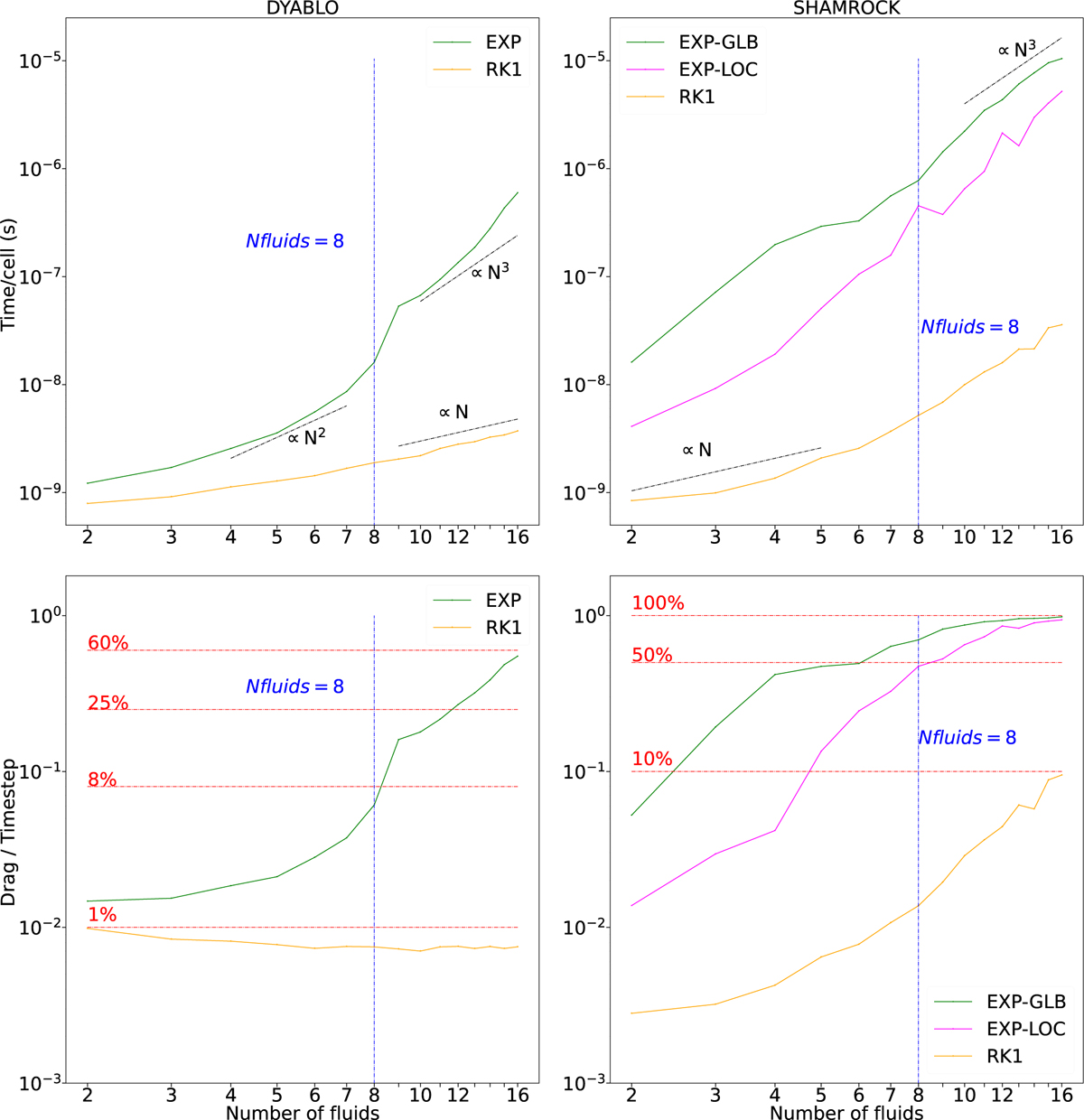
Performance of the EXP drag solver as function of the number of fluids (gas and dust fluids) on one A100 GPU obtained with an implementation with a moderate level of optimisation in the Dyablo (left) and the Shamrock (right) codes. We provide the results obtained with the RK1 algorithm for comparison. The tests with Dyablo used static arrays and global memory. The tests with Shamrock used dynamical arrays and either the local (EXP-LOC) or the global (EXP-GLB) memory. For 8-16 dust fluids, the computational cost of the drag step is ∼ 10−100% of the hydro step, which makes it usable for astrophysical applications.
Current usage metrics show cumulative count of Article Views (full-text article views including HTML views, PDF and ePub downloads, according to the available data) and Abstracts Views on Vision4Press platform.
Data correspond to usage on the plateform after 2015. The current usage metrics is available 48-96 hours after online publication and is updated daily on week days.
Initial download of the metrics may take a while.