


| Issue |
A&A
Volume 704, December 2025
|
|
|---|---|---|
| Article Number | A193 | |
| Number of page(s) | 11 | |
| Section | Astronomical instrumentation | |
| DOI | https://doi.org/10.1051/0004-6361/202557407 | |
| Published online | 15 December 2025 | |
The case for an astrometric mission extension of Euclid
Extending Gaia by six magnitudes with Euclid covering one third of the sky
Istituto Nazionale di Astrofisica (INAF), Osservatorio Astronomico di Padova,
Vicolo dell’Osservatorio 5,
Padova
35122,
Italy
★ Corresponding author: This email address is being protected from spambots. You need JavaScript enabled to view it.
Received:
25
September
2025
Accepted:
27
October
2025
Abstract
The nominal duration of Euclid’s main mission is six years, but current best estimates indicate that the observatory has sufficient propellant to operate for up to ∼14 years in total. In this work, we advocate dedicating six of these ∼8 additional years to repeating the main survey, covering approximately one third of the sky. This repetition would not only improve the sampling, signal-to-noise, quality, and depth of the survey, but – most importantly – would provide a six-year time baseline between two epochs if executed in the same sequence. The availability of multiple epochs would enable the derivation of proper motions for stars as faint as V ≈ 27, i.e. more than five magnitudes fainter than those measured by the Gaia mission. Although it may seem early to propose such a mission extension, in this work we quantitatively illustrate its immense scientific potential. We therefore intend to initiate the technical and scientific discussions early to ensure optimal planning. The extension proposed here would employ only the VIS channel – owing to its superior astrometric capability and depth – while simultaneously using NISP in slitless-spectroscopy mode to enhance the signal-to-noise ratio of first-epoch spectra that would also benefit of proper motions to identify and reject objects within the local Universe.
Key words: instrumentation: high angular resolution / instrumentation: miscellaneous / telescopes / astrometry / proper motions / reference systems
© The Authors 2025
 Open Access article, published by EDP Sciences, under the terms of the Creative Commons Attribution License (https://creativecommons.org/licenses/by/4.0), which permits unrestricted use, distribution, and reproduction in any medium, provided the original work is properly cited.
This article is published in open access under the Subscribe to Open model. This email address is being protected from spambots. You need JavaScript enabled to view it. to support open access publication.
1 Introduction
Over the past ∼30 years, astronomers worldwide have benefited from the unparalleled capabilities of the Hubble Space Telescope (HST): its high angular resolution and stability, and the remarkable quality of its images obtained from the pristine darkness of space. However, these images have been restricted to relatively few and narrow fields of view, and the possibility of observing the entire sky at an HST-comparable resolution has remained, until now, only a dream.
With the advent of the Euclid space observatory (Euclid Collaboration: Mellier et al. 2025), we are closer than ever to realising this vision. Euclid enables observations of about one third of the sky at a resolution and depth similar to those of HST (Fig. 1).
High resolving power directly translates into high-precision imaging astrometry. However, in order to maximize sky coverage while minimizing both the number of pixels (i.e. telemetry requirements) and readout noise, wide-field imagers are often under-sampled, and Euclid is no exception. Its detectors range from moderately to severely under-sampled (Cuillandre et al. 2025; Libralato et al. 2024).
A comprehensive discussion of the challenges in achieving unbiased astrometric precision in under-sampled images from space-based observatories, and the methods of recovering the full astrometric information, is provided in the seminal work of Anderson & King (2000, hereafter AK00). This study introduced an iterative procedure to break the degeneracy and to solve empirically and simultaneously for both the effective point spread functions (ePSFs) and the positions of sources.
In a recent study, Libralato et al. (2024, hereafter L24) demonstrated that, once undersampling is properly treated, Euclid’s detectors are capable of delivering astrometric positional precisions down to the sub-milliarcsecond (sub-mas) level for unsaturated, high-signal-to-noise sources, and as good as 10 mas for sources as faint as V ∼ 27 (see Fig. 2). L24 also described the rather complex procedures required to fully recover the astrometric signal in Euclid images. The lack of optimal calibration data to independently solve for both the ePSFs and the geometric-distortion corrections (GDCs) further complicates the procedures, which are necessarily empirical and iterative.
Astrometric positions from the single-epoch Euclid catalogue already enable, and will continue to enable, important synergies and diverse scientific applications when combined with the Gaia catalogues, as has been partly discussed in L24. Notably, Euclid images reach substantially fainter magnitudes than Gaia – up to approximately six magnitudes deeper, depending on the spectral energy distribution (SED) of the sources.
In this work we propose dedicating part of the (expected) extra operational years beyond the nominal Euclid mission to repeating as much of the already surveyed sky as possible, with a second epoch separated by about six years. This strategy would enable the determination of proper motions (PMs) for sources much fainter (and, naturally, far more numerous on the same patch of sky) than those available in Gaia DR3 or in any future Gaia data release.
The author is a member of the Euclid Consortium. This article, however, is written in his capacity as independent researcher. The proposals and views expressed herein are solely those of the author and should not be regarded as representing the official position of the Euclid Consortium or its governing bodies.
This paper is organized as follows. We briefly outline in Sect. 2 Euclid mission and its stellar astrophysics capabilities. In Sect. 3, we describe the typical Euclid observing strategy for most sky regions (the reference observation sequence, ROS), and how real-data imaging astrometry of these compare with the available and future Gaia catalogues. In Sect. 4, we outline the proposed new observations within the mission extension, and use the preliminary astrometric and photometric performance of Euclid (as presented in L24) to make quantitative predictions for the resulting catalogues. In Sect. 5, we explore the concept of collecting two extra epochs instead of just one. In Sect. 6, we present a brief overview of the scientific applications enabled by this added legacy value of the Euclid mission. In Sect. 7 we summarize the advantages and disadvantages of collecting additional epochs with the Euclid mission. Finally, Sect. 8 provides our conclusions.
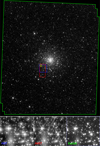 |
Fig. 1 Comparison of imaging depth and resolution from different space observatories. On top are Euclid VIS observations of the globular cluster NGC 6397 combined by Libralato et al. (2024). While both HST and JWST achieve substantially greater imaging depths than Euclid in these specific datasets (HST large program GO-10424 and JWST program GO-1979), the angular resolution of Euclid is comparable to that of HST and JWST, enabling high-precision morphological studies over a considerably larger survey area. The Euclid ~1° × 1° field of view presented in L24 is shown in green, the JWST ∼2.5′×6′ field studied by Bedin et al. (2021, 2024, program GO-1979) in red, and the HST ~3′×3′ field from program GO-10424 in blue. The yellow region of about 50′′ ×50′′ in the top panel is common to the three datasets, which are shown individually in the bottom panels with observatories labelled according to the same colour code. [Images and catalogues available here: HST & JWST and Euclid]. |
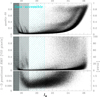 |
Fig. 2 Catalogue published by Libralato et al. (2024) demonstrating the 1D-positional root mean square (RMS) precision of Euclid/VIS imaging astrometry.Mild saturation begins at IE ∼ 19 (shaded light grey regions), while sources brighter than ~18 are severely saturated (region in dark grey). The region of the sources accessible to Gaia is indicated by a shaded region in azure. Top: quality-fit parameter (see Libralato et al. 2024, this parameter quantifies how well a source profile resemble the PSF model) as a function of the calibrated VIS-magnitude in filter IE. Middle: illustration of the astrometric precision as function of the magnitude (in VIS pixels on left axis, and in milli-arcseconds on the right axis). Bottom: the precision is as good as 20 mas in a single exposure for sources at IE ∼ 26, but it can reach sub-mas precision on a single image for well-exposed unsaturated point sources. |
2 Point sources and stellar astrophysics
The Euclid mission, launched on July 1, 2023, is a joint ESA– NASA project designed to explore the nature of dark energy and dark matter by mapping the geometry of the Universe. Operating from the Sun–Earth L2 point, Euclid is conducting a six-year survey of roughly 15 000 square degrees of the sky, capturing high-resolution optical images and near-infrared spectra of over 1.5 billion galaxies and about 30 million spectroscopic redshifts (Euclid Collaboration: Mellier et al. 2025). Equipped with two main instruments – the VISible imager (VIS) and the Near-Infrared Spectrometer and Photometer (NISP) – Euclid aims to reconstruct the large-scale structure of the cosmos and understand its evolution over the past 10 billion years. While its primary focus lies in cosmology, Euclid’s unprecedented data is already having significant impacts on stellar astrophysics, the study of our Galaxy’s structure and evolution, and our knowledge of the Milky Way’s satellite systems.
Euclid’s early results, particularly from the Early Release Observations (ERO), demonstrate its immense power for stellar astrophysics (e.g.: ESA 2024a; George et al. 2025; Cuillandre et al. 2025; Hunt et al. 2025, and references therein). These single-day observations revealed a breathtaking diversity of objects: star-forming regions, open and globular clusters, nearby galaxies, galaxy clusters, and diffuse stellar populations. Euclid catalogued over 11 million objects in visible light and about 5 million in the infrared, enabling astronomers to probe stellar populations at unprecedented scales. Among its notable findings is the detection of numerous free-floating planets and brown dwarfs (BDs) – objects that bridge the gap between stars and planets – suggesting that the Galaxy may host hundreds of thousands of such sub-stellar bodies, possibly down to Saturn-like masses (Martín et al. 2025; ESA 2024a). These discoveries are crucial for understanding stellar formation, planetary system evolution, and the role of low-mass objects in Galactic dynamics.
Euclid’s high-resolution imaging also provides fresh insights into the structure and evolution of the Milky Way. While not primarily designed as a Galactic survey, its wide-field coverage captures stars across the disc, bulge, and halo, complementing missions such as Gaia and JWST. By characterizing stellar populations and tracing their motions and compositions, Euclid helps build a clearer picture of how the Milky Way assembled its mass over cosmic time and how its structure fits into the broader context of galaxy evolution within the cosmic web. Moreover, by mapping galaxies across cosmic history, Euclid indirectly informs models of how galaxies like the Milky Way formed, interacted, and evolved in various environments, including groups and clusters.
One of Euclid’s most transformative contributions concerns the satellites of the Milky Way and nearby dwarf galaxies. The ERO data revealed a ‘rich harvest’ of previously undetected faint dwarf galaxies, improving our census of low-mass companions around massive galaxies (Marleau et al. 2025; ESA 2024b). In particular, Euclid’s deep imaging of galaxy clusters, such as Perseus, enabled measurements of the luminosity and stellar mass functions down to extremely faint magnitudes (M ≈ −11.3). Intriguingly, these observations suggest fewer low-mass galaxies than predicted by standard cosmological simulations, posing challenges to our understanding of dark matter distribution and dwarf galaxy formation. Such findings have direct implications for solving long-standing problems in astrophysics, such as the ‘missing satellites’ problem, and help refine models of how small galaxies form, survive, or are disrupted in the environments around larger systems such as the Milky Way.
In essence, Euclid is far more than a cosmological probe. While its overarching goal is to unveil the nature of dark energy and dark matter, its wide-field, high-resolution view of the Universe is transforming multiple areas of astrophysics simultaneously. By uncovering populations of rogue planets and sub-stellar objects, mapping the structure and evolution of our Galaxy, and expanding our knowledge of faint dwarf galaxies and satellite systems, Euclid is reshaping our understanding of how the Milky Way fits into the grand narrative of cosmic history. Its continuing surveys promise an unprecedented synergy between cosmology and stellar astrophysics, offering a new, holistic view of our place in the Universe.
3 Euclid work-horse observing strategy
The Euclid mission employs a carefully designed observing strategy to achieve its primary scientific objectives of probing the nature of dark energy and dark matter through precise measurements of galaxy shapes and redshifts across a large portion of the extragalactic sky. Central to this strategy are the Wide Survey, which covers approximately 15 000 deg2, and the Deep Fields, totalling about 50 deg2, supplemented by Deep Auxiliary Fields of 6.5 deg2 that provide ultra-deep imaging for calibration and specialized scientific studies (see Fig. A.1). Observations were conducted using the VISible Imaging Channel (VIS) and the Near-Infrared Spectrometer and Photometer (NISP) operated (mostly) simultaneously. Each pointing in both cameras employs a four-point dithering pattern with an offset of roughly 100 arc-seconds, designed to ensure uniform coverage, improve sampling of the point spread function (PSF), fill gaps between detectors, and facilitate rejection of cosmic ray and artefacts (such as hot or warm pixels, snowballs, or persistence).
For the Wide Survey, the data collection at each of the four pointings follows the reference observation sequence (ROS), which we can summarize in two steps (Euclid Collaboration: Scaramella et al. 2022):
step-1: the nominal exposure time for VIS filter IE is 566 seconds per pointing, while NISP performs simultaneous spectroscopic observations with grisms lasting 549.6 seconds per exposure, for a total duration with overheads for this step of 585 s.
step-2: Once this step is concluded, NISP-only is operated to collect imaging in the YE, JE, and HE bands with 87.2 seconds per exposure. In this second part of the sequence, VIS is not collecting (deep) images because of a lack of telemetry and because of potential vibrations introduced by the mechanical filter change of NISP. The total duration of this second phase is 388 s.
The dithering strategy is optimized to balance uniform sky coverage with spacecraft operational constraints, so that each sky position is observed multiple times and on different parts of the detectors, allowing both systematic effects and instrumental variations to be mitigated. The Deep Fields employ a more concentrated observing pattern, with multiple exposures per field to achieve greater depth, reaching fainter magnitudes and enabling high-resolution (and accuracy) calibration for the Wide Survey.
Sky coverage proceeds according to a reference survey sequence (RSD) that accounts for calibration requirements, spacecraft pointing constraints, and the distribution of bright sources and background light across the sky (see Fig. A.1). Observations are scheduled to optimize efficiency, minimize gaps, and maintain uniform depth while balancing visibility and the thermal constraints of the spacecraft. Calibration observations are interleaved with science exposures and include both photometric and spectroscopic checks. In addition to the main science exposures, Euclid periodically acquires short calibration exposures aimed at monitoring the stability of the VIS and NISP instruments and at validating the spectroscopic performance of the survey. These observations are used to assess potential temporal drifts in the instrument response, ensure accurate PSF and photometric calibration, and verify the completeness and purity of the redshift catalogue through comparisons with reference fields with known spectroscopic redshifts (Euclid Collaboration: Scaramella et al. 2022).
Prior to the main mission, ERO were conducted over 24 hours on a set of 17 astronomical targets including galaxy clusters, nearby galaxies, globular clusters, and star-forming regions. These observations employed the same four-dither strategy used in the main surveys, with VIS exposures in filter IE of 566 seconds and NISP exposures of 87.2 seconds in the YE, JE, and HE bands, demonstrating the capabilities of Euclid and providing early public data. By combining wide and deep observations, precise dithering, and careful calibration, the Euclid mission ensures high-fidelity imaging and spectroscopy, allowing it to map the large-scale structure of the Universe with unprecedented accuracy and to advance our understanding of dark energy and dark matter.
Comparison of Euclid and Gaia DR3 astrometry
To illustrate the power of Euclid’s imaging astrometry, in this section we compare its results with those of the best all-sky astrometric catalogue currently available – the Gaia source catalogue in its most recent public release, DR3. This comparison, discussed in part in L24, is presented here to quantitatively demonstrate Euclid real data, not to diminish in any way the extraordinary scientific value of the Gaia catalogues. For clarity, we divide this comparison into three magnitude regimes (see Fig. 2 for reference)1:
Gaia domain – G ≲ 19: Most sources with G < 19 in the Gaia catalogues are saturated, or nearly saturated, in Euclid images. Their PSFs – and therefore their astrometric positions – are significantly affected. For these bright sources, Euclid cannot improve or complement the astrometric precision or accuracy of any past or future Gaia data releases.
Euclid domain – G ≳ 21: At the faint end, most sources with G > 21 are simply too faint to be detected or measured by Gaia and are therefore absent from DR3 and will remain so in all future Gaia releases. In this regime, Euclid’s astrometric catalogue becomes invaluable, providing positional measurements for sources up to six magnitudes fainter than those included in Gaia.
Synergy domain – 19 ≲ G ≲ 21: This intermediate range deserves special attention. In this magnitude interval, sources are measurable by both Gaia and Euclid. The high signal-to-noise Euclid positions can contribute to better constraining the astrometric solutions derived from the fit to the individual Gaia measurements of these faint stars.
More importantly, even a single-epoch Euclid catalogue enables the derivation of Gaia-Euclid PMs, as has been demonstrated in L24. By combining Euclid positions (epoch ~ 2023.7) with Gaia DR3 positions (epoch 2016.0), high-precision PMs can be obtained. These combined PMs were shown to improve the accuracy of Gaia DR3 values by up to an order of magnitude.
However, while Gaia-Euclid PMs based on DR3 show improvements by up to a factor of ten, this advantage will naturally diminish as newer Gaia releases become available. The upcoming Gaia DR4 (expected December 2026) will likely reduce this factor to about 4–5, and DR5 to roughly 2 for the majority of the stars in the synergy domain (Brown 2024). Nevertheless, we note that improving the proper-motion precision by a factor of two (in milli-arcseconds per year) increases the accessible volume of space by a factor of eight, for a given target precision in tangential velocity (in kilomerters per second).
In addition, PMs can be derived for sources that currently lack them in DR3 – those with only two-parameter (2p) astrometric solutions, i.e. positions only. The comparison between Gaia DR3-Euclid PMs and Gaia DR3 PM values, as well as the newly obtained PMs for 2p-only sources, are shown in Fig. 3, based on the L24 catalogue.
It must also be clearly stated and emphasized that the link between unsaturated Euclid sources and Gaia entries provides the astrometric anchoring of Euclid data to an absolute reference system. Because Euclid covers only relatively narrow fields, it cannot independently determine absolute positions except with respect to background galaxies – whose centroids are less reliable due to morphological complexity and deviations from point-source PSFs.
Finally, future Gaia releases will include the individual epoch astrometric measurements for each source. The combination of these data with Euclid’s high-signal-to-noise positions for faint stars in this magnitude range will further improve the fit of all the astrometric parameters (positions, PMs, and parallaxes) of common objects.
4 A second epoch of the Euclid Wide Survey
In this work, we advocate for conducting a second epoch of the entire Euclid Wide Survey (EWS) – or as large a fraction of it as operationally feasible – to begin immediately after the nominal six-year duration of the main mission. The second epochs should aim to repeat step-1 of the survey (described in Sect. 3) in a manner as identical as possible to the original, including the same cadence, observing strategy, dither, and instrument configuration.
Aspirationally, we envision repeating the entire 15 000 deg2 of the EWS, though even a partial re-observation∼ of selected regions would yield significant scientific benefits. From an operational standpoint, we foresee no major technical obstacles to this plan. Current estimates (Guzzo 2024)2 suggest that the spacecraft’s propellant should allow for up to an additional eight years of operations after the nominal six-year mission, which would enable a full re-observation of the same sky area. Furthermore, planning a second epoch limited to just the ‘step-1’ of the Euclid observing sequence (described in the previous section), would shorten the observation to ∼60% of the step-1+step-2 duration of the main mission, making it faster to repeat the survey, or potentially offering a collection of extra images and spectra for each pointing.
A second epoch of the EWS, carried out at equal depth, would provide a remarkable scientific return, far exceeding the alternative of extending the survey to cover an additional one third of the sky at a shallower depth. By design, the already-surveyed area represents the darkest regions available; hence, re-observing the same fields would maximize sensitivity while boosting photometric signal-to-noise. The scientific advantages of this approach are manifold: not only would it reinforce the primary Euclid science goals, but it would also enable a wealth of new opportunities in both extragalactic and stellar astrophysics.
One of the most compelling motivations for a second Euclid epoch is the ability to measure PMs for an unprecedented number of sources; fainter than what is reachable by Gaia (i.e. G ≳21). Taking into account the updated source statistics from the most recent estimates presented at the 2024 EAS meeting (Brown 2024), the total number of objects in the Gaia catalogue is expected to increase from about 1.8 billion in DR3 to nearly 2.8 billion in DR4, with roughly one billion of them being 2p sources – that is, entries with only positional information. In the subsequent DR5 release, these numbers will grow only moderately. Since Euclid will survey approximately one third of the sky, it will overlap with of the order of 3 × 10⁸ of the Gaia 2p sources and roughly 5 × 10⁸ of the 5p+ sources.
When considering the same area of sky, Euclid is expected to detect roughly five times more sources than are contained in Gaia DR3 (L24), owing to its ~6 mag deeper limiting sensitivity. However, this ratio will naturally decrease as future Gaia releases include more faint sources. Based on current forecasts (Brown 2024), the Euclid-to-Gaia source ratio will drop from ∼5× relative to DR3, to about 3× for DR4, and to roughly 2.5 for DR5, still representing a substantial increase in the number of detectable objects over the same sky area. Even with these updated figures, Euclid will therefore remain a unique and complementary facility, extending the reach of space-based astrometry to several magnitudes fainter than the final Gaia catalogues.
Based on current estimates, a time baseline of ~6–8 years between the two epochs would allow proper-motion uncertainties down to the few 100 µas yr−1 level at the EWS detection limit. These unprecedented astrometric capabilities would enable a clean separation between Galactic and extragalactic sources, improve Milky Way structural models, trace stellar streams and tidal debris in the halo, and provide new constraints on the formation and evolution of the Local Group (more in Sect. 6).
In addition to astrometry, a second epoch would have profound consequences for the slitless spectroscopy obtained by the Near Infrared Spectrometer and Photometer (NISP). Doubling the exposure time on every target would directly improve the signal-to-noise ratio of Euclid’s low-resolution spectra, enabling more robust redshift measurements, especially for faint galaxies near the current detection limit. This deeper spectroscopic dataset would reduce catastrophic redshift failures, improve clustering analyses, and enhance constraints on cosmological parameters. Moreover, fainter emission-line galaxies would become accessible, broadening the redshift range and increasing the number density of spectroscopic tracers available for cosmological studies.
Also as a benefit to cosmology and for the Euclid’s primary mission, additional epochs would enhance the characterization of the GDC and of the ePSF, refining our understanding of their fine structures and of their temporal and spatial variations. This, in turn, would improve the accuracy of weak-lensing measurements. Moreover, proper-motion data could be exploited to distinguish unresolved background fix galaxies from foreground stellar objects moving within the Local Group.
In summary, a second epoch of the EWS would transform Euclid from a static imaging and spectroscopic mission into a multi-epoch astrometric powerhouse, extending its reach well beyond its initial science goals. The combination of doubled imaging depth, enhanced spectroscopy, and precise PMs for billions of sources would open up a vast landscape of new scientific opportunities, as is further discussed in Sect. 6.
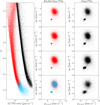 |
Fig. 3 Overview of the comparative astrometric analyses of Euclid and Gaia presented by L24. The left panel shows the Gaia-G magnitude as a function of the 1D PM error (the sum in quadrature of the PM errors along the α cos δ and δ directions divided by |

5 Contemplating two additional epochs
In the nominal mission plan, the EWS provides the first epoch (hereafter epoch 1) over a baseline of six years. In Sect. 4, we advocated for the significant scientific benefits of obtaining a second epoch of the EWS, repeating the survey as identically as possible to the main mission. Here, we consider an even more ambitious scenario: collecting two additional epochs (epoch 2 and epoch 3) after the completion of the nominal mission.
Acquiring two extra epochs would naturally be more challenging from both an operational and resource standpoint, but the potential scientific rewards are considerable. In particular, with three opportunely well-separated epochs, Euclid would be able to measure stellar parallaxes for billions of stars, opening up a new and unique window into Galactic structure and stellar astrophysics. Crucially, to achieve meaningful parallax sensitivity, the three epochs must not all be observed at the same time of the year: at least one of the additional epochs must be obtained approximately six months out of phase with respect to one of the others, in order to sample the parallactic ellipse optimally.
In the simplest scenario, the two extra epochs would match the exposure times and observing strategy of the first epoch, doubling the observational investment relative to the single-epoch case discussed in Sect. 4. However, one could consider a compromise approach: collecting only half the exposure time in each of the new epochs, effectively acquiring two pointings per field instead of four. While this would lead to shallower imaging, it would still provide the necessary astrometric leverage for parallax measurements when combined with the deep first epoch (or a further compromised choice, e.g. three pointings few months apart).
The feasibility of acquiring observations at phases separated by six months depends on a number of engineering and operational constraints that require detailed assessment by the Euclid operations team (Euclid Collaboration: Scaramella et al. 2022). Specifically, it needs to be evaluated whether the spacecraft can safely and efficiently re-orient (Euclid Collaboration: Scaramella et al. 2022, Sect. 2.3) its observing strategy to sample the desired parallactic angles, while maintaining thermal stability, power constraints, and mission efficiency. If such an approach proves to be technically feasible, it would allow Euclid to deliver parallax measurements for sources up to ~6 magnitudes fainter than the Gaia limit. Thanks to the common-unsaturated magnitude interval with Gaia all the Euclid astrometric measurements will be in an absolute reference system, dramatically improving astrometric precision and accuracy (e.g. Bedin & Fontanive 2018, 2020).
Therefore, while repeating the main mission strategy for one identical second epoch is straightforward and operationally viable, extending to two additional epochs spaced by six months introduces non-trivial engineering challenges. Nevertheless, the potential science gains – combining deep Euclid photometry with high-precision parallaxes for billions of faint sources – are so significant that this possibility warrants serious consideration and further discussion within the Euclid collaboration and the astronomical community.
As was discussed at the end of Sect. 3, the additional astrometric data points provided by Euclid will contribute to the fitting of Gaia’s individual astrometric measurements, thereby tightening the constraints on all astrometric parameters at the faint end of the Gaia catalogue. Indeed, starting with Gaia DR4, the individual observations will be publicly released, allowing for joint solutions that combine Gaia and Euclid measurements. This will enable the derivation of accurate parallaxes and PMs for a large fraction of the currently 2p sources, in much the same way as the early Gaia DR1 data were combined with HIPPARCOS and Tycho measurements to improve astrometric solutions. In this context, even a single additional Euclid epoch will substantially enhance the precision of astrometric parameters for faint stars, while a third Euclid epoch – offset by about six months – would provide valuable redundancy for parallax determinations and secure reliable solutions for the faintest sources that might otherwise remain poorly constrained in Gaia DR5 plus Euclid epoch 2 alone.
6 Scientific opportunities
The addition of one or more extra epochs to the EWS would open a vast landscape of new scientific opportunities, far beyond the mission’s original cosmological objectives. By doubling the number of VIS images (and NISP spectra) in each field and enabling time-domain astrophysics, multi-epoch Euclid observations would deliver unprecedented capabilities in stellar astrophysics, Galactic archaeology, extragalactic science, and transient phenomena, while simultaneously improving the main Euclid science goals such as weak gravitational lensing and galaxy clustering. Below, we summarize some of the most promising science cases.
6.1 Stellar astrophysics and Galactic archaeology
Demography of low-mass stars and brown dwarfs: deep multi-epoch imaging will probe the faint end of the stellar luminosity function in the disc, halo, and bulge, as well as the population of BDs in the Galactic field. Proper motions derived from repeated observations will enable a robust separation between nearby sub-stellar objects and distant extragalactic sources, providing a complete census of cool, low-mass populations down to planetary-mass objects.
Faint and ultracool white dwarfs: a temporal baseline will improve detection of very faint, cool, and massive white dwarfs, critical tracers of the oldest stellar populations. The resulting statistics will inform models of stellar evolution, star formation history, and Galactic chemical enrichment.
Stellar streams, halo substructure, and accretion history: combining precise PMs with deep photometry allows the detection of faint tidal streams, disrupted satellites, and other low-surface-brightness structures in the Galactic halo, thereby constraining the merger history of the Milky Way and the properties of dark matter. According to current survey forecasts, the EWS will cover approximately ∼25 known stellar streams and ~15 significant halo substructures within its footprint, while also providing sensitivity to detect many more ultra-faint streams predicted by Λ cold dark matter (ΛCMD, where Λ is the cosmological constant). The addition of a second or third epoch would enable accurate mapping of their kinematics, revealing the signatures of past accretion events and constraining the Galactic gravitational potential on large scales. Multi-epoch Euclid data will thus provide an unprecedented census of tidal debris and faint satellites, placing powerful constraints on dark matter models and the hierarchical assembly history of the Milky Way.
Star clusters and internal dynamics: two or three epochs would allow kinematic measurements of stars within globular clusters and open clusters, probing their internal velocity dispersion, mass segregation, and evaporation rates. Within its current footprint, the EWS is expected to observe approximately ~25–30 known globular clusters and about ~250 open clusters, spanning a broad range of distances, metallicities, and dynamical states. In combination with parallaxes and accurate photometry, this will enable robust determinations of dynamical masses, tidal radii, and structural parameters for these systems. Moreover, the ability to measure PMs for stars several magnitudes fainter than the Gaia limit will allow us to probe cluster outskirts in unprecedented detail, revealing tidal tails, ongoing disruption, and the effects of the Galactic tidal field on cluster survival. This opens unique insights into the interplay between cluster evolution, the Galactic potential, and the early assembly history of the Milky Way.
Dwarf galaxies and ultra-faint satellites: thanks to its wide-area coverage, exquisite angular resolution, and sensitivity to low surface brightness, the EWS will provide an unprecedented census of nearby dwarf galaxies. Within its ∼15 000 deg2 footprint, Euclid is expected to re-observe nearly all of the ~60 known Milky Way satellites and to discover at least ∼80 – 120 new dwarf galaxy candidates, extending the census to MV ~ −6 and down to surface brightness levels as faint as µV ∼ 31 mag arcsec−2. Furthermore, Euclid will cover more than 70% of the known nearby galaxy groups, enabling the detection of hundreds of ultra-faint dwarf galaxies out to distances of ∼5 Mpc. This will significantly improve constraints on galaxy formation in low-mass halos and provide a direct test of ΛCDM predictions for the abundance of dark-matter-dominated systems.
While two epochs would provide unprecedented PMs, the addition of a third epoch, optimally offset in phase by about six months, would also enable the measurement of stellar parallaxes down to magnitudes as faint as V ~ 26. Access to accurate distances would provide direct determinations of absolute magnitudes, placing individual stars and sub-stellar objects on well-calibrated luminosity functions. This capability would allow us to break degeneracies between intrinsic luminosity and distance, enabling more robust determinations of the mass function of low-mass stars and BDs, the ages and metallicities of faint white dwarfs, and the 3D structure of stellar streams, clusters, and tidal debris. In this way, parallaxes from a third epoch would provide crucial additional constraints on stellar astrophysics and Galactic archaeology, significantly enhancing the scientific return of the Euclid mission.
6.2 Time-domain science and transients
Multiple epochs of Euclid will be particularly effective in revealing variable sources. This is particularly tre when considering the simultaneous surveys by observatories such as LSST and the upcoming Roman Space Telescope.
Supernovae and other transients: Multi-epoch imaging naturally enables the discovery and characterization of supernovae, kilonovae, tidal disruption events, and other variable phenomena. Euclid’s relatively red filter, IE, would be particularly powerful for high-redshift supernovae and dust-obscured events.
Stellar variability and exotic objects: With photometric monitoring over multiple years, Euclid can detect variability across a wide range of stellar types. These, including flare stars, pulsating variables, eclipsing binaries, and rare compact objects such as cataclysmic variables or AM CVn systems.
Microlensing events: The repeated coverage of the same fields at a high angular resolution could allow for the serendipitous detection of microlensing events by compact objects, including possible constraints on isolated stellar remnants and even free-floating black holes. Once a luminosity variation is detected and flagged, these candidate events could be promptly followed up with other space- and ground-based facilities, enabling spectroscopic characterization, multi-band photometric monitoring, and precise modelling of the lensing geometry.
6.3 Enhancing Euclid’s core science
Improved PSF modeling and weak lensing performance: Doubling the number of images per field would enable temporal modelling of both the Euclid PSFs and of the geometric distortion correction (L24), improving control of systematics in weak gravitational lensing analyses.
Better photometric redshifts and spectroscopy: Doubling the exposure time of slitless NISP spectra would directly improve the signal-to-noise ratio, leading to more accurate and complete redshift estimates, especially for faint galaxies near the current detection limit.
Higher-precision galaxy catalogs: Multi-epoch imaging would enable the construction of deeper, cleaner (decontaminated from foreground moving stars), and more complete galaxy and pointsource catalogues, benefiting a wide range of astrophysical studies.
6.4 Extended astrometric capabilities
Proper motions and parallaxes: With two epochs separated by ∼6–8 years, Euclid can derive PMs for up to 7–9 billion sources (L24), reaching ∼6 magnitudes fainter than the Gaia limit. With three epochs, strategically offset in orbital phase by six months, parallaxes would become feasible even at very faint magnitudes, enabling unprecedented 3D mapping of the Milky Way and its satellites.
Synergy with Gaia and LSST: A powerful way to obtain precise light curves in crowded fields is to use an external high-resolution catalogue to model and subtract neighbouring stars via the instrument’s PSF. This neighbour-subtraction technique reduces blending and yields cleaner light curves than aperture photometry, which is always affected by dilution effects (e.g. Nardiello et al. 2019, 2015; Libralato et al. 2016, and references therein). A Euclid-based input list, with its depth and angular resolution, would be an ideal reference for LSST, enabling accurate photometry in dense regions and extending its discovery potential for faint variables, transients, and exoplanet signals.
6.5 Legacy science value
The combined imaging, spectroscopy, astrometry, and time-domain information from multi-epoch Euclid observations will provide a transformative, multi-purpose dataset. The resulting catalogues of point sources, parallaxes, PMs, galaxy morphologies, and spectral properties will represent a unique resource for the community, supporting investigations across virtually all fields of astrophysics for decades to come.
7 Pros and cons of additional epochs
Adding one or more extra epochs to thee EWS comes with a range of scientific benefits but also technical and operational challenges. Below we summarize the main considerations.
7.1 Scientific advantages
Dramatic improvement in astrometry: a second epoch would enable PM measurements for up to ∼7–9 billion stars down to VIS ∼26 mag, roughly 6 magnitudes fainter than Gaia, with the precision of approximately a few hundred micro-arcseconds (µas) for the faintest sources. A third epoch, suitably offset in phase, would additionally enable parallax determinations for faint stars, providing an unprecedented 3D map of the Milky Way and its satellites.
Boost in photometric depth and signal-to-noise: doubling the exposure time for both VIS images and NISP spectra leads to improved signal-to-noise ratios and more effective rejection of artefacts, better photometric redshifts, and higher-quality slitless spectra, particularly for faint galaxies near the current detection limit.
Enhanced PSF modelling and weak lensing: more epochs improve the temporal modelling of the PSF, benefiting weak lensing shape measurements and reducing systematics. A better characterization of GDC will also enhance calibration accuracy.
Time-domain astrophysics: additional epochs enable the discovery and characterization of variable sources, transients, tidal disruption events, supernovae, microlensing, and other rare phenomena.
Legacy value: multi-epoch Euclid data would create an unparalleled astrophysical dataset, complementing Gaia, LSST, and Roman, enabling a vast range of community-driven science for many years.
7.2 Technical and operational challenges
Charge transfer efficiency (CTE) degradation: over time, radiation damage in space causes CTE losses in the VIS CCD detectors, degrading astrometric and photometric performance. However, lessons from HST/ACS-UVIS and Gaia show that CTE effects can be accurately modelled and corrected even after 10–20 years of operation, meaning this is a manageable, not prohibitive, issue.
Thermal stability and instrument aging: long-term stability of the optical system and thermal control is critical for maintaining PSF quality and astrometric accuracy. While small drifts are expected, they can be mitigated through recalibration strategies.
Mission planning and fuel budget: while current estimates (Guzzo 2024) predict sufficient propellant for up to ~8 years of extended operations, operational constraints, scheduling priorities, and data volume limitations must be carefully evaluated.
Telemetry and data processing: doubling or tripling the number of exposures increases the data volume significantly, requiring enhanced capabilities and additional resources for calibration, reduction, and archiving.
Engineering feasibility of non-synchronous epochs: if parallaxes are desired, one of the additional epochs must be observed ~6 months out of phase relative to the others. This raises complex scheduling and thermal constraints that require dedicated assessment by the Euclid operations team.
7.3 Lessons from HST and Gaia
Experience from long-duration space missions like HST (still operating successfully for more than 30 years) and Gaia (2013– 2025) demonstrates that detector aging, CTE degradation, and optical stability challenges are surmountable with proper calibration pipelines. Euclid benefits from this accumulated expertise and is well positioned to maintain high-quality astrometry and photometry even beyond its nominal mission lifetime.
Overall, while some technical hurdles exist, none appear fundamentally prohibitive. The scientific return from one or more additional epochs would be transformative, significantly amplifying Euclid’s legacy and enhancing its synergies with future surveys.
8 Conclusions
The Euclid mission already represents a transformative leap forward in high-resolution imaging and cosmological mapping, but its potential to deliver groundbreaking astrometric science is far from fully realized. Leveraging its exceptional stability, wide-field imaging, and sub-milliarcsecond astrometric precision, Euclid can extend the reach of Gaia’s legacy by more than six magnitudes, accessing billions of fainter sources across one third of the sky.
By dedicating a portion of the mission’s anticipated extended lifetime to conducting a second epoch of the EWS, we could unlock unprecedented scientific opportunities. Two well-separated epochs would enable the determination of accurate PMs for up to ∼7–9 billion stars, reaching down to V ~ 26 mag (estimates based on results by L24).
If technically feasible, adding a third epoch, optimally offset by six months in orbital phase, would represent a further transformative leap, enabling precise parallax measurements down to V ∼ 26. This would extend 3D mapping of the Milky Way and its satellite systems into regimes unreachable by any existing or planned mission, revolutionizing our understanding of Galactic structure, stellar populations, and the assembly history of the Local Group.
Beyond astrometry, the science benefits are multifaceted. A second epoch would double the depth of Euclid’s slitless spectroscopy, significantly improving redshift completeness and accuracy, expanding access to faint emission-line galaxies, and enhancing clustering analyses and cosmological constraints.
Furthermore, repeated imaging has the potential to produce significant advances in time-domain astrophysics, encompassing phenomena such as supernovae, microlensing events, variable stars, and tidal streams, with implications spanning stellar, Galactic, and extragalactic regimes. The high-angular-resolution input catalogue and detections provided by Euclid will facilitate accurate and precise characterizations in ongoing surveys conducted by observatories such as LSST and Roman, with methods similar to those described in (Nardiello et al. 2019, and reference there in).
Therefore, even a modest extension of the Euclid mission would transform it into a multi-epoch astrometric powerhouse, extending Gaia’s impact by an order of magnitude in both depth and scope. Such an investment would pay extraordinary dividends across a vast range of science cases, ensuring Euclid’s enduring legacy in mapping the Universe and our place within it.
Finally, the long-term value of a multi-epoch Euclid survey would be immense. The resulting catalogues – comprising precise positions, parallaxes, PMs, high-quality spectra, and morphological measurements – would form a legacy dataset of unparalleled depth and breadth, complementing Gaia, LSST, and the Roman Space Telescope. This synergy would secure European leadership in space-based astrometry well into the coming decades and provide a foundation for addressing some of the most pressing questions in astrophysics and cosmology.
Acknowledgement
The author is grateful to the referee Dr. Ulrich (Uli) Bastian for the prompt and thorough evaluation of the manuscript. The constructive comments – particularly those concerning the use of current and forthcoming Gaia catalogues – have been invaluable in improving both the clarity and the overall quality of the paper. The author also thanks Dr. Mattia Libralato for carefully reading the manuscript and for his insightful suggestions.
Reference
- Anderson, J., & King, I. R. 2000, PASP, 112, 1360 [NASA ADS] [CrossRef] [Google Scholar]
- Bedin, L. R., & Fontanive, C. 2018, MNRAS, 481, 5339 [NASA ADS] [CrossRef] [Google Scholar]
- Bedin, L. R., & Fontanive, C. 2020, MNRAS, 494, 2068 [NASA ADS] [CrossRef] [Google Scholar]
- Bedin, L. R., Anderson, J., Apai, D., et al. 2021, The faintest and coolest stars in the two closest globulars, JWST Proposal. Cycle 1, ID. #1979 [Google Scholar]
- Bedin, L. R., Nardiello, D., Salaris, M., et al. 2024, Astron. Nachr., 345, e20240039 [NASA ADS] [CrossRef] [Google Scholar]
- Brown, A. 2024, in EAS2024, European Astronomical Society Annual Meeting, 208 [Google Scholar]
- Cuillandre, J. C., Bertin, E., Bolzonella, M., et al. 2025, A&A, 697, A6 [Google Scholar]
- ESA 2024a, Euclid Early Release Observations press release, Euclid Consortium press materials, announcement of detection of free-floating planet candidates and brown dwarfs [Google Scholar]
- ESA 2024b, Euclid Early Release Observations press release, highlights detection of new low-mass dwarf galaxies in nearby clusters [Google Scholar]
- Euclid Collaboration (Scaramella, R., et al.) 2022, A&A, 662, A112 [NASA ADS] [CrossRef] [EDP Sciences] [Google Scholar]
- Euclid Collaboration (Mellier, Y., et al.) 2025, A&A, 697, A1 [Google Scholar]
- George, K., Boselli, A., Cuillandre, J. C., et al. 2025, A&A, 701, A40 [NASA ADS] [CrossRef] [EDP Sciences] [Google Scholar]
- Guzzo, L. 2024, in EAS2024, European Astronomical Society Annual Meeting, 2675 [Google Scholar]
- Hunt, L. K., Annibali, F., Cuillandre, J. C., et al. 2025, A&A, 697, A9 [NASA ADS] [CrossRef] [EDP Sciences] [Google Scholar]
- Libralato, M., Bedin, L. R., Nardiello, D., & Piotto, G. 2016, MNRAS, 456, 1137 [NASA ADS] [CrossRef] [Google Scholar]
- Libralato, M., Bedin, L. R., Griggio, M., et al. 2024, A&A, 692, A96 [NASA ADS] [CrossRef] [EDP Sciences] [Google Scholar]
- Marleau, F. R., Cuillandre, J.-C., Cantiello, M., et al. 2025, A&A, submitted [Google Scholar]
- Martín, E. L., Žerjal, M., Bouy, H., et al. 2025, A&A, 697, A7 [NASA ADS] [CrossRef] [EDP Sciences] [Google Scholar]
- Nardiello, D., Bedin, L. R., Nascimbeni, V., et al. 2015, MNRAS, 447, 3536 [CrossRef] [Google Scholar]
- Nardiello, D., Borsato, L., Piotto, G., et al. 2019, MNRAS, 490, 3806 [NASA ADS] [CrossRef] [Google Scholar]
For simplicity, we adopt a crude approximation by assuming that stars saturating in Euclid images at a magnitude of IE ∼ 19 correspond to a Gaia magnitude of G ∼ 19. In reality, this relation depends strongly on the SED of each source. Likewise, we assume that the faintest stars detected by Gaia, at G ∼21, correspond to IE ∼21
https://eas.unige.ch/EAS2024/plenary.jsp. Public and private communication.
Appendix A Euclid survey field of view
The top panel of Fig. A.1 presents the visualization of the Euclid survey areas over the sky. The bottom-panel instead show the currently planned progression of the survey over the operational years [for both panels, credits by: ESA/Euclid Consortium/Planck Collaboration/A. Mellinger.]
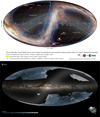 |
Fig. A.1 Top: Visualization of the Euclid survey areas over the sky. Bottom: Survey’s planned progression with the operational years. [For panels, credits by: ESA/Euclid Consortium/Planck Collaboration/A. Mellinger.] |
All Figures
|
Fig. 1 Comparison of imaging depth and resolution from different space observatories. On top are Euclid VIS observations of the globular cluster NGC 6397 combined by Libralato et al. (2024). While both HST and JWST achieve substantially greater imaging depths than Euclid in these specific datasets (HST large program GO-10424 and JWST program GO-1979), the angular resolution of Euclid is comparable to that of HST and JWST, enabling high-precision morphological studies over a considerably larger survey area. The Euclid ~1° × 1° field of view presented in L24 is shown in green, the JWST ∼2.5′×6′ field studied by Bedin et al. (2021, 2024, program GO-1979) in red, and the HST ~3′×3′ field from program GO-10424 in blue. The yellow region of about 50′′ ×50′′ in the top panel is common to the three datasets, which are shown individually in the bottom panels with observatories labelled according to the same colour code. [Images and catalogues available here: HST & JWST and Euclid]. |
| In the text | |
|
Fig. 2 Catalogue published by Libralato et al. (2024) demonstrating the 1D-positional root mean square (RMS) precision of Euclid/VIS imaging astrometry.Mild saturation begins at IE ∼ 19 (shaded light grey regions), while sources brighter than ~18 are severely saturated (region in dark grey). The region of the sources accessible to Gaia is indicated by a shaded region in azure. Top: quality-fit parameter (see Libralato et al. 2024, this parameter quantifies how well a source profile resemble the PSF model) as a function of the calibrated VIS-magnitude in filter IE. Middle: illustration of the astrometric precision as function of the magnitude (in VIS pixels on left axis, and in milli-arcseconds on the right axis). Bottom: the precision is as good as 20 mas in a single exposure for sources at IE ∼ 26, but it can reach sub-mas precision on a single image for well-exposed unsaturated point sources. |
| In the text | |
|
Fig. 3 Overview of the comparative astrometric analyses of Euclid and Gaia presented by L24. The left panel shows the Gaia-G magnitude as a function of the 1D PM error (the sum in quadrature of the PM errors along the α cos δ and δ directions divided by |
| In the text | |
|
Fig. A.1 Top: Visualization of the Euclid survey areas over the sky. Bottom: Survey’s planned progression with the operational years. [For panels, credits by: ESA/Euclid Consortium/Planck Collaboration/A. Mellinger.] |
| In the text | |
Current usage metrics show cumulative count of Article Views (full-text article views including HTML views, PDF and ePub downloads, according to the available data) and Abstracts Views on Vision4Press platform.
Data correspond to usage on the plateform after 2015. The current usage metrics is available 48-96 hours after online publication and is updated daily on week days.
Initial download of the metrics may take a while.