


| Issue |
A&A
Volume 701, September 2025
|
|
|---|---|---|
| Article Number | A152 | |
| Number of page(s) | 22 | |
| Section | Interstellar and circumstellar matter | |
| DOI | https://doi.org/10.1051/0004-6361/202453608 | |
| Published online | 12 September 2025 | |
Gravitationally bound gas determines star formation in the Galaxy
1
National Astronomical Observatories, Chinese Academy of Sciences,
Beijing
100101,
China
2
University of Chinese Academy of Sciences,
Beijing
100049,
China
3
School of Astronomy and Space Science, Nanjing University,
Nanjing
210093,
China
4
Key Laboratory of Modern Astronomy and Astrophysics, Ministry of Education,
Nanjing
210093,
China
5
Department of Astronomy, The University of Texas at Austin,
2515 Speedway, Stop C1400,
Austin,
TX
78712-1205,
USA
6
Institute for Frontiers in Astronomy and Astrophysics, Beijing Normal University,
Beijing
102206,
China
7
New Cornerstone Science Laboratory, Department of Astronomy, Tsinghua University,
Beijing
100084,
China
8
Zhejiang Lab,
Hangzhou
311121,
China
9
Physics Department, National Sun Yat-Sen University,
Kaohsiung City
80424,
Taiwan
10
Center of Astronomy and Gravitation, National Taiwan Normal University,
Taipei
116,
Taiwan
11
School of Physical Science and Technology, Guangxi University,
Nanning
530004,
China
12
Harvard-Smithsonian Center for Astrophysics,
60 Garden Street,
Cambridge,
MA
02138,
USA
13
Centre for Astrochemical Studies, Max-Planck-Institut für Extraterrestrische Physik,
Gießenbachstraße 1,
85748
Garching,
Germany
14
Shanghai Astronomical Observatory, Chinese Academy of Sciences,
Shanghai
200030,
China
15
Purple Mountain Observatory, Chinese Academy of Sciences,
Nanjing
210023,
China
★ Corresponding authors: This email address is being protected from spambots. You need JavaScript enabled to view it.
; This email address is being protected from spambots. You need JavaScript enabled to view it.
Received:
24
December
2024
Accepted:
19
June
2025
Abstract
Stars form from molecular gas under complex conditions influenced by multiple competing physical mechanisms, such as gravity, turbulence, and magnetic fields. However, accurately identifying the fraction of gas actively involved in star formation remains challenging. Using dust continuum observations from the Herschel Space Observatory, we derived column density maps and their associated probability distribution functions (N-PDFs). Assuming that the power-law component in the N-PDFs corresponds to gravitationally bound (and thus star-forming) gas, we analyzed a diverse sample of molecular clouds spanning a wide range of mass and turbulence conditions. This sample included 21 molecular clouds from the solar neighborhood (d < 500 pc) and 16 high-mass star-forming molecular clouds. For these two groups, we employed the counts of young stellar objects (YSOs) and mid to far-infrared luminosities as proxies for star formation rates (SFRs), respectively. Both groups revealed a tight linear correlation between the mass of the gravitationally bound gas and the SFR, suggesting a universally constant star formation efficiency in the gravitationally bound gas phase. The star-forming gas mass derived from threshold column densities (Nthreshold) varies from cloud to cloud and is widely distributed over the range of ~1–17×1021 cm−2 based on N-PDF analysis. However, in solar neighborhood clouds it is in rough consistency with the traditional approach using AV≥ 8 mag. In contrast, in highly turbulent regions (e.g., the Galactic Central Molecular Zone) where the classical approach fails, the gravitationally bound gas mass and SFR still follow the same correlation as other high-mass star-forming regions in the Milky Way. Our findings also strongly support the interpretation that gas in the power-law component of the N-PDF is undergoing self-gravitational collapse to form stars.
Key words: stars: formation / ISM: clouds / local insterstellar matter
These authors contributed equally.
© The Authors 2025
 Open Access article, published by EDP Sciences, under the terms of the Creative Commons Attribution License (https://creativecommons.org/licenses/by/4.0), which permits unrestricted use, distribution, and reproduction in any medium, provided the original work is properly cited.
This article is published in open access under the Subscribe to Open model. This email address is being protected from spambots. You need JavaScript enabled to view it. to support open access publication.
1 Introduction
Stars form out of interstellar gas when gravity overwhelms pressure, turbulence, and magnetic fields (Elmegreen 1989). In the Milky Way and in external galaxies, most stars form in dense regions in molecular clouds (e.g., Gao & Solomon 2004a,b; Wu et al. 2005, 2010; Heyer et al. 2016; Hu et al. 2022b; Neumann et al. 2023). However, how stars form under the competition between gravity and other factors, and what controls the rate and efficiency of star formation in molecular clouds, remain unclear.
The connections between gas content and star formation rate (SFR) have been established through empirical studies, such as the Kennicutt–Schmidt relation (Schmidt 1959; Kennicutt 1998; Kennicutt & Evans 2012). These works show diverse efficiencies of star formation between normal and starburst galaxies (Gao & Solomon 2004a,b), indicating different star formation processes. The dense gas phase, i.e., with a threshold of H2 number density above 104 cm−3 or a threshold of optical extinction AV≥ 8 mag, was found to better correlate with SFR over a wide range of scales, both within the Milky Way (e.g., Wu et al. 2005, 2010; Heyer et al. 2016; Stephens et al. 2016; Pokhrel et al. 2021; Hu et al. 2022b) and in extragalactic systems (e.g., Gao & Solomon 2004b,a; Zhang et al. 2014; Gallagher et al. 2018; Jiménez-Donaire et al. 2019; Bemis & Wilson 2019; Neumann et al. 2023). For example, a roughly linear correlation was found between the SFR and the dense gas mass by taking an empirical column density threshold of AV= 8 mag, for nearby star-forming clouds (e.g., Lada et al. 2010; Evans et al. 2014).
However, distinct exceptions still exist. Very turbulent clouds near galactic centers, such as the central molecular zone (CMZ) of the Milky Way, contain a large amount of dense gas, but the observed SFRs are lower than predicted by an order of magnitude (e.g., Longmore et al. 2013). Therefore, a simple threshold of AV= 8 mag does not adequately distinguish the star-forming gas in molecular clouds.
Recently, it has been recognized that much of the molecular gas is not gravitationally bound (hereafter “unbound”) (e.g., Miville-Deschênes et al. 2017; Evans et al. 2021). Simulations of such gas indicate very low SFRs (Kim et al. 2021). The bound gas, despite comprising a smaller fraction of the total mass, contains the material directly relevant to star formation. Considering the low efficiency in unbound clouds and the metallicity-dependence of cloud mass estimates (Gong et al. 2020; Hu et al. 2022a), the bound gas produces a much lower SFR than that predicted by simple free-fall models, providing a solution to the low star formation efficiency problem of the Milky Way (Evans et al. 2022)1.
However, a precise measurement of the mass of bound gas within a molecular cloud remains challenging, primarily due to the intricate interplay between gravity and turbulence across various scales. To address this challenge, the concept of dense gas mass has been introduced, typically inferred from the line luminosity of molecular transitions with high critical densities (ncrit > 104 cm−3), such as HCN and CS transitions (Wu et al. 2010; Zhang et al. 2014; Liu et al. 2016). This method involves a complex and uncertain conversion from line luminosity to the mass of dense gas. For example, a large fraction of HCN 1–0 emission is found to be actually generated in extended diffused gas regions rather than dense clumps in molecular clouds (Stephens et al. 2016; Evans et al. 2020). In addition, these tracers may not necessarily always trace the bound gas, especially in regions with unusually high turbulence. Given that different dense gas tracers may give different conversions from line luminosity to dense gas mass, all of these factors make the accurate estimation of the mass of star-forming gas very impractical.
The column density probability distribution function (N-PDF) was proposed as a powerful tool to quantify gas components. The turbulent, low-density gases would appear as a lognormal distribution (Federrath et al. 2010; Kainulainen et al. 2014; Federrath et al. 2016) powered by the atomic gas around GMCs (Burkhart et al. 2015). At higher densities, the N-PDF develops a power-law tail generated by self-gravitating gas (Klessen 2000; Burkhart et al. 2017). The breakpoint, Nthreshold, which distinguishes between the lognormal and power-law profiles, presents the division of cloud mass structure into unbound and bound portions.
The N-PDF can be observationally measured from molecular lines, for example CO (e.g., Schneider et al. 2016; Orkisz et al. 2017), or from dust absorption or emission. Dust based N-PDF benefits from being free of opacity and depletion problems that seriously constrain the use of CO for N-PDF, especially in dense regions. Herschel (Pilbratt et al. 2010) has enabled the N-PDF study with far-IR dust emission at good resolution and sensitivity toward quite a few individual star-forming regions (e.g., Schneider et al. 2013; Lombardi et al. 2015; Chen et al. 2018; Schneider et al. 2022).
Taking advantage of its low optical depth, for this work we used dust emission to generate the N-PDF in a representative sample of nearby low-mass and distant, massive molecular clouds, to separate bound gas and unbound gas, and to quantitatively measure the mass of bound gas. We also tested whether gravitational bound gas is a good representative of star-forming gas. Then we made further tests in molecular clouds in the CMZ to check if it can explain the low star formation rate in the CMZ. All the clouds have high-sensitivity far-infrared images of dust emission, observed with the Herschel space telescope, using PACS (Poglitsch et al. 2010) and SPIRE (Griffin et al. 2010). In Section 2, we describe the sample selection and the methods we used to generate N-PDF for these sources. The major results including correlations between the derived gravitational bound gas mass and star formation rates are presented in Section 3. In Section 4, we discuss the factors that determine the rate and efficiency of star formation in the Galaxy. Our conclusions are given in Section 5.
2 Sample selection and methods
2.1 Sample selection
To study the correlation between self-gravitating gas masses and star formation rates over a wide dynamic range, we selected a sample of nearby star-forming regions as well as distant and massive clouds (Lada et al. 2010; Wu et al. 2010; Evans et al. 2014). This sample encompasses molecular clouds with masses ranging from 102 to 105 M⊙.
2.1.1 Low-mass star-forming regions
The sample of low-mass star-forming regions combines data from references Lada et al. (2010) and Evans et al. (2014). The first subsample (e.g., Lada et al. 2010) includes 11 clouds from eight nearby star-forming regions within a distance of less than 500 pc. The 2MASS images were adopted to estimate the extinction for calculating gas mass above AV = 8 mag. The second subsample (e.g., Evans et al. 2014) consists of 29 clouds from 12 star-forming regions. The Spitzer (3.6–160 μm bands) and 2MASS data were both utilized to generate extinction maps for estimating the gas mass above AV = 8 mag. Five star-forming regions (Lupus I, II, II, Perseus, and Ophiuchus) are contained in both subsamples. The differences between the derived gas masses above AV = 8 magnitudes from the different subsamples are less than 50%. For target regions not covered by Evans et al. (2014), we adopted gas mass estimates above AV = 8 magnitudes from Lada et al. (2010). Utilizing the YSO counting approach to calculate the star formation rate, the combination of these two subsamples provides the best available nearby star-forming cloud sample with good SFR estimation in the literature to study SFR-related correlations2.
To ensure uniform Herschel data quality across our sample, we searched the combined list in the Herschel Gould Belt survey (HGBS) archive, where we found deep PACS and SPIRE data for 21 clouds. Detailed descriptions of the observations and data reductions can be found in Section 2.2.1. We adopted the distance and star formation rate (SFR) calculated from YSO counting, as reported in Lada et al. (2010); Evans et al. (2014), and Zucker et al. (2020). The resulting list of 20 clouds is presented in Table 1.
Basic information for nearby star-forming clouds.
2.1.2 High-mass star-forming regions
We selected high-mass star-forming clouds from Wu et al. (2010), which is a well-studied massive star-forming clump sample. The sources mapped in CS 5–4 (Shirley et al. 2003) have virial masses within the nominal core radius ranging from 30 M⊙ to 2750 M⊙, with a mean of 920 M⊙. Most sources in this category contain compact or ultracompact H II regions.
Accurate distance measurements are crucial for calculating the mass of each cloud. We conducted a cross-match of this sample with the data from Reid et al. (2014) to identify a subsample for which distances have been accurately determined using parallax measurements. Subsequently, we searched the cross-matched sample in the Herschel archive to select sources with available deep SPIRE and PACS images. In the resulting sub-sample, a few sources have low bolometric luminosity. It has been observed that for sources with low bolometric luminosity (less than 104.5 L⊙, Wu et al. 2010) or low SFR (less than 5 × 10⁻⁶ M⊙ yr−1, Vutisalchavakul et al. 2016), the bolometric luminosity may no longer trace the SFRs well due to the lack of high-mass stars in the initial mass function (IMF). We therefore removed these targets from our sample. The 16 massive star-forming regions we chose are listed in Table 2.
2.2 Calculating column density
2.2.1 Data of dust emission
We employed Herschel3 data to generate the column density maps of the target molecular clouds. For the nearby star-forming regions, we retrieved the HGBS data that were taken at 70 and 160 μm using the PACS instrument (Poglitsch et al. 2010) and at 250,350, and 500 μm using the SPIRE instrument (Griffin et al. 2010). The HGBS took a census in the nearby (0.5 kpc) molecular cloud complexes for an extensive imaging survey of the densest portions of the Gould Belt, down to a 5σ column sensitivity NH2 ~ 1021 cm−2 or AV ~ 1 (André et al. 2010). All target fields were mapped in two orthogonal scan directions at a scanning speed of 60″ s−1 in parallel mode, acquiring data simultaneously in five bands. The angular resolution in this observing mode is 7.6″ at 70 μm, 11.5″ at 160 μm, 18.2″ at 250 μm, 25.2″ at 350 μm, and 36.9″ at 500 μm. The data were reduced using Herschel Interactive Processing Environment (HIPE) version 7.0. A more detailed description of the observations and data reductions is available on the HGBS archives4. The reduced SPIRE/PACS maps for all target molecular clouds also are from the same website.
For the distant and massive clouds, we retrieved the level 2.5 processed archival Herschel images, which are from the Herschel Infrared Galactic plane Survey (Hi-GAL) (Molinari et al. 2010). The Hi-GAL is a photometric survey designed to map the entire Galactic plane at 70, 160, 250, 350, and 500 μm simultaneously with 166 individual maps (e.g. “tiles”), each covering a region of the sky of 2.°2 × 2.°2. Since we are interested in extended structures, we adopted the extended emission products, which were absolute zero-point corrected based on the images taken by the Planck space telescope.
Information and derived parameters for massive star-forming regions.
2.2.2 Calculating H2 column density with Hersche/images
We performed single-component, modified blackbody spectral energy distribution (SED) fits to each pixel of input Herschel PACS/SPIRE images. Before performing any SED fitting, we convolved all images to a common angular resolution of the largest telescope beam (36.9″), and all images were re-gridded to have the same pixel size. We weighted the data points by the measured noise level in the least-squares fits. Following Roy et al. (2014), we adopted the dust opacity per unit mass at 1000 GHz of 0.1 cm2 g−2 (Ossenkopf & Henning 1994). For the modified blackbody assumption, the flux density Sν at a certain observing frequency ν is given by
![Mathematical equation: $\[S_\nu=\Omega_m B_\nu\left(T_{\mathrm{d}}\right)\left(1-e^{-\tau_\nu}\right),\]$](/articles/aa/full_html/2025/09/aa53608-24/aa53608-24-eq77.png) (1)
(1)
where the column density N can be approximated by
![Mathematical equation: $\[N=g\left(\tau_\nu / \kappa_\nu \mu m_H\right),\]$](/articles/aa/full_html/2025/09/aa53608-24/aa53608-24-eq78.png) (2)
(2)
where Bν(Td) is the Planck function at dust temperature Td, the dust opacity κν = κ1000 GHz(ν/1000 GHz)β, Ωm is the solid angle, μ = 2.8 is the mean molecular weight, mH is the mass of a hydrogen atom. We assumed a gas-to-dust mass ratio (g) of 100. The effect of scattering opacity (Liu 2019) can be safely ignored in our case given that we are focusing on >103 au scale structures, where the averaged maximum grain size is expected to be well below 100 μm (Wong et al. 2016).
2.3 Separating bound and unbound gas with N-PDF
The column density probability distribution function (N-PDF) serves as a diagnostic tool to quantify the statistical distribution of gas in molecular clouds (Chen et al. 2018). Observations and simulations have both shown that the N-PDF comprises a low-density lognormal component and one or more high-density power-law components that trace turbulence-dominated and gravity-dominated gases, respectively (Kainulainen & Tan 2013; Lombardi et al. 2015; Schneider et al. 2015). This approach effectively separates the bound gas from the unbound gas, and it is the approach we adopt throughout this paper to define and calculate bound gas. Consequently, the transition point in the N-PDF from a lognormal to a power-law form is considered the column density threshold for star formation. Above this threshold, gravity predominates, rendering the gas more likely to collapse and form stars (Burkhart & Mocz 2019).
For the target molecular clouds, we obtained the column density maps with an angular resolution of 36.9″, matched to the longest wavelength Herschel band. To describe the N-PDF, we used the notation η following the frequently used formalism from previous works. The normalization of the probability function is given by
![Mathematical equation: $\[\int_{-\infty}^{+\infty} p(\eta) d \eta=\int_0^{+\infty} p\left(N_{H_2}\right) d N_{H_2}=1,\]$](/articles/aa/full_html/2025/09/aa53608-24/aa53608-24-eq79.png) (3)
(3)
where the natural logarithm of the ratio of column density and mean column density is η = ln(NH2/⟨NH2⟩) (Schneider et al. 2015). The N-PDF is composed of a low-density lognormal component and a high-density power-law component. The two components are continuous at the transitional column density (Burkhart et al. 2017). The distribution can be written as
![Mathematical equation: $\[p_\eta(\eta)=\left\{\begin{array}{ll}M\left(2 \pi \sigma_\eta^2\right)^{-0.5} e^{-(\eta-\mu)^2 /\left(2 \sigma_\eta^2\right)} & \left(\eta<\eta_t\right) \\M p_0 e^{-\alpha \eta} & \left(\eta>\eta_t\right)\end{array},\right.\]$](/articles/aa/full_html/2025/09/aa53608-24/aa53608-24-eq80.png) (4)
(4)
where ση is the dimensionless dispersion of the logarithmic field, μ is the mean, ηt is the transitional point, α is the slope of the power-law tail, p0 is the amplitude of the N-PDF at the transition point, and M is the normalization or scaling parameter. A few of the sources’ N-PDFs exhibit only the power-law components within their last closed contour. For these, we adopted the column density at the last closed contour as the lower limit for the transitional column density. Furthermore, some sources’ N-PDFs do not conform to a piecewise function description. For these cases, we incorporated an error margin into the transitional column density to account for the uncertainty in the transitional region.
To account for the sensitivity limits, spatial coverage of the maps, and the requirement for the last closed contour (Alves et al. 2017), we set an optimal column density threshold for each cloud. We then applied a Maximum Likelihood Estimation (MLE) method (Clauset et al. 2009) to fit the N-PDF of each cloud above this threshold. This approach allows us to fit the N-PDF without pre-binning the data, thus avoiding biases or artifacts that arise from the binning process (Virkar & Clauset 2014). We employed a Markov Chain Monte Carlo (MCMC) approach to sample the posterior distributions of parameters for this specified model (e.g., Equation (4)) to derive the transitional column density (both the logarithmic normalized value, ηt, and the absolute value, Nthreshold) and to quantify the uncertainties associated with these estimates. Given the limited prior constraints on the model parameters, we adopted non-informative (uniform) priors for all parameters except for the slope of the power-law tail, α. For α we assumed a prior that is uniform in tan−1(α), which corresponds to a flat prior in the angle of the slope and avoids bias toward steeper values.
The likelihood function is defined as a Gaussian, albeit with a variance that is underestimated by a specific fractional amount f. For each parameter, the median value was taken as the estimate, while the 3σ error of a Gaussian distribution served as the parameter’s error estimate. The Python package EMCEE (Foreman-Mackey et al. 2013) was utilized for the implementation of the fitting process.
An example of Ophiuchus is shown in Fig. 1. Initially, we derived the fitting values using the least-squares method. Subsequently, we initiated the sampling process by positioning the walkers in a small Gaussian ball centered around the least-squares fitting result. The primary purpose of this approach is to provide a suitable initial position in the parameter space for MCMC sampling, thereby enhancing the convergence speed and improving the accuracy of posterior distribution estimation. To effectively explore the state space of the most critical parameter, Nthreshold, particularly because it may exhibit multi-peak distributions, we set the dispersion of the initial position for Nthreshold to be ~1000 times larger than that of the other parameters.
We conducted MCMC for each source for 10 000 steps, ensuring that the length of the Markov chains is at least 50 times the integrated autocorrelation times for all parameters. This substantial ratio ensures that the Markov chains have sufficiently converged. We explored various methods of constructing and updating proposals, referred to as “moves” in EMCEE, including (a) the classical construction of Metropolis-Hastings proposals that updates the walkers using independent proposals, (b) the “stretch move” ensemble method (Goodman & Weare 2010), and (c) a combination of Differential Evolution Moves (Nelson et al. 2014) and a snooker proposal using differential evolution (ter Braak & Vrugt 2008). For this work we found that the third method proved the most effective, enabling the fastest convergence and most effective exploration of the parameter space. Figures B.1–B.4 display the N-PDFs for the target clouds, which are listed in Tables 1 and 2.
The results of the N-PDF fits are summarized in Table B.1. Due to differences in cloud distance, the spatial resolution of the Herschel data varies between the nearby cloud sample and the massive cloud sample. To evaluate whether this variation in spatial resolution introduces systematic biases in the derived transitional column densities (Nthreshold) and the corresponding Msgb values, we conducted a spatial resolution test using the Ophiuchus cloud as a representative case, as described in Appendix C.
 |
Fig. 1 An example of the N-PDF fitting. Left: the N-PDF of Ophiuchus (gray histogram). The error bars at the lower-density end show the uncertainties due to the map area. The orange line shows the fitted curve and the black vertical line shows the fitted threshold column density. Right: corner plot of the fitted parameters. ση represents the dimensionless dispersion, and μ is the mean of the lognormal component. Nthreshold is the transitional column density, related to ηt via the relation ηt = ln(Nthreshold/⟨NH2⟩). α denotes the slope of the power-law tail. |
2.4 Calculating the gravitationally bound gas mass
The N-PDF can be derived from molecular line emissions, though this method faces challenges due to optical depth and line excitation issues. In contrast, utilizing dust column density measurements offers substantial advantages. For nearby clouds, the dust column density was measured by mapping the extinction to background stars (Lada et al. 2010; Evans et al. 2014). However, for more distant clouds, measuring dust column density using the extinction method becomes impractical due to the difficulty of having adequate background stars and separating them from the foreground. Consequently, dust emission at farinfrared and submillimeter wavelengths is commonly employed. We compared the dense gas masses derived from the N-PDF method using dust emission and from the extinction map, for the sample of nearby star-forming regions. These two methods produce consistent results in most nearby clouds.
We compared the dense gas structures traced by these two methods based on 2MASS extinction maps and Herschel column density maps of the clouds in the low-mass star-forming sample. An illustrative example is the nearby Ophiuchus, and is shown in the upper left panel of Fig. 3. The contours of the extinctionderived AV = 8 and dust emission (N-PDF) derived Nthreshold coincide closely in the column density map of the cloud. This finding is consistent across most nearby clouds in our sample.
The mass of self-gravitating gas can be calculated by integrating the mass above the column density threshold (the turning point between lognormal and power law), i.e.,
![Mathematical equation: $\[M_{\mathrm{sgb}}=\int_{N_{\text {threshold }}}^{+\infty} M(N) d N.\]$](/articles/aa/full_html/2025/09/aa53608-24/aa53608-24-eq81.png) (5)
(5)
Figure 2 displays the comparison between ![Mathematical equation: $\[M_{\text {sgb}}^{\text {dust}}\]$](/articles/aa/full_html/2025/09/aa53608-24/aa53608-24-eq82.png) (the mass above Nthreshold derived from Herschel observations) and
(the mass above Nthreshold derived from Herschel observations) and ![Mathematical equation: $\[M_{\mathrm{A}_{\mathrm{V}}>8}^{2 \mathrm{MASS}}\]$](/articles/aa/full_html/2025/09/aa53608-24/aa53608-24-eq83.png) (the mass above an extinction contour of AV = 8 mag, derived from extinction maps and cited from Lada et al. 2010 and Evans et al. 2014). Generally, the dense gas mass derived by these two methods aligns well across nearby clouds, except for Cepheus I. As also seen in Fig. 7, Cepheus I (the uppermost left point) appears as an outlier, exhibiting only a small amount of gas above AV = 8 (see also Fig. 3). Gas in this cloud becomes bound at a much lower column density than AV = 8.
(the mass above an extinction contour of AV = 8 mag, derived from extinction maps and cited from Lada et al. 2010 and Evans et al. 2014). Generally, the dense gas mass derived by these two methods aligns well across nearby clouds, except for Cepheus I. As also seen in Fig. 7, Cepheus I (the uppermost left point) appears as an outlier, exhibiting only a small amount of gas above AV = 8 (see also Fig. 3). Gas in this cloud becomes bound at a much lower column density than AV = 8.
 |
Fig. 2 Comparison between the derived dense gas mass from (AV > 8) extinction map Zucker et al. (2021) and from N-PDF method (this work). The black line indicates MAV>8=Msgb. |
3 Results
3.1 A physical explanation of AV = 8 mag threshold
Figure 3 shows the N-PDF analysis in two nearby star-forming clouds, Ophiuchus and Cepheus I. A lognormal component and the first power-law component are fit with the breaking point between them, labeled as Nthreshold. As the blue-shaded region shows, the break occurs essentially at a column density corresponding to a visual extinction about AV = 8 mag for Ophiuchus (as well as for many other low-mass clouds), which is an empirical criterion associated with the best correlation with star formation both in observations for nearby clouds (Lada et al. 2010; Heiderman et al. 2010; Evans et al. 2014) and in simulations (Burkhart et al. 2017). The fact that the AV = 8 threshold coincides with Nthreshold suggests that this commonly used extinction threshold may not only be an empirical one, but likely has a physical explanation: above this density gas becomes bound, and therefore is closely related to star formation.
3.2 Msgb versus SFR correlation for nearby star-forming clouds
For nearby star-forming clouds, counting YSOs is so far the most reliable approach to estimate the SFR. We adopted the SFR for the nearby sample from Lada et al. (2010), Evans et al. (2014), and Zucker et al. (2020), who used the YSO counting method.
We applied a linear least-squares fit to the correlations between the self-gravitating gas obtained from the N-PDF method (Msgb) and SFR (using YSO counting) for the low-mass clouds in our sample, resulting in a tight linear correlation with a slope of 1.02±0.10 (see the left panel of Fig. 4). The fitting process accounts for errors associated with each measurement.
This result is consistent with previous works using the extinction map and a fixed AV = 8 mag cut to calculate dense gas mass, and the YSO counting method for SFR, for a sample of nearby star-forming clouds. They also obtained a linear correlation, with slopes of 0.96 ± 0.13 (Lada et al. 2010) and 0.89 (Evans et al. 2014). However, although the Nthreshold value in our nearby sample roughly meets the AV > 8 mag criterion, there is still substantial variation ranging from 1.0 to 11.0 × 1021 cm−2 in column density (see Table 1), consistent with Schneider et al. (2013) who observed the variation for a much smaller sample. The mean and median of Nthreshold for the nearby clouds are 3.50 × 1021 cm−2 and 2.05 × 1021 cm−2, respectively. For example, in the case of Cepheus I as presented in Fig. 3, the Nthreshold is much smaller than AV = 8 in this extremely low SFR cloud, but we can still see star formation occurring in regions with AV < 8 mag, but N > Nthreshold indicating that bound gas traces star-forming gas better than AV = 8 in this cloud. The variation of Nthreshold in nearby clouds likely reflects the influence of turbulence within these regions. This motivated us to extend the dynamic range of the dense gas mass and SFR to test the correlation in high-mass star-forming clouds.
 |
Fig. 3 Example Av maps and N-PDFs. Left: Av maps of Ophiuchus and Cepheus I (Zucker et al. 2021). The orange contours trace AV = 8 mag, while the blue contours trace Nthreshold. The young embedded protostars (Class 0, I, and Flatspectrum sources) are presented as magenta crosses (Dunham et al. 2015). Ophiuchus is a good representative of nearby star-forming clouds, while Cepheus I presents an extreme case with very low SFR. Right: N-PDFs of the Ophiuchus and Cepheus I generated based on Herschel PACS and SPIRE images (black). The fittings of a lognormal component and a power-law tail are shown as an orange dashed line and a blue line. We plot the N-PDF of the pixels within the AV = 8 mag contour in this panel, which is shown in the gray-blue area. |
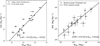 |
Fig. 4 Correlations between the self-gravitating gas obtained from the N-PDF method, and the star formation rates. Left: a sample of nearby massive star-forming regions. The black line shows a linear least-squares fit with a slope of 1.04±0.10. Right: a sample of massive star-forming regions. The black line shows a linear least-squares fit with a slope of 0.97±0.12. |
3.3 Msgb vs. SFR correlation for high-mass star-forming clouds
For distant and massive star-forming regions, no correlations between the extinction-based dense gas mass and SFR have been investigated before because both extinction map and counting YSOs to compute the SFR are unfeasible for distant clouds. We rely on bolometric luminosity to estimate the SFR for massive clouds. The idea is that the luminosity of stars is absorbed by dust in the molecular cloud and re-radiated in the far-infrared (Kennicutt & Evans 2012). For a sample of massive star-forming regions (Wu et al. 2010), we derived the SFRs from their bolometric luminosity by using the relation SFR ≈ 2 × 10⁻¹⁰(LIR/L⊙) M⊙ yr−1 from IRAS flux, following Gao & Solomon (2004b) and Kennicutt (1998). We also used the N-PDF method to separate unbound and bound gas in order to derive their bound gas mass. Uncertainties of distance and dust contamination from foreground and background sources only contribute to minor errors, and they do not change the conclusions (see Appendix for details). The uncertainty in SFR(Lbol) arises from several factors: measurement errors in flux, uncertainties in distance, and the uncertainty of the conversion from the bolometric luminosity to SFR. Due to the lack of reliable uncertainty of the conversion from the bolometric luminosity to SFR, we assumed a 50% uncertainty for each high-mass distant cloud in our SFR measurements.
We also made a linear least-squares fit of Msgb–SFR correlation to the high-mass clouds in our sample, with Msgb derived from the N-PDF method and SFR calculated from bolometric luminosity. The fitting result is also linear, with a slope of 0.97±0.11 (Fig. 4).
Although we applied different methods to derive the SFR in nearby clouds and in distant massive clouds, we see a clear trend that bound gas mass has a tight linear correlation with SFR, presenting consistent star formation efficiency (SFR per amount of bound gas) no matter which method we use. Our results demonstrate that bound gas mass is closely related to star formation for both nearby low-mass clouds and distant high-mass clouds.
4 Discussion
4.1 Comparing SFR for low-mass and high-mass star-forming regions
For both nearby clouds and distant massive clouds, the mass of the gas belongs to the power-law component of the N-PDF has a tight, linear correlation with SFR. In Fig. 5, we present these two linear correlations together. Apparently, there is an offset of a factor of 7.8 in SFR between them. As we show in Appendix C, the measurement of the bound gas mass in the two cloud samples is consistent, so that the different intercepts are unlikely due to the resolution of imaging. More likely, this offset reflects the difference in measuring SFR in these two systems.
A direct comparison between SFR (YSO) and SFR (IR) is quite complicated, given the differences in timescale and in sensitivity to the IMF of the two methods. Massive star formation tracers, such as infrared luminosity, only reflect SFR well for clumps massive enough to have a fully sampled IMF and old enough (5–10 Myr) to reach statistical steady state (Krumholz & Tan 2007), and thus normally fails to trace SFR in low-mass clouds (Wu et al. 2010; Gutermuth et al. 2009, 2011). In contrast, the YSO counting method for SFR focuses on small scales and shorter timescales (typical for YSOs of a couple of Myr), and trace star formation well in low-mass regions (Lada et al. 2010; Heiderman et al. 2010; Evans et al. 2014).
A significant difference between the dense gas–SFR correlations based on massive star formation SFR tracers (e.g., infrared luminosity) and smaller-scale SFR tracers has also been reported by other works (e.g., Lada et al. 2012; Pokhrel et al. 2021; Elia et al. 2025). For example, Lada et al. (2012) found that the linear correlation between the SFR(YSO) and dust-extinction derived cloud mass for nearby clouds and the Gao-Solomon correlation between SFR(IR) and dense gas (from HCN) for galaxies Gao & Solomon (2004b) has an offset of 2.7. Given that both linear relations span a large range of magnitudes in mass, with coefficients being consistent within quoted errors, Lada et al. (2012) argued that they should represent the same relation. Similar to Lada’s arguments, we believe the nearby clouds and distant, massive clouds in our sample follow similar underlying physical processes, given that the two samples have overlaps in bound gas mass range, that the two linear correlations likely reflect the same relation. Especially for the only sources in our sample (Orion A and Orion B) that happen to have been measured via both methods, Lada et al. (2012) found the SFRs measured via the two methods differ by a factor of ~8, which is quite consistent with the discovered offset of 7.8. However, we should keep in mind that such a constant conversion from SFR(YSO) to SFR(LIR) has not been fully justified given the very different spatial scales and timescales, and should be used with caution.
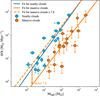 |
Fig. 5 Correlations between the self-gravitating gas obtained from the N-PDF method, and the star formation rates, for nearby clouds using the YSO counting method, and for distant massive clouds using the bolometric luminosity method. Both correlations are almost linear, with an offset of ~7.8. |
4.2 A consistent star formation efficiency in terms of bound gas in Galactic molecular clouds
If we naively scale down the SFR(YSO) of the solar neighborhood sample by a factor of 7.8 in order to match the SFR(IR) for massive clouds (and to match that used by most extragalactic studies), the SFR(YSO) and SFR(IR) of Orion A and B are also matched. We are intrigued to see a tight linear correlation in the plot of Msgb–SFR (Fig. 6) formed by the 36 star-forming clouds (from low-mass to high-mass regions over four orders of magnitude), in spite that there is no evidence that the SFR(YSO) in all neighborhood clouds can be correctly re-scaled to SFR(IR) by multiplying a constant factor. A linear regression yielded a slope of 0.97 ± 0.07. Based on this result and the fact that the Msgb – SFR correlation is linear and tight for both the solar neighborhood sample and high-mass sample, we argue that the power-law component in the N-PDFs may define the star-forming gas in a molecular cloud, which is likely gravitationally bound.
To conduct a comparison with literature results derived based on a fixed threshold, we adopted the AV = 8 mag cut to estimate the dense gas mass (MAV>8). For nearby clouds, both AV and Herschel column density maps are available. We used the dense gas masses enclosed within the extinction contour of AV = 8 mag from the 2MASS extinction maps, as reported by Lada et al. (2010) and Evans et al. (2014), and refer to these as ![Mathematical equation: $\[M_{\mathrm{A}_{\mathrm{V}}>8}^{2 \mathrm{MASS}}\]$](/articles/aa/full_html/2025/09/aa53608-24/aa53608-24-eq84.png) . Using the standard conversion of N(H2)/AV = 0.94×1021 cm−2 mag−1 (Frerking et al. 1982), we applied a column density threshold of 7.4×1021 cm−2 to the Herschel maps to obtain
. Using the standard conversion of N(H2)/AV = 0.94×1021 cm−2 mag−1 (Frerking et al. 1982), we applied a column density threshold of 7.4×1021 cm−2 to the Herschel maps to obtain ![Mathematical equation: $\[M_{\mathrm{A_V}>8}^{\text {Herschel}}\]$](/articles/aa/full_html/2025/09/aa53608-24/aa53608-24-eq85.png) . For massive clouds, where AV maps are not available, we adopted the same threshold directly on the Herschel column density maps to derive
. For massive clouds, where AV maps are not available, we adopted the same threshold directly on the Herschel column density maps to derive ![Mathematical equation: $\[M_{\mathrm{A_V}>8}^{\text {Herschel}}\]$](/articles/aa/full_html/2025/09/aa53608-24/aa53608-24-eq86.png) . We found that the correlation between SFR and the bound gas mass ( Msgb ) is linear and significantly tighter than the correlation using the fixed-threshold dense gas mass (MAV>8). The latter correlation is nonlinear, with a slope = 0.66 for
. We found that the correlation between SFR and the bound gas mass ( Msgb ) is linear and significantly tighter than the correlation using the fixed-threshold dense gas mass (MAV>8). The latter correlation is nonlinear, with a slope = 0.66 for ![Mathematical equation: $\[M_{\mathrm{A}_{\mathrm{V}}>8}^{2 \mathrm{MASS}+\text {Herschel}}\]$](/articles/aa/full_html/2025/09/aa53608-24/aa53608-24-eq87.png) (MAV>8 derived from extinction maps above AV = 8 mag for nearby clouds and from Herschel column density maps above N(H2) = 7.4×1021 cm−2 for massive clouds) and 0.63 for
(MAV>8 derived from extinction maps above AV = 8 mag for nearby clouds and from Herschel column density maps above N(H2) = 7.4×1021 cm−2 for massive clouds) and 0.63 for ![Mathematical equation: $\[M_{\mathrm{A_V}>8}^{\text {Herschel}}\]$](/articles/aa/full_html/2025/09/aa53608-24/aa53608-24-eq88.png) (MAV>8 derived from Herschel column density maps above N(H2) = 7.4×1021 cm−2 for all clouds), and exhibits a larger scatter. This difference is more clearly illustrated by comparing the star formation efficiencies (i.e., SFR per unit dense gas mass), as shown in Figure 7.
(MAV>8 derived from Herschel column density maps above N(H2) = 7.4×1021 cm−2 for all clouds), and exhibits a larger scatter. This difference is more clearly illustrated by comparing the star formation efficiencies (i.e., SFR per unit dense gas mass), as shown in Figure 7.
Our tentative hypothesis is that for some solar neighborhood clouds, using a fixed column density threshold of AV > 8 mag led to underestimating the amount of star-forming gas (see Cepheus I in Fig. 3 as an example). This might be because these clouds are less turbulent, such that molecular gas can be bound by self-gravity at considerably lower densities than is inferred by the AV = 8 mag criterion. On the other hand, massive star-forming molecular clouds may be more turbulent, such that only gas in higher-density regions can be bound by self-gravity. In such cases, sticking to a fixed column density will overestimate the amount of star-forming gas. The most extreme cases may be those in the CMZ, which are discussed in Section 4.3.
We based on Fig. 6 to derive the star-forming efficiency (SFE; i.e., SFR/Msgb) in the bound gas traced by the power-law component of the N-PDF. We found that across a large range of cloud parameters and Galactic environments, the SFE is nearly constant. The derived mean and median SFR are both 0.004 Myr−1, meaning that ~0.4% of the enclosed gas mass is converted to stars every megayear, although this derivation is up to the uncertainties in converting YSO counts and infrared luminosities into SFRs (see discussion in Section 4.1).
4.3 The Central Molecular Zone areas
The N-PDF method can naturally explain the very low star formation efficiency in the CMZ close to the Galactic center. Longmore et al. (2013) studied three large areas in the CMZ, finding that their star formation rate is much lower than predicted by their dense gas content. The SFR is an order of magnitude lower than predicted for gas with AV > 8 mag.
Longmore et al. (2013) argued that the low SFR is because the CMZ is very turbulent, and star formation can only occur in very dense regions where gravity can overcome the high turbulence. This idea has been widely explored (e.g., Liu et al. 2013; Rathborne et al. 2014; Henshaw et al. 2016; Federrath et al. 2017; Walker et al. 2018; Barnes et al. 2019; Lu et al. 2020; Henshaw et al. 2023). In particular, Rathborne et al. (2014) used high-sensitivity ALMA 3 mm continuum observations to study the N-PDF of G0.253+0.016, an exceptionally massive and dense molecular cloud in the CMZ that shows no clear evidence of widespread star formation (Walker et al. 2021). They found that there is a small deviation from the lognormal distribution at the highest column densities, indicating self-gravitating gas, which exactly coincides with the location of the H2O maser emission (Lu et al. 2019). Using the N-PDF method, we extended the analysis from the CMZ to our sample and find the threshold column density for the −1° < l < 1°, |b| < 0.5° area is about 40 times higher than that of Orion B.
Similar concerns arise regarding the consistency of SFR calculations in the CMZ regions and our other samples. In the three CMZ regions, SFRs are measured through radio free-free emission using Wilkinson Microwave Anisotropy Probe (WMAP) Sky Maps, so we need to quantify the potential biases in the SFRs measured using the radio free-free method, and the YSO counting and bolometric luminosity approaches.
Given the relatively low resolution of WMAP, our selection is limited to isolated sources with considerable angular sizes. We identified six massive star-forming clouds with available WMAP W-band measurements and estimated their SFRs following the approach outlined by Rahman & Murray (2010). Figure 8 presents a comparison between the SFRs derived from free-free emission and bolometric luminosity for these massive clouds. SFRs from these methods generally align, and a linear least-squares fit between them yields a slope of 1.23 ± 0.16 and an intercept of −1.03. We utilized this fitting result to convert SFR(free-free) to SFR(Lbol).
We caution here that there are potential caveats associated with the sample of massive star-forming regions used for comparison, as highlighted in previous studies (e.g., Feldmann & Gnedin 2011; Kruijssen et al. 2014; Krumholz et al. 2019). These regions are large evolved H II complexes that have likely dispersed much of their natal molecular material, meaning the current gas mass may not reliably trace the original reservoir involved in star formation. Conversely, the stellar population may not have reached equilibrium or fully sampled the IMF in some younger regions, making SFRs derived from free-free emissions complex.
We used the N-PDF method to calculate the star-forming gas mass of these three CMZ regions, and plotted them on the Msgb–SFR plot. They move from far below to roughly on the new Msgb–SFR correlations. Thus, the new correlation may explain the origin of the very low SFR of the CMZ regions. Although a large fraction of gas is of high volume density, only a small fraction of the gas is bound, which contributes to star formation in these regions. Our findings are consistent with both observational and theoretical predictions that the threshold for star formation is environment-dependent (e.g., Kruijssen et al. 2014; Rathborne et al. 2014; Krumholz & Kruijssen 2015; Henshaw et al. 2023).
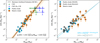 |
Fig. 6 SFR vs. dense gas mass correlations. Left: correlation between the self-gravitating gas mass obtained from N-PDF and the star formation rates, for nearby and for high-mass star-forming regions. The black line is a fitting for both nearby and massive clouds, with a slope of 1.01 ± 0.07. Three regions from CMZ are marked in the plot, whose SFRs from the literature (Longmore et al. 2013), and dense gas mass calculated by the N-PDF method (green triangles) and by a fixed threshold method (blue triangles). Right: similar to the left panel, but for dense gas masses calculated by a fixed extinction or column density threshold method. |
 |
Fig. 7 Star formation rate per unit dense gas mass for bound gas and gas with a fixed density threshold. Left: MAV>8 derived from Herschel column density maps above N(H2) = 7.4 × 1021 cm−2. The cloud mass Mcloud is calculated by integrating all cloud mass above AV = 1. The blue circles show the relationship based on Msgb from the N-PDF method, and the orange hexagons show the relationship based on |
![Mathematical equation: $\[M_{\mathrm{A_V}>8}^{\text {Herschel}}\]$](/articles/aa/full_html/2025/09/aa53608-24/aa53608-24-eq89.png)
![Mathematical equation: $\[M_{\mathrm{A}_{\mathrm{V}}>8}^{2 \mathrm{MASS}+\text {Herschel}}\]$](/articles/aa/full_html/2025/09/aa53608-24/aa53608-24-eq90.png)
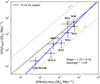 |
Fig. 8 Comparison between SFR(Lbol) and SFR(free-free). The solid black line represents the 1–1 line where the two SFRs are equal. The two gray lines represent 10 and 0.1 times the SFRs from the infrared and free-free emissions, respectively. The blue line is a linear fit to the data. |
4.4 The contribution of dense turbulent gas to star formation
There is gravitationally dominated and dense yet turbulent gas in these clouds, characterized by N > Nthreshold falling under the lognormal distribution in the N-PDF plot. The overall influence of these bound yet turbulent gases on star formation remains uncertain, particularly in extreme environments. For example, it makes up about 50% of the total dense gas mass in the −1° < l < 1°, |b| < 0.5° area in the CMZ; if we remove it, this most extreme area will move even closer to the new Msgb–SFR correlation. How critical is this dense and turbulent gas to star formation?
Burkhart & Mocz (2019) proposed that the gas components with N > Nthreshold should be capable of collapsing to form stars, and therefore categorized them as star-forming gas. However, there are exceptions. For example, some dense and turbulent gas in the Ophiuchus molecular cloud with N > Nthreshold in N-PDF are not located within the main cloud, but are isolated (Jiao et al. 2022). These components are not massive enough to form stars in the near future. Furthermore, such gas components can also reduce their density because of turbulence dissipation, moving back and forth around Nthreshold in the N-PDF. Consequently, this type of gas might only partially contribute to star formation.
We refer to the gas with N > Nthreshold in N-PDF as “threshold cut” gas, i.e.,
![Mathematical equation: $\[M_{\mathrm{sgb}}^{\mathrm{threshold} \text { cut }}=\int_{N_{\text {threshold }}}^{+\infty} p(N) N \mu m_H d N,\]$](/articles/aa/full_html/2025/09/aa53608-24/aa53608-24-eq91.png) (6)
(6)
and the bound gas without high-turbulence component that only focuses on gas above the lognormal distribution in N-PDF as “lognormal cut” gas, i.e.,
![Mathematical equation: $\[M_{\text {sgb }}^{\text {lognormal cut }}=\int_{N_{\text {threshold }}}^{+\infty}\left[p(N)-p_{\text {lognormal }}(N)\right] N \mu m_H d N,\]$](/articles/aa/full_html/2025/09/aa53608-24/aa53608-24-eq92.png) (7)
(7)
where plognormal is the extrapolated lognormal component of the N-PDF fit.
We tested how these two methods influence our results. The distinction between these two methods lies in whether we consider the dense turbulent gas as star-forming gas or not. We applied these two approaches to calculate the mass of star-forming gas and assessed the resulting Msgb−SFR correlations. As demonstrated in Fig. 9, these two approaches yielded very similar results. Both show a tight linear fit with a slope of ~1. Thus, although these dense but turbulent gases may contribute only partially to star formation, their inclusion or exclusion from the Msgb calculation does not alter our primary conclusions.
5 Conclusions
We analyzed the column density probability distribution function (N-PDF) for a sample of star-forming molecular clouds that cover wide ranges of gas masses and turbulence. Our sample comprises solar neighborhood clouds (d < 500 pc) in which the star formation rates (SFRs) can be inferred by YSO counts, and the distant massive star-forming molecular clouds in which the SFRs can be inferred by infrared luminosities. We decomposed the N-PDF into a lognormal component at the low column density end and a power-law component at the high column density end. We compared the gas masses in these components with the SFRs. Our major findings are the following:
A surprisingly good linear correlation is found between the star formation rate and the mass of the gas that belongs to the power-law component in the N-PDF;
The gas that belongs to the power-law component of the N-PDF may have a universal star-forming efficiency, which is about 0.4% per million years up to the uncertainty of converting infrared luminosity to SFR;
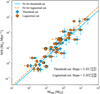
Fig. 9 Comparing the self-gravitating gas mass vs. SFR correlations between the N-PDF method with an unfixed column density threshold (
![Mathematical equation: $\[M_{\mathrm{sgb}}^{\mathrm{threshold} \text { cut }}\]$](/articles/aa/full_html/2025/09/aa53608-24/aa53608-24-eq93.png) Equation (6); blue circles) and the N-PDF method above the lognormal distribution (
Equation (6); blue circles) and the N-PDF method above the lognormal distribution (![Mathematical equation: $\[M_{\mathrm{sgb}}^{\mathrm{threshold} \text { cut }}\]$](/articles/aa/full_html/2025/09/aa53608-24/aa53608-24-eq94.png) Equation (7); orange hexagons). The fitting slopes are 1.01±0.07 and 1.03±0.06, respectively.
Equation (7); orange hexagons). The fitting slopes are 1.01±0.07 and 1.03±0.06, respectively.The transitional column density between the lognormal and power-law components, Nthreshold, varies from cloud to cloud. In our samples, it is distributed in the range of 1–17 × 1021 cm−2. Intriguingly, the Nthreshold values we measured from the solar neighbor clouds approximately correspond to the extinction AV = 8. This may explain why AV = 8 has been regarded as a good empirical criterion to separate star-forming gas from the rest of the gas in a molecular cloud;
We applied the same analyses to three regions in the central molecular zone (CMZ). We found that in these regions, gas belonging to the power-law component of the N-PDF may have a similar SFE to what was measured from outside of the CMZ.
With these findings we suggest that Nthreshold is a better criterion than AV = 8 for identifying star-forming gas. The N > Nthreshold regions may be produced due to self-similar self-gravitational collapse (thus gravitationally bound gas); regions at lower column densities may be supported (e.g., by gravity, magnetic field, or other feedback mechanisms) against the gravitational collapse. Nthreshold varies from cloud to cloud may be due to an interplay between self-gravity and the support mechanisms. Likely, molecular clouds in the CMZ have high Nthreshold values due to strong turbulence in those regions, thus using AV = 8 instead of Nthreshold to identify star-forming gas for clouds in the CMZ yielded low estimates of SFE. Gravitationally bound gas identified by Nthreshold therefore defines the star-forming gas in molecular clouds, with a consistent efficiency to convert gas into stars.
While the correlations identified in the present work will be empirically applicable, our interpretation of them may be tested by the follow-up studies of gas kinematics and the energetics in the star-forming molecular clouds.
Acknowledgements
S.J. and J.W.W. are supported by NSFC grant nos. 12588202 and 12041302, by the National Key R&D Program of China No. 2023YFA1608004. J.W.W. thanks the support from the Tianchi Talent Program of Xinjiang Uygur Autonomous Region. Z-Y.Z. is supported by NSFC grant nos. 12041305, 12173016, and the science research grants from the China Manned Space Project with NOs.CMS-CSST-2021-A08 and CMS-CSST-2021-A07, and the Program for Innovative Talents, Entrepreneur in Jiangsu. NJE thanks the Astronomy Department of the University of Texas for research support. D.L.is a New Cornerstone investigator. H.B.L. is supported by the National Science and Technology Council (NSTC) of Taiwan (Grant Nos. 111-2112-M-110-022-MY3, 113-2112-M-110-022-MY3). This research has made use of data from the Herschel Gould Belt survey (HGBS) project and the Herschel Infrared Galactic plane Survey (Hi-GAL). Herschel is an ESA space observatory with science instruments provided by European-led Principal Investigator consortia and with important participation from NASA. This research made use of the data from the Milky Way Imaging Scroll Painting (MWISP) project, which is a multi-line survey in 12CO/13CO/C18O along the northern galactic plane with PMO 13.7 m telescope.
Appendix A Contamination
The majority of massive star-forming regions are located in the inner Galaxy, where foreground and background dust emission may contaminate Herschel images and introduce bias to the shape of the N-PDF. Such contamination can be categorized into two types: a) diffuse dust emission originating from the Galactic plane; and b) additional sources with different distances along the line of sight, which cannot be distinguished by dust emission.
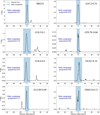 |
Fig. A.1 The C18O spectra for DR21S, G10.6-0.4, G12.89+0.49, G35.2-0.74, G59.78+0.06, G9.62+0.10, OH43.8-0.13, S106. The blue shadows show the velocity range of the main component. |
A.1 Contamination from diffuse foreground and background
The diffuse gas primarily influences the lower-density part of the N-PDF, which corresponds to the lognormal distribution. This could introduce bias by shifting the column density threshold to lower values and needs to be subtracted. Following the approach outlined in Schneider et al. (2013); Chen et al. (2018), we selected nearby regions without obvious emission as the background and subtracted it from the Herschel data.
A.2 Contamination from additional targets along the line of sight
To assess potential contamination from additional sources along the same line of sight, we use observational data of molecular lines that contain velocity information. For most of the massive star-forming regions, we accessed archival data of 12CO, 13CO, and C18O J=1-0 from the publicly available FOREST Unbiased Galactic Plane Imaging Survey constructed with the Nobeyama 45-m telescope (FUGIN, Umemoto et al. 2017). The data have an angular resolution of ~20″ and a velocity resolution of 1.3 km s−1, with a sensitivity of 0.24 K for 12CO and 0.12 K for 13CO and C18O. There are five massive star-forming regions (W3(OH), G9.62+0.10, G59.78+0.06, S106, and S158) that fall outside the mapping area of FUGIN. For these clouds, we retrieved archival data of 12CO, 13CO, and C18O J=1-0 from the Milky Way Imaging Scroll Painting (MWISP) project, observed by the Purple Mountain Observatory 14-m Delingha telescope (Su et al. 2019). For MWISP data, the sensitivity is ~0.45 K for 12CO with 0.16 km s−1 velocity resolution and ~0.25 K for 13CO and C18O with 0.17 km s−1 velocity resolution.
Given that 12CO J=1-0 is mostly optically thick, we check the spectra of 13CO and C18O J=1-0 that were spatially integrated over the same region of the dust data. For most of the target clouds, the contribution from other velocity components is less than 20%, whereas, for W31 (1) and W33, it is ~25%. The C18O spectra for all targets within the gravitationally bound regions are displayed in Fig A.1 and A.2. Accordingly, we have incorporated a 20% uncertainty in our estimation of Msgb.
Appendix B The N-PDFs for all target clouds
The N-PDF fitting process is described in Section 2.3. All the N-PDFs for the target clouds are attached here, and the fitting results of N-PDFs are listed in Table B.1.
Fitting results of column density probability distribution functions (N-PDFs)
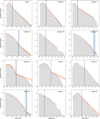 |
Fig. B.1 N-PDFs for low-mass clouds. |
 |
Fig. B.2 N-PDFs for low-mass clouds. |
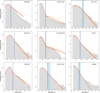 |
Fig. B.3 N-PDFs for high-mass clouds. |
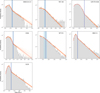 |
Fig. B.4 N-PDFs for high-mass clouds. |
Appendix C The effects of spatial resolution on Nthreshold fitting
Since N-PDFs are simplified 1D representations of complex 2D column density structures, the influence of spatial resolution on the shape of N-PDF is not straightforward. Alves et al. (2017) examined the N-PDFs of the Ophiuchus cloud at different spatial resolutions and found that the power-law slope remained largely unchanged as resolution decreased.
In this study, the Herschel observations have different spatial resolutions for the nearby cloud sample and the more distant, massive cloud sample due to their varying distances. To assess whether this spatial resolution discrepancy introduces systematic differences in the fitted transitional column density (Nthreshold) and the resulting Msgb measurements, we performed a test using Ophiuchus as an example.
The typical distance of the high-mass cloud sample is ~4 kpc. We therefore scaled the Ophiuchus Herschel observations to simulate distances of 1, 2, 4, and 6 kpc, yielding column density maps using SED fitting with spatial resolutions of ~0.15, 0.30, 0.60, and 1.00 pc, respectively. Subsequently, we analyze the N-PDFs of the Ophiuchus molecular cloud at different spatial resolutions. Figure C.1 shows the column density maps at different spatial resolutions, while Figure C.2 presents the corresponding N-PDFs. The red contours in Figure C.1 mark the transitional column density from the N-PDFs. Notably, in the N-PDFs at different spatial resolutions, the high-density end decreases as the spatial resolution decreases, while the transitional column density and the gravity-bound structure remain essentially invariant. Moreover, the variation in the estimated bound gas mass is within 30%. This implies that the transitional column density of N-PDF is invariant to spatial resolution once the spatial resolution can resolve the gravity-bound structures.
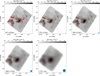 |
Fig. C.1 Column density maps of the Ophiuchus molecular cloud at different spatial resolutions. The red contours indicate the absolute transitional column density, Nthreshold. |
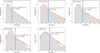 |
Fig. C.2 N-PDFs of the Ophiuchus molecular cloud at different spatial resolutions. |
References
- Alves, J., Lombardi, M., & Lada, C. J. 2017, A&A, 606, L2 [NASA ADS] [CrossRef] [EDP Sciences] [Google Scholar]
- André, P., Men’shchikov, A., Bontemps, S., et al. 2010, A&A, 518, L102 [NASA ADS] [CrossRef] [EDP Sciences] [Google Scholar]
- Barnes, A. T., Longmore, S. N., Avison, A., et al. 2019, MNRAS, 486, 283 [NASA ADS] [CrossRef] [Google Scholar]
- Bemis, A., & Wilson, C. D. 2019, AJ, 157, 131 [NASA ADS] [CrossRef] [Google Scholar]
- Burkhart, B., & Mocz, P. 2019, ApJ, 879, 129 [NASA ADS] [CrossRef] [Google Scholar]
- Burkhart, B., Lee, M.-Y., Murray, C. E., & Stanimirović, S. 2015, ApJ, 811, L28 [NASA ADS] [CrossRef] [Google Scholar]
- Burkhart, B., Stalpes, K., & Collins, D. C. 2017, ApJ, 834, L1 [Google Scholar]
- Chen, H. H.-H., Burkhart, B., Goodman, A., & Collins, D. C. 2018, ApJ, 859, 162 [NASA ADS] [CrossRef] [Google Scholar]
- Clauset, A., Shalizi, C. R., & Newman, M. E. J. 2009, SIAM Rev., 51, 661 [NASA ADS] [CrossRef] [Google Scholar]
- Dunham, M. M., Allen, L. E., Evans, N. J., et al. 2015, ApJS, 220, 11 [NASA ADS] [CrossRef] [Google Scholar]
- Elia, D., Evans, N. J., Soler, J. D., et al. 2025, ApJ, 980, 216 [Google Scholar]
- Elmegreen, B. G. 1989, ApJ, 338, 178 [NASA ADS] [CrossRef] [Google Scholar]
- Evans, N. J., Heiderman, A., & Vutisalchavakul, N. 2014, ApJ, 782, 114 [CrossRef] [Google Scholar]
- Evans, N. J., Kim, K.-T., Wu, J., et al. 2020, ApJ, 894, 103 [NASA ADS] [CrossRef] [Google Scholar]
- Evans, N. J., Heyer, M., Miville-Deschênes, M.-A., Nguyen-Luong, Q., & Merello, M. 2021, ApJ, 920, 126 [NASA ADS] [CrossRef] [Google Scholar]
- Evans, N. J., Kim, J.-G., & Ostriker, E. C. 2022, ApJ, 929, L18 [NASA ADS] [CrossRef] [Google Scholar]
- Federrath, C., Rathborne, J. M., Longmore, S. N., et al. 2016, ApJ, 832, 143 [NASA ADS] [CrossRef] [Google Scholar]
- Federrath, C., Roman-Duval, J., Klessen, R. S., Schmidt, W., & Mac Low, M. M. 2010, A&A, 512, A81 [NASA ADS] [CrossRef] [EDP Sciences] [Google Scholar]
- Federrath, C., Rathborne, J. M., Longmore, S. N., et al. 2017, in IAU Symposium, 322, The Multi-Messenger Astrophysics of the Galactic Centre, eds. R. M. Crocker, S. N. Longmore, & G. V. Bicknell, 123 [Google Scholar]
- Feldmann, R., & Gnedin, N. Y. 2011, ApJ, 727, L12 [Google Scholar]
- Foreman-Mackey, D., Hogg, D. W., Lang, D., & Goodman, J. 2013, PASP, 125, 306 [Google Scholar]
- Frerking, M. A., Langer, W. D., & Wilson, R. W. 1982, ApJ, 262, 590 [Google Scholar]
- Gallagher, M. J., Leroy, A. K., Bigiel, F., et al. 2018, ApJ, 858, 90 [NASA ADS] [CrossRef] [Google Scholar]
- Gao, Y., & Solomon, P. M. 2004a, ApJS, 152, 63 [Google Scholar]
- Gao, Y., & Solomon, P. M. 2004b, ApJ, 606, 271 [NASA ADS] [CrossRef] [Google Scholar]
- Gong, M., Ostriker, E. C., Kim, C.-G., & Kim, J.-G. 2020, ApJ, 903, 142 [CrossRef] [Google Scholar]
- Goodman, J., & Weare, J. 2010, Commun. Appl. Math. Computat. Sci., 5, 65 [Google Scholar]
- Griffin, M. J., Abergel, A., Abreu, A., et al. 2010, A&A, 518, L3 [EDP Sciences] [Google Scholar]
- Gutermuth, R. A., Megeath, S. T., Myers, P. C., et al. 2009, ApJS, 184, 18 [Google Scholar]
- Gutermuth, R. A., Pipher, J. L., Megeath, S. T., et al. 2011, ApJ, 739, 84 [Google Scholar]
- Heiderman, A., Evans, N. J., Allen, L. E., Huard, T., & Heyer, M. 2010, ApJ, 723, 1019 [NASA ADS] [CrossRef] [Google Scholar]
- Henshaw, J. D., Longmore, S. N., Kruijssen, J. M. D., et al. 2016, MNRAS, 457, 2675 [Google Scholar]
- Henshaw, J. D., Barnes, A. T., Battersby, C., et al. 2023, in Astronomical Society of the Pacific Conference Series, 534, Protostars and Planets VII, eds. S. Inutsuka, Y. Aikawa, T. Muto, K. Tomida, & M. Tamura, 83 [Google Scholar]
- Heyer, M., Gutermuth, R., Urquhart, J. S., et al. 2016, A&A, 588, A29 [NASA ADS] [CrossRef] [EDP Sciences] [Google Scholar]
- Hu, C.-Y., Schruba, A., Sternberg, A., & van Dishoeck, E. F. 2022a, ApJ, 931, 28 [NASA ADS] [CrossRef] [Google Scholar]
- Hu, Z., Krumholz, M. R., Pokhrel, R., & Gutermuth, R. A. 2022b, MNRAS, 511, 1431 [Google Scholar]
- Jiao, S., Wu, J., Ruan, H., et al. 2022, Res. Astron. Astrophys., 22, 075016 [Google Scholar]
- Jiménez-Donaire, M. J., Bigiel, F., Leroy, A. K., et al. 2019, ApJ, 880, 127 [CrossRef] [Google Scholar]
- Kainulainen, J., & Tan, J. C. 2013, A&A, 549, A53 [NASA ADS] [CrossRef] [EDP Sciences] [Google Scholar]
- Kainulainen, J., Federrath, C., & Henning, T. 2014, Science, 344, 183 [NASA ADS] [CrossRef] [Google Scholar]
- Kennicutt, R. C., & Robert C., J. 1998, ApJ, 498, 541 [NASA ADS] [CrossRef] [Google Scholar]
- Kennicutt, R. C., & Evans, N. J. 2012, ARA&A, 50, 531 [NASA ADS] [CrossRef] [Google Scholar]
- Kim, J.-G., Ostriker, E. C., & Filippova, N. 2021, ApJ, 911, 128 [NASA ADS] [CrossRef] [Google Scholar]
- Klessen, R. S. 2000, ApJ, 535, 869 [NASA ADS] [CrossRef] [Google Scholar]
- Kruijssen, J. M. D., Longmore, S. N., Elmegreen, B. G., et al. 2014, MNRAS, 440, 3370 [Google Scholar]
- Krumholz, M. R., & Tan, J. C. 2007, ApJ, 654, 304 [NASA ADS] [CrossRef] [Google Scholar]
- Krumholz, M. R., & Kruijssen, J. M. D. 2015, MNRAS, 453, 739 [Google Scholar]
- Krumholz, M. R., McKee, C. F., & Bland-Hawthorn, J. 2019, ARA&A, 57, 227 [NASA ADS] [CrossRef] [Google Scholar]
- Lada, C. J., Lombardi, M., & Alves, J. F. 2010, ApJ, 724, 687 [Google Scholar]
- Lada, C. J., Forbrich, J., Lombardi, M., & Alves, J. F. 2012, ApJ, 745, 190 [NASA ADS] [CrossRef] [Google Scholar]
- Lin, Y., Liu, H. B., Li, D., et al. 2016, ApJ, 828, 32 [NASA ADS] [CrossRef] [Google Scholar]
- Liu, H. B. 2019, ApJ, 877, L22 [NASA ADS] [CrossRef] [Google Scholar]
- Liu, H. B., Ho, P. T. P., Wright, M. C. H., et al. 2013, ApJ, 770, 44 [NASA ADS] [CrossRef] [Google Scholar]
- Liu, T., Kim, K.-T., Yoo, H., et al. 2016, ApJ, 829, 59 [NASA ADS] [CrossRef] [Google Scholar]
- Lombardi, M., Alves, J., & Lada, C. J. 2015, A&A, 576, L1 [NASA ADS] [CrossRef] [EDP Sciences] [Google Scholar]
- Longmore, S. N., Bally, J., Testi, L., et al. 2013, MNRAS, 429, 987 [NASA ADS] [CrossRef] [Google Scholar]
- Lu, X., Zhang, Q., Kauffmann, J., et al. 2019, ApJ, 872, 171 [Google Scholar]
- Lu, X., Cheng, Y., Ginsburg, A., et al. 2020, ApJ, 894, L14 [NASA ADS] [CrossRef] [Google Scholar]
- McKee, C. F., & Ostriker, E. C. 2007, ARA&A, 45, 565 [Google Scholar]
- Miville-Deschênes, M.-A., Murray, N., & Lee, E. J. 2017, ApJ, 834, 57 [Google Scholar]
- Molinari, S., Swinyard, B., Bally, J., et al. 2010, PASP, 122, 314 [Google Scholar]
- Nelson, B., Ford, E. B., & Payne, M. J. 2014, ApJS, 210, 11 [Google Scholar]
- Neumann, L., Gallagher, M. J., Bigiel, F., et al. 2023, MNRAS, 521, 3348 [NASA ADS] [CrossRef] [Google Scholar]
- Orkisz, J. H., Pety, J., Gerin, M., et al. 2017, A&A, 599, A99 [NASA ADS] [CrossRef] [EDP Sciences] [Google Scholar]
- Ossenkopf, V., & Henning, T. 1994, A&A, 291, 943 [NASA ADS] [Google Scholar]
- Pilbratt, G. L., Riedinger, J. R., Passvogel, T., et al. 2010, A&A, 518, L1 [NASA ADS] [CrossRef] [EDP Sciences] [Google Scholar]
- Poglitsch, A., Waelkens, C., Geis, N., et al. 2010, A&A, 518, L2 [NASA ADS] [CrossRef] [EDP Sciences] [Google Scholar]
- Pokhrel, R., Gutermuth, R. A., Krumholz, M. R., et al. 2021, ApJ, 912, L19 [CrossRef] [Google Scholar]
- Rahman, M., & Murray, N. 2010, ApJ, 719, 1104 [Google Scholar]
- Rathborne, J. M., Longmore, S. N., Jackson, J. M., et al. 2014, ApJ, 795, L25 [NASA ADS] [CrossRef] [Google Scholar]
- Reid, M. J., Menten, K. M., Brunthaler, A., et al. 2014, ApJ, 783, 130 [Google Scholar]
- Roy, A., André, P., Palmeirim, P., et al. 2014, A&A, 562, A138 [NASA ADS] [CrossRef] [EDP Sciences] [Google Scholar]
- Schmidt, M. 1959, ApJ, 129, 243 [NASA ADS] [CrossRef] [Google Scholar]
- Schneider, N., André, P., Könyves, V., et al. 2013, ApJ, 766, L17 [NASA ADS] [CrossRef] [Google Scholar]
- Schneider, N., Bontemps, S., Girichidis, P., et al. 2015, MNRAS, 453, L41 [CrossRef] [Google Scholar]
- Schneider, N., Bontemps, S., Motte, F., et al. 2016, A&A, 587, A74 [NASA ADS] [CrossRef] [EDP Sciences] [Google Scholar]
- Schneider, N., Ossenkopf-Okada, V., Clarke, S., et al. 2022, A&A, 666, A165 [NASA ADS] [CrossRef] [EDP Sciences] [Google Scholar]
- Shirley, Y. L., Evans, N. J., Young, K. E., Knez, C., & Jaffe, D. T. 2003, ApJS, 149, 375 [NASA ADS] [CrossRef] [Google Scholar]
- Stephens, I. W., Jackson, J. M., Whitaker, J. S., et al. 2016, ApJ, 824, 29 [NASA ADS] [CrossRef] [Google Scholar]
- Su, Y., Yang, J., Zhang, S., et al. 2019, ApJS, 240, 9 [Google Scholar]
- ter Braak, C. J. F., & Vrugt, J. A. 2008, Statist. Comput., 435, 4 [Google Scholar]
- Umemoto, T., Minamidani, T., Kuno, N., et al. 2017, PASJ, 69, 78 [Google Scholar]
- Virkar, Y., & Clauset, A. 2014, Ann. Appl. Statist., 8, 89 [Google Scholar]
- Vutisalchavakul, N., Evans, N. J., & Heyer, M. 2016, ApJ, 831, 73 [CrossRef] [Google Scholar]
- Walker, D. L., Longmore, S. N., Zhang, Q., et al. 2018, MNRAS, 474, 2373 [NASA ADS] [CrossRef] [Google Scholar]
- Walker, D. L., Longmore, S. N., Bally, J., et al. 2021, MNRAS, 503, 77 [Google Scholar]
- Wong, Y. H. V., Hirashita, H., & Li, Z.-Y. 2016, PASJ, 68, 67 [Google Scholar]
- Wu, J., Evans, N. J., Gao, Y., et al. 2005, ApJ, 635, L173 [NASA ADS] [CrossRef] [Google Scholar]
- Wu, J., Evans, II, N. J., Shirley, Y. L., & Knez, C. 2010, ApJS, 188, 313 [NASA ADS] [CrossRef] [Google Scholar]
- Zhang, Z.-Y., Gao, Y., Henkel, C., et al. 2014, ApJ, 784, L31 [NASA ADS] [CrossRef] [Google Scholar]
- Zucker, C., Speagle, J. S., Schlafly, E. F., et al. 2020, A&A, 633, A51 [NASA ADS] [CrossRef] [EDP Sciences] [Google Scholar]
- Zucker, C., Goodman, A., Alves, J., et al. 2021, ApJ, 919, 35 [NASA ADS] [CrossRef] [Google Scholar]
- Zuckerman, B., & Evans, N. J. 1974, ApJ, 192, L149 [NASA ADS] [CrossRef] [Google Scholar]
The SFR from free-fall prediction is 150–180 times higher than the observed values (Zuckerman & Evans 1974; McKee & Ostriker 2007; Evans et al. 2021).
Herschel is an ESA space observatory with science instruments provided by European-led Principal Investigator consortia and with important participation from NASA.
All Tables
All Figures
|
Fig. 1 An example of the N-PDF fitting. Left: the N-PDF of Ophiuchus (gray histogram). The error bars at the lower-density end show the uncertainties due to the map area. The orange line shows the fitted curve and the black vertical line shows the fitted threshold column density. Right: corner plot of the fitted parameters. ση represents the dimensionless dispersion, and μ is the mean of the lognormal component. Nthreshold is the transitional column density, related to ηt via the relation ηt = ln(Nthreshold/⟨NH2⟩). α denotes the slope of the power-law tail. |
| In the text | |
|
Fig. 2 Comparison between the derived dense gas mass from (AV > 8) extinction map Zucker et al. (2021) and from N-PDF method (this work). The black line indicates MAV>8=Msgb. |
| In the text | |
|
Fig. 3 Example Av maps and N-PDFs. Left: Av maps of Ophiuchus and Cepheus I (Zucker et al. 2021). The orange contours trace AV = 8 mag, while the blue contours trace Nthreshold. The young embedded protostars (Class 0, I, and Flatspectrum sources) are presented as magenta crosses (Dunham et al. 2015). Ophiuchus is a good representative of nearby star-forming clouds, while Cepheus I presents an extreme case with very low SFR. Right: N-PDFs of the Ophiuchus and Cepheus I generated based on Herschel PACS and SPIRE images (black). The fittings of a lognormal component and a power-law tail are shown as an orange dashed line and a blue line. We plot the N-PDF of the pixels within the AV = 8 mag contour in this panel, which is shown in the gray-blue area. |
| In the text | |
|
Fig. 4 Correlations between the self-gravitating gas obtained from the N-PDF method, and the star formation rates. Left: a sample of nearby massive star-forming regions. The black line shows a linear least-squares fit with a slope of 1.04±0.10. Right: a sample of massive star-forming regions. The black line shows a linear least-squares fit with a slope of 0.97±0.12. |
| In the text | |
|
Fig. 5 Correlations between the self-gravitating gas obtained from the N-PDF method, and the star formation rates, for nearby clouds using the YSO counting method, and for distant massive clouds using the bolometric luminosity method. Both correlations are almost linear, with an offset of ~7.8. |
| In the text | |
|
Fig. 6 SFR vs. dense gas mass correlations. Left: correlation between the self-gravitating gas mass obtained from N-PDF and the star formation rates, for nearby and for high-mass star-forming regions. The black line is a fitting for both nearby and massive clouds, with a slope of 1.01 ± 0.07. Three regions from CMZ are marked in the plot, whose SFRs from the literature (Longmore et al. 2013), and dense gas mass calculated by the N-PDF method (green triangles) and by a fixed threshold method (blue triangles). Right: similar to the left panel, but for dense gas masses calculated by a fixed extinction or column density threshold method. |
| In the text | |
|
Fig. 7 Star formation rate per unit dense gas mass for bound gas and gas with a fixed density threshold. Left: MAV>8 derived from Herschel column density maps above N(H2) = 7.4 × 1021 cm−2. The cloud mass Mcloud is calculated by integrating all cloud mass above AV = 1. The blue circles show the relationship based on Msgb from the N-PDF method, and the orange hexagons show the relationship based on |
| In the text | |
|
Fig. 8 Comparison between SFR(Lbol) and SFR(free-free). The solid black line represents the 1–1 line where the two SFRs are equal. The two gray lines represent 10 and 0.1 times the SFRs from the infrared and free-free emissions, respectively. The blue line is a linear fit to the data. |
| In the text | |
|
Fig. 9 Comparing the self-gravitating gas mass vs. SFR correlations between the N-PDF method with an unfixed column density threshold ( |
| In the text | |
|
Fig. A.1 The C18O spectra for DR21S, G10.6-0.4, G12.89+0.49, G35.2-0.74, G59.78+0.06, G9.62+0.10, OH43.8-0.13, S106. The blue shadows show the velocity range of the main component. |
| In the text | |
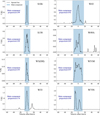 |
Fig. A.2 Similar to Fig. A.1, but for S158, W3(OH), W31(1), W33, W43, W49A, W51M, W75N. |
| In the text | |
|
Fig. B.1 N-PDFs for low-mass clouds. |
| In the text | |
|
Fig. B.2 N-PDFs for low-mass clouds. |
| In the text | |
|
Fig. B.3 N-PDFs for high-mass clouds. |
| In the text | |
|
Fig. B.4 N-PDFs for high-mass clouds. |
| In the text | |
|
Fig. C.1 Column density maps of the Ophiuchus molecular cloud at different spatial resolutions. The red contours indicate the absolute transitional column density, Nthreshold. |
| In the text | |
|
Fig. C.2 N-PDFs of the Ophiuchus molecular cloud at different spatial resolutions. |
| In the text | |
Current usage metrics show cumulative count of Article Views (full-text article views including HTML views, PDF and ePub downloads, according to the available data) and Abstracts Views on Vision4Press platform.
Data correspond to usage on the plateform after 2015. The current usage metrics is available 48-96 hours after online publication and is updated daily on week days.
Initial download of the metrics may take a while.